









North Platte, Nebraska manages to balance its interesting history with its lively present, in a variety of ways. Real Food Traveler’s Hospitality Editor, Ron Stern, shows us around North Platte, and gives us his 10 reasons to go.

Save this article about North Platte, NE to Pinterest to help you plan a visit. Clockwise, Pulled Pork sandwich from Good Life on the Bricks; sandhill cranes by Pixabay.com; Pizza and cheese curds from Pals Brewing Co.; Baileys Railroad yard; William F. Cody Mansion; Senherts Bakery doughnuts; The Canteen District; Fort Cody Trading Post; tanking; Veteran’s Memorial Wall. Photos by Ron Stern, graphic by RealFoodTraveler.com.
Hungry for more? Get Ron’s guide to Nebraska ice cream shops and soda fountains.
Situated at the confluence of the North and South Platte Rivers, North Platte, Nebraska has a past that helped shape America. From railroad yards to the Old West to World War II volunteerism, this city has well-earned its place in the annals of U.S. History. Today’s travelers can discover a revitalized community that offers a blend of historical traditions, culinary temptations, arts and culture, and exceptional outdoor recreation.
Founded in 1866 this west-central Nebraska city became a major railroad hub for the Union Pacific Railroad. It was known at the time as a “Hell on Wheels” town, one of many that sprang up as work progressed along the line. With few diversions available for the laborers, saloons, gambling, and prostitution quickly filled the void in these so-called Boomtowns. Over time, more traditional activities took root like service businesses, literary societies, theaters, and community churches.
Here are 10 reasons you will love North Platte. Prepare to be wowed!
1. Food and Drink at North Platte Restaurants
Start your day with some freshly roasted coffee and breakfast at The Espresso Shop by Caravan. This is the longest-running coffee shop in the city and where the community meets for homemade soups, and sandwiches, all made from scratch. Get there early to try some exquisite donuts trucked from Sehnert’s Bakery. This James Beard Award Winner has been in the baking business since 1521, starting in Erfurt, Germany.

Doughnuts from Senhert’s Bakery at The Espresso Shop by Caravan.
“The Bricks” was the former name of the Canteen District and at Good Life on the Bricks they smoke all their own BBQ meat from scratch. I enjoyed a delicious pulled pork sandwich with a side of beans that was quite filling and satisfying.
For a touch of Italian, I was told Luigi’s is a hands-down, local favorite. For starters, they brought some small loaves of warm, sourdough that was out-of-this-world good. I followed this up by some tasty Veal Marsala over spaghetti pasta and limoncello cake with mascarpone frosting for dessert. They are also known for their crispy crust pizzas, made fresh each day.
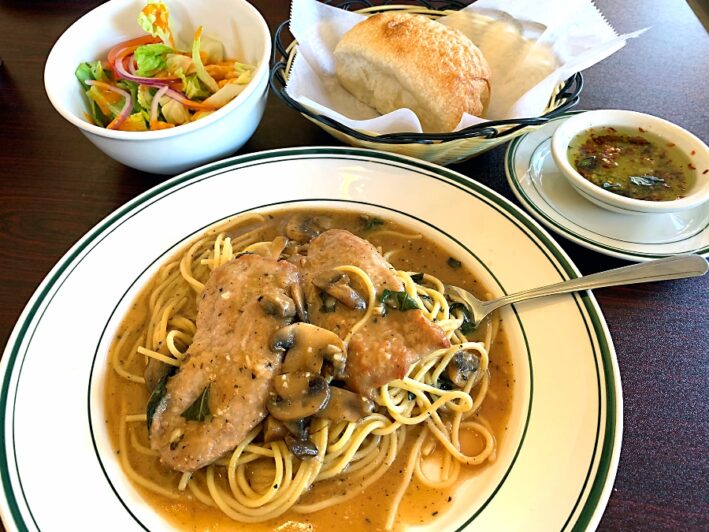
Veal Marsala dinner at Luigi’s.
Pals Brewing Company is located in a rural area away from all distractions and offers a tranquil setting for some quality beers and food. The owners came from Wisconsin, and they brought their love of cheese with them. “Squeaky” Wisconsin cheese curds are a staple as are freshly made pizzas and hors d’ oeuvres. Named one of the 50 Best Breweries, Microbreweries & Brew Pubs In The USA by Traviosa, their motto is “Come as Strangers, Leave as Friends.”
With a modern rustic feel, The Cedar Room is a local gem tucked into the Canteen District. Offering American Fusion Cuisine, there is a little something for everyone here. Trimmed in cedar wood with oak floors and a copper ceiling, the ambiance is cozy and inviting.
From ribeye steaks to seafood flown in from Hawaii, they offer exceptional value and service that has caught the attention of locals and tourists alike. The co-owners told me that people from far away as Tazmania have found their way to their eatery with others flying in just for the experience.
I tried their prime filet along with a loaded baked potato. The meat was tender and flavorful and paired nicely with one of their craft cocktails. For dessert, their huge multi-layered carrot cake was big enough to share but that seemed such a hassle, so I ate it myself.

The exterior of The Cedar Room.
If you get the sense I like the sweet stuff, you are correct. While in town, don’t pass up Double Dips Ice Creamery. Owned by a nurse turned ice cream entrepreneur, they offer a cool and creamy Buffalo Bill Cody sundae made with Peanut Butter Fudge ice cream covered with warm Peanut Butter Fudge Sauce and pecans. Speaking of the Wild West celebrity, at Cody Park, they have some palate-intensive soft serve with flavors like black cherry and lemon (Dole Whip) that are the bomb. More than one person made the same comment to me that it is the “best ice cream they have ever had.”
2. Tanking
Until my visit to North Platte, I have never heard of “tanking” beyond a possible military reference. So,what is it? Picture this: A large metal, livestock tank outfitted with benches. The tank is placed into the North Platte River and three to eight people climb aboard and using paddles, slowly move downstream. Of course, most bring snacks and beverages, making this a fun-filled, floating water fest.
The distance is about two miles and can take anywhere from 90 minutes to two hours depending upon the water level. Held in the warmer months, this was one of the most unique things we have ever done on the water. So pack up your favorite cooler and float, float, float.
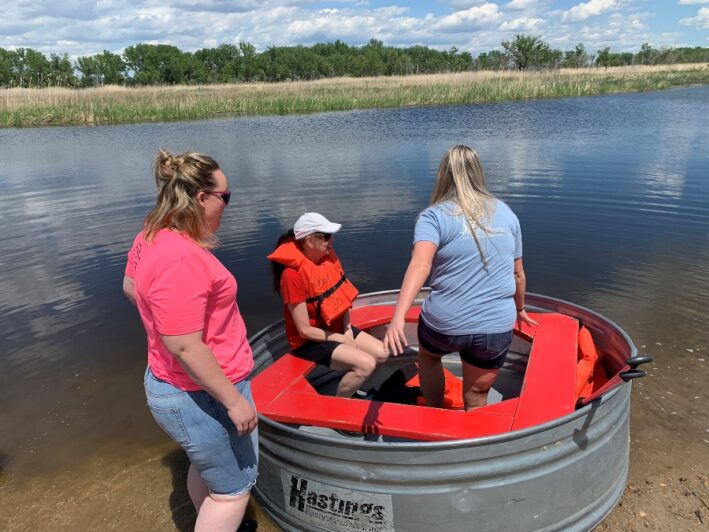
Getting ready to go tanking. Photo with permission by Heather Jones and Sydnee Hansen.
3. Historical Canteen District
With a hip and trendy vibe, the North Platte Canteen District has been transformed into a shopping and entertainment venue attracting thousands of travelers traversing the I-80 corridor. The entire area has been given a fresh, new look with upscale lighting, flower boxes, archways and a host of other improvements.
But the “Canteen District” is more than just a catchy name, much more! The history behind this is one of the most amazing volunteer stories of World War II. It all started on December 17, 1941 when families of the Nebraska National Guard, Company D were waiting at the North Platte Depot to give Christmas presents to their family members. Each train would usually stop about ten minutes to allow soldiers to stretch their legs.
Mothers, fathers, grandparents, and girlfriends all lined the platform, waiting patiently for their loved ones who were stopping through town. As the train pulled in, the crowd edged closer. Then something unexpected happened that turned their excitement into disappointment. Instead of seeing their boys from Nebraska, they realized that the train was carrying soldiers from Kansas Company D.
After a few moments of hushed silence, one person stepped forward to the window and passed their presents to a soldier, which was quickly followed by all the others. The gratefulness of this unexpected gesture by the families was all that was needed to give local Rae Wilson an idea. She wrote to the local paper to raise support for a canteen that would meet every arriving train.
Her efforts were successful and working out of the Cody Hotel, baskets of cookies, fruit, cigarettes, and magazines were prepared and handed through the windows to passing troops.
The operation was expanded to an abandoned lunchroom at the depot and another local named Helen Christ took over as coordinator. At this point in the war, however, rationing of basic commodities was instituted. Not to be deterred, residents and others from near and far pooled their rations for the effort. Children gave up birthday cakes so that the sugar could be used for soldiers’ birthday cakes. One local boy named Gene Slattery auctioned the shirt off his back every week at a local barn sale, raising an incredible $2,000 for his efforts. During one month in 1945, someone calculated how much was being distributed to the troops. Here is what they found: 40,161 cookies, 30,679 hard-boiled eggs, 6,547 doughnuts, 6,939 cup, loaf, and birthday cakes, 2,845 pounds of sandwich meat, 12 dozen different items in similar proportions.
By any stretch, this was an amazing feat that ended up involving 55,000 volunteers from 125 different towns as far as 200 miles away. Their acts of self-sacrifice served to help the war effort and boost the morale of six million soldiers and civilians alike.
4. Sandhill Cranes
One of the most impressive displays of nature occurs each spring when migrating Sandhill Cranes come to nest in the North Platte River Valley. These magnificent birds can reach a height of almost four feet and have a wingspan of up to six and a half feet.
Known for their ability to perform an intricate dancing ritual during mating season, they put on quite a display for birdwatchers who come from all over the world to witness the spectacle. Emitting a trumpeting sound, you can imagine the excitement of this multiplied by the 400,000 of cranes that spend up to six weeks in the region.
Sandhill Crane tours are available, and my suggestion is that you book well in advance. You will want to bring your binoculars and cameras with long lenses for this one!
Hungry for more? Learn all about the Sandhill Crane Migration in Nebraska.
5. Buffalo Bill Ranch State Historical Park
Known as “Scout’s Rest” the restored home and barn was the home of William “Buffalo Bill” Cody from 1886 to 1913. This glimpse into the life and career of the famous Pony Express rider and Wild West showman is open to the public and contains many of his artifacts and memorabilia.
Born in 1846 Cody’s family was among the first settlers in Kansas. During the Civil War, he served in the Union Army and was also a scout earning him the nickname “Buffalo Bill” for his shooting ability. He was particularly adept at buffalo hunting whose meat he procured for the crews of the Kansas Pacific Railroad.
Cody’s skills as a tracker and scout led to his being one of only four such civilians to receive the Congressional Medal of Honor for valor during the Indian Wars in 1872. He was subsequently declared ineligible for the award and stripped of his medal. This was again reversed in 1989 however, by the Army Board for Correction of Military Records.
Perhaps best known for his Buffalo Bill’s Wild West Shows, he garnered national attention with his on-the-road performances in the U.S. and Europe. Cody featured as many as 1,200 personalities of the Old West in his shows such as James Butler, “Wild Bill” Hickok, and Annie Oakley. Famous Native Americans also joined Cody including Sitting Bull and Geronimo.
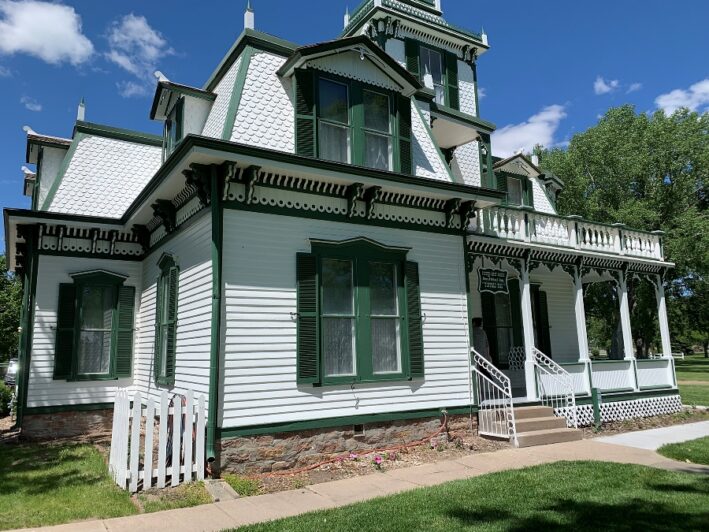
The William F. Cody Mansion.
6. Bailey Railroad Yard
Named after Edd H. Bailey, the President of Union Pacific at the time, the Bailey Railroad Yard is the largest railroad classification yard in the world. It was constructed with the aid of Union Pacific’s Chief Engineer General Grenville Dodge. Dodge was formerly an officer in the Union Army and served under General Ulysses S. Grant.
With thousands of cars coming through each day, they are separated (i.e. sorted) to various tracks. Using small hills known as “humps,” cars are rolled down the incline and a switch is thrown to move them onto the correct track.
The yard is over eight miles in length with 400 tracks covering 2,850 acres. Approximately 139 trains traverse the yards every 24 hours.
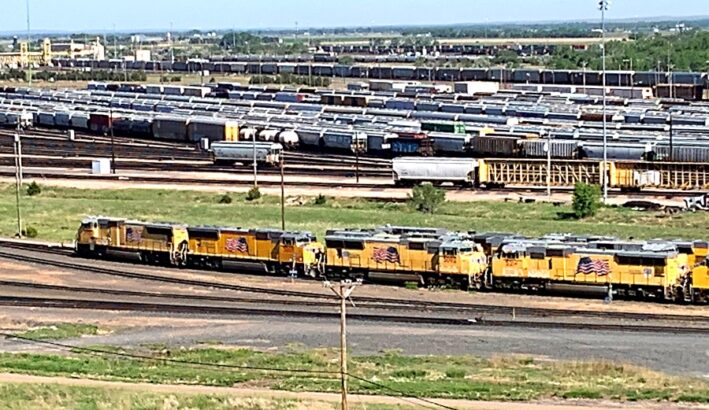
Bailey’s Railroad Yard.
7. Golden Spike Tower
This tower was named after the iconic golden spike that connected the eastern and western tracks of the Central Pacific Railroad in Promontory, Utah, on May 10, 1869. A single golden spike was driven into the track commemorating this historic event.
At a height of 95 feet, The Golden Spike Tower offers visitors a picturesque view of the yard from its seventh-floor open observation deck. If you love trains, you can see thousands of all types from your elevated vantage point. The eighth floor provides enclosed 360-degree panoramic vistas as well as many displays and exhibits. You can shop for some gifts and souvenirs in their lobby gift shop.

The Golden Spike Tower.
8. Orphan Train History
A documentary at the Golden Spike Tower tells the story of what has come to be known as “The Orphan Train.” Never heard of it? Neither had I, but I love discovering stories like this in places I would never expect.
Between 1854 and 1929, orphaned or destitute children were placed on trains from congested east coast cities to various points out west. New York City alone was said to have 30,000 of these little ones.
Private donations from some of the wealthiest families helped to fund the massive welfare operation. Traveling with chaperones and with advanced advertising, the children would be introduced to prospective family members along the east-west route. If a child wasn’t chosen, they would stay on the train and continue on their journey in hopes that they would become part of a new, permanent family. In the 75 years of its history, this effort, one of the largest in United States history, and which gave rise to the foster system, was able to relocate about 250,000 children.
9. Shopping
You can indulge your curiosity while picking your way through North Platte’s eclectic shopping venues. At the Grain Bin Antique Town, they have created a little village featuring 20 historic, wooden, and octagon granaries. Filling them with antiques, souvenirs, and local treasures, you’re sure to find something of value.
Welcoming you with a gigantic 30-foot sign of Bill Cody, the Fort Cody Trading Post has been a family-run operation since 1963. An easy diversion from I-80, this attraction in the shape of a fort offers authentic western gear, Buffalo Bill memorabilia, and treats of all sorts. Their show-stopping masterpiece, however, is Buffalo Bill’s Wild West in Miniature, featuring 20,000 hand-carved items that took one man over 12 years to complete. At regular intervals, the display comes alive with music, narration, and figures that seem to magically move. The owners claim this is “one of the largest single folk art displays in the country!”
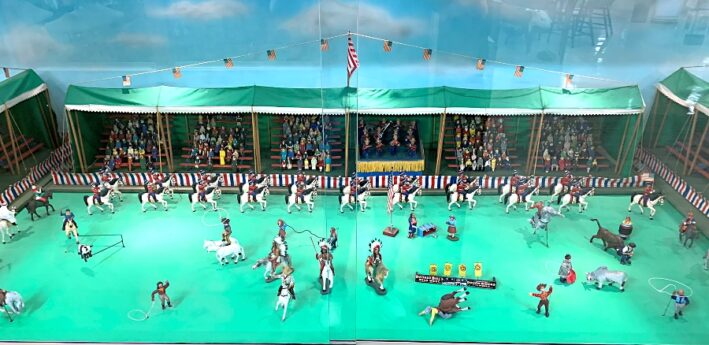
A miniature scene from a Wild West Show inside Fort Cody Trading Post.
The Prairie Arts Center was originally constructed in 1913 under Theodore Roosevelt. Constructed in the Italian Renaissance Revival style, it is one of only 18 such buildings in Nebraska. Having gone through several iterations, one of the things you can do during your visit is to take an art class on the third floor of this historic building. Some of the interesting ones I saw included beer tasting and painting, open studio ceramics, a batik workshop, and an art therapy group.
10. 20th Century Veterans Memorial
Honoring veterans of all the major military branches as well as the volunteers of the North Platte Canteen, this heartfelt visual memorial was created in bronze relief on a large wall. From World War I to the Iraq War, the 15-foot tall brick bas-relief mural is surrounded by thousands of bricks with names of those who served in the 20th Century. There is also a law enforcement memorial just adjacent to the main display, as a tribute to those who lost their lives in the line of duty.
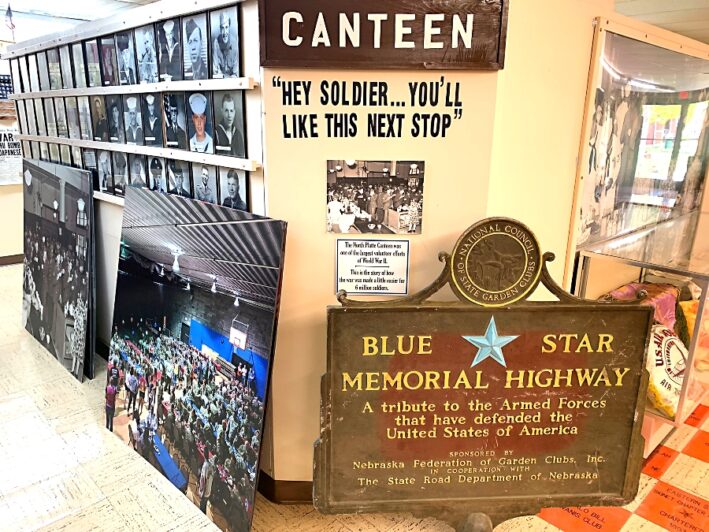
A Canteen recreation inside the Lincoln Memorial in North Platte, Nebraska.
With ties to Western folklore, North Platte became an intricate part of America’s railroad expansion. For more than 150 years of history, North Platte’s tight-knit community has overcome adversity during WWII and earned the respect of millions of soldiers and their families. With its natural beauty, an abundance of attractions, and great food, today’s revitalized city will capture your heart and adventurous spirit.
Resources for Planning a Trip to North Platte:
Where to Stay:
Best Western Plus North Platte Inn & Suites is centrally located close to the major attractions. The rooms are clean and comfortable with many offering a king and queen combination. They have a very good breakfast included with your stay and I found their down-home Nebraska hospitality a welcome addition to my visit.
Lincoln County Historical Museum- Showcases the early history of North Platte, including Native Americans, pioneers, the canteen, the railroad, and an entire village of historic structures from the area.
Sandhill Crane Tours- Various tours can be arranged through Dusty Trails, LLC.
Learn more about planning your trip and things to do in North Platte, NE, on their website.

–Story and images by Ron Stern, “The Global Gumshoe” and RFT’s Hospitality Editor
Please note: Ron was hosted for portions of his visit however, as is Real Food Traveler’s policy, our opinions and impressions are always our own.




0 Comments