





In some places, you can go camping year-round. And in this COVID-19 age, more people are hitting the road to go camping and RV-ing than ever before. Writer Carrie Dow, an avid camper herself, shares her tried and true tips for how to make simple camping meals to get more out of campground cooking.

Whether you’re tent camping or RV-ing, here are some easy camping food ideas for you to try.
Ideas for simple camping food ideas
If social distancing caused you to discover or rediscover camping as a means of escape in 2020, here are tips to get the most out of campground meals and go beyond hot dogs.
You’ve spent all day driving on country roads to find your campsite and, upon arrival, clouds roll in and thunder rumbles. Fat raindrops fall as you set up your temporary vacation home. You’re tired, wet, and hungry and the firepit you planned on grilling hot dogs over has a puddle of water in it.
After a decade of tent and trailer camping, my family and I have been in that situation many times. One memorable Memorial Day weekend found us high in the Rocky Mountains during a white-out blizzard. Use to be bad weather meant driving into the nearest town to find a restaurant, but with the coronavirus running wild, that is not an option. Whether you’re sleeping in a tricked-out RV or a tent on the ground, here are things you can do to make a variety of good camping meals.
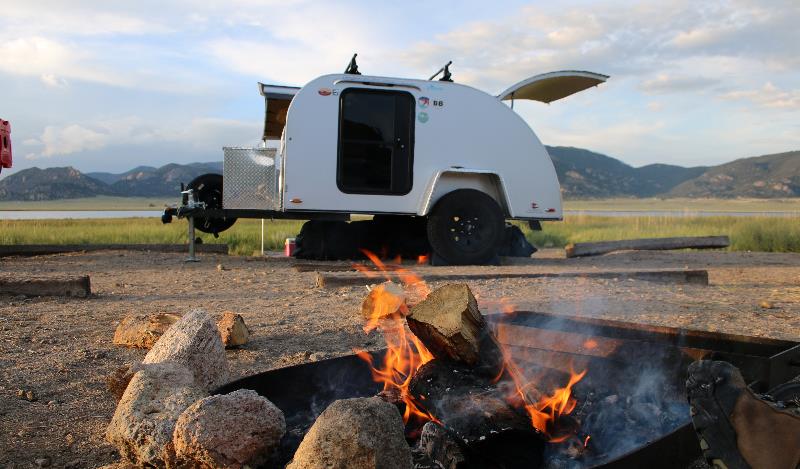
Preparation is key for making your camping meal plan, no matter how you camp.
Tips for Making Easy Camping Meals
Invest in outdoor cooking equipment – your camp “kitchen”
Camping involves investing in sturdy, reliable gear. Some folks buy simple items like a tent and sleeping bags, while others invest thousands of dollars in a pop-up trailer. Both types of shelter will keep you safe and comfortable in the great outdoors, but what about cooking outside? Good weather is never a given. If it rained the days leading up to your trip, the firepit might be soaked or, if you camp in the western US, fire bans will prevent you from having a campfire at all. (Never set up a campfire outside of a designated fire ring or during a fire ban. It’s dangerous and illegal). I recommend non-RV campers invest in a one- or two-burner propane camp stove. Easy to use and clean, ours folds flat for storage when not in use. You can find one at any sporting goods, outdoor, or hardware store and basic models cost under $100. The propane canisters cost only a few bucks and can usually be recycled where purchased. Rain won’t affect a propane flame much, but high winds can make it tough to ignite, depending on where it’s placed.
Whether you have a camp stove or a full RV kitchen, you’ll need pots, pans, and dining utensils to go with it. Family cooking and utensil kits can be purchased at the same places as stoves. These items pack within other items (like Russian nesting dolls) making them easy to transport and store and since they are reusable, won’t end up in a landfill. Keep everything in a storage bin with lid, which can double as a dish washing tub if you don’t have a sink.
Something else to have are sealable, reusable food storage containers in various sizes. These, however, should be plastic because most parks don’t allow glass.
I don’t normally promote specific brands, but something we can’t camp without is our JetBoil® pack. This tiny, but powerful apparatus boils water quickly – less than five minutes. It’s designed for backcountry backpackers who rely on lightweight “just add water” foodstuff packs, but it we love it for our morning coffee. In a hurry to hit the trails? Use it for instant oatmeal, soups, noodles, teas, and hot chocolate.

A camp stove like this 2-burner one from Coleman comes in handy when you can’t (or don’t want to) build a campfire.
PAMAP (Prep As Much As Possible)
Any cooking prep you do before camping is helpful because it means not doing it at the campsite. Who wants to chop onions while flies buzz around? Chop and store them beforehand and they will be safe from flies until needed. You might think, if I have a kitchen inside my RV, why do any advance work? Think of it this way: After a day of kayaking or biking, does your family want to be slicing and stirring or do they want to be eating and relaxing?
Make a batch of your special meat rub, marinade, dressing, or BBQ sauce at home or pour your favorite brand into one of those containers I mentioned earlier so you don’t have to drag all those condiments on the road.
Keep things healthy by chopping a variety of veggies such as lettuce, peppers, cucumbers, zucchini, carrots, whatever, in advance and put into separate containers. Then you can mix and match veggies for salads, cook one or two as a side, add to sandwiches, or make kabobs. (Sure, you can buy pre-cut vegetables, but that adds unnecessary plastic waste to the environment.)
Boil a dozen eggs and put into an egg-safe container. Eat them throughout the weekend as protein snacks or slice one to top a salad or sandwich.
Pre-make pancake batter and pour into a squirtable container. Then squirt onto a hot griddle for a satisfying and easy camping breakfast.
Whatever raw meat you bring, cook it all even if it doesn’t get eaten since cooked foods keep longer than raw. These leftovers easily become Sunday dinner after a long drive home.
For meats not marinated (bacon, sausage, ground beef) store in the freezer and put in the cooler, frozen. As they thaw, they will help keep other foods cold, especially if you can’t get ice right away.
With PAMAP, the possibilities are endless.

No matter what you put in them, kabobs are a great option for your camping menu.
Here are My Ideas for How to Plan a Camping Menu
Camping doesn’t mean boring hamburgers and hot dogs the whole weekend. Sure, they’re easy, but why not stretch your camp cuisine to include other dishes. The outdoors is a perfect place to enjoy your favorite comfort food.
Make any dish the night before, or if it keeps well, the weekend before, and bring it along. It could be anything – casseroles, soups or stews, mac and cheese, loaded baked potatoes, even cookies and cupcakes. Pre-making dishes also gets your family away from over-processed, plastic-packaged foods.
One of my go-to camping dinners is tacos. I pre-make taco-seasoned meat using shredded chicken or ground bison. Then I bring along shredded cheeses, soft-shelled tortillas, and a thick, veggie-filled salsa to avoid dicing messy tomatoes. The only cooking required is reheating the meat and toasting tortillas.
Another favorite dish is chili, which I make in the slow cooker the day before leaving. Chili works great because we can have a bowl as a complete meal or add a spoonful to spice up those boring hot dogs.
My last go-to is baked beans, but I prefer to make a meal out of it by adding meat, either shredded chicken, diced pork, or ground beef. Pre-cook the meat and then add to your favorite baked bean recipe to turn it into a one-pan meal rather than just a side dish.
S’mores are the best. Three simple ingredients – sweet, melty chocolate, toasted marshmallows and crunchy graham crackers – that are easy to pack and put together. However, chocolate bars can get crushed in transit or quickly melt on hot summer evenings. And washing melted chocolate off a kid’s face and hands without running water can be tricky. That’s why I make my Easiest Peasiest S’mores Ever, in advance, by spreading a layer of creamy chocolate frosting between two graham crackers. When it’s time for dessert, we toast marshmallows over the fire and poof! Let the frosting warm up a bit to take them apart to add the marshmallow or enjoy separately.
Camp cooking don’t: Pre-made breakfast burritos. They seem like a good idea but take waaaay to long to re-heat. And no matter how long you put them over a flame, the tortillas get burnt while the middle stays cold. Unless you have an RV oven, I would avoid.
Camping requires reliable gear and detailed preparation, same with camp cooking. While it takes extra effort, having the right equipment and doing the work beforehand means more time for outdoor fun without sacrificing delicious meals.
— Story and photos by Carrie Dow
Please note: RealFoodTraveler.com is a participant in the Amazon Services LLC Associates Program, an affiliate advertising program designed to provide a means for sites to earn a very small amount of advertising fees by linking to Amazon.com while providing convenience for the reader.
Hungry for more? For some ideas about where to camp, here’s a little-known but quite luxe RV park in northern New Mexico. Or, just 30 minutes outside of Savannah, Georgia is CreekFire Motor Ranch you can camp in tents, RV’s or tiny homes. If you don’t like roughing it, here are recommendations for four places to glamp in the west. For some extreme camping, find out what it’s like to go camping in the desert in Egypt.
Plan ahead and keep ideas handy for simple camping meals by pinning them to Pinterest.





0 Comments