





Sipping one is like taking a vacation in a glass! Learn more about the fascinating origin of the classic Pina Colada cocktail in this article by Debi Lander. And make your own at home with two authentic recipes.
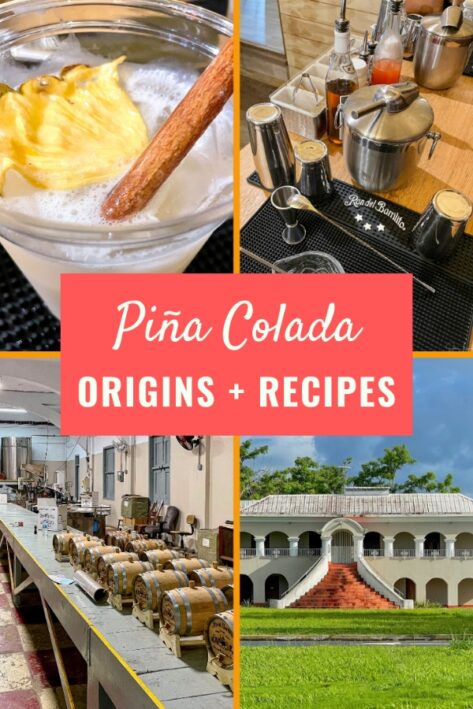
Save this article and two recipes for Pina Coladas to Pinterest. Photos by Debi Lander. Graphic by Canva.com.
Hungry for more? Read about being in a rum competition in Barbados.
Pinning Down the Piña Colada Origin
Memories of my vacations to various Caribbean islands always include a frosty rum-based drink. What’s better than kicking back on a sugar sand beach under the shade of a palm tree, and sipping a rum punch?
The Pina Colada, that sweet concoction of rum, coconut cream, and pineapple juice, hails from San Juan, Puerto Rico. On a recent visit to the capital city, I not only enjoyed a few but learned some stories about its origin.
To truly unravel the story, we need to go back in time and consider the history of rum.
The Spanish established a settlement in Puerto Rico in the early 1500s and Spanish Conquistador, Juan Ponce de Leon, brought the first sugar cane rootstocks. By 1517, the first sugar mill was established, powered by oxen. Around 1548, the mills switched to hydraulic power. By 1776, the island held 643 sugar mills, and Puerto Rico’s sugar crop produced 78,884 barrels of sugar cane syrup.

Barrilito’s Sugar Mill and Factory.
The process involved extracting sugar cane juices and boiling them at high temperatures. The work resulted in crystallized sugar, and the syrup that didn’t solidify became molasses. Sugar cane laborers discovered that mixing molasses with water and exposing it to the sun (fermentation) produced an alcoholic beverage.
I remember the importance of a Triangle Trade route during colonial times when I think back to high school history class. To summarize, molasses was made by slaves in Puerto Rico (and the American colonies), hauled to New England, turned into rum, and shipped to Europe.
This poignant story was summed up in the song from the musical 1776, Molasses to Rum to Slaves. It speaks to the horrors of slavery and addresses the hypocrisy of the Northern colonies. New Englanders did not produce sugar cane, but they certainly participated in the slave trade.
The story of commercial rum production in Puerto Rico starts with Don Pedro Fernandez and a trip he took to France. Don Pedro, a third-generation sugarcane grower, studied the art of brandy and cognac distillation in France. He returned to his island home in 1871, bringing a copper still.
Fernandez used his knowledge of French spirits and produced the island’s first commercial rum within a few years. He called it “Ron del Barrilito,” or the “Rum of the Little Barrel” because he stored it in little oak barrels.
When Spain lost the Spanish-American war in 1898, they gave Puerto Rico to the United States. During the first half of the 1900s, thousands of Puerto Ricans earned a living from working at the sugar mills or regional sugar cane processing centers. In 1917, Puerto Rico became a U.S. territory, and its people became U.S. citizens.
However, when the U.S. enacted Prohibition laws, Puerto Rico became a rum-free zone, (being part of the United States). The Barillito company shifted its operations into manufacturing alcohol for cosmetics and other purposes.
When the ban was lifted, the family returned to rum making using the old methods from Don Pedro’s brandy days. Their tradition involves blending bulk rum with a tiny hint of a secret blend of macerated fruits and spices and barrel-aging techniques. Today, Barrilito remains the island’s oldest producer.

Rum aging in barrels at Barrilito.
I was introduced to Barillito by the head bartender at the Caribe Hilton, who told me about another bartender named Ramón “Monchito” Marrero. In 1954, the Caribe Hilton commissioned Monchito to create a signature cocktail. He reportedly spent three months crafting the fruity blend of rum, coconut cream, and pineapple juice that, according to many sources, Hollywood legend Joan Crawford declared “was better than slapping Bette Davis in the face.” For the next 35 years, he personally prepared and served his cocktail at the hotel’s Beachcomber Bar.
To further complicate the story, the Barrachina, a bar in Old San Juan, also claims that Ramón Portas Mignot, another cocktailer, created the pina colada. There’s even a plaque at the entrance of the establishment to commemorate the birthplace of this popular drink.
Still, some other islanders say that the pina colada dates back to the 1800s and credit the fruity cocktail to Puerto Rican pirate Roberto Cofresí, saying that he served his crew this beverage to boost morale.
Whichever version you believe, come 1978, the piña colada was declared the official drink of Puerto Rico. In 2004, Puerto Rico’s Governor Sila María Calderón presented the Caribe Hilton with a proclamation in honor of the 50th anniversary of the beverage.
Caribe Hilton Piña Colada Recipe
The following is the original Piña Colada recipe recorded by the Caribe Hilton. Today, the bartenders there tweak the recipe, eliminating the heavy cream. They claim customers complain, saying they don’t taste the rum! Also note, the cocktail is prepared and served over ice cubes, not as a frozen slushie.
Ingredients:
2 ounces white rum
1 ounce coconut cream
1 ounce heavy cream
6 ounces fresh pineapple juice
½ cup crushed ice
Method:
Add the rum, coconut cream, heavy cream, and pineapple juice to a blender. Add the ice and blend until smooth for about 15 seconds. Serve in a 12-ounce glass. Garnish with a fresh pineapple wedge and a maraschino cherry.

The Caribe Hilton’s Pina Colada.
Barrilito’s Piña Colada Recipe
I visited the Barrilito rum warehouse seeing rows upon rows of rum stored in former sherry barrels. I saw the lab when the master distiller chooses the quantities to create the rum. The property also includes the Hacienda Santa Ana, the historic home of Barrilito family. I became a fan with their recipe when I took a mixology class at Barillito.
Ingredients:
2 oz. Barrilito 2 Star Rum
4 oz Pineapple Juice
1 ½ oz Coconut Cream
Method:
Place ingredients in a shaker with ice. Shake well and then pour over ice.

The Pina Colada from Barrilito.
-Story and photos by Debi Lander
Hungry for more? Discover more places in Puerto Rico to enjoy a cocktail.





Sure do love a good Pina colada! Thirsty now!