






When you are passionate about wine, you let it take you around the world, experiencing what each region and country has to offer. Travel writer and wine guru, Julie Pegg, takes us along to Hungary over the course of the International Wine Tourism conference. As she does, she discovers wonderful wines to sip, food to enjoy, and unique places to rest one’s head. Let’s go with Julie as she explores Hungarian wine.
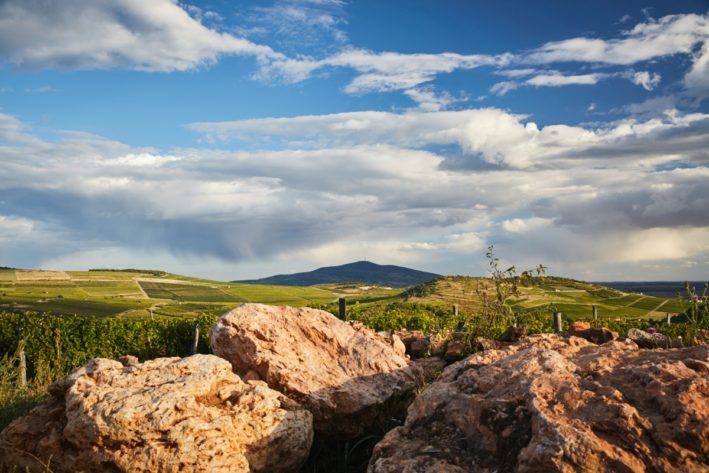
Exploring Hungarian Wine: First we sail
I’m aboard Budapest’s Europa Boat along with a hundred or so International Wine Tourism Conference cast. The stately Danube cruise ship is ours for the evening and I am in my glory. Budapest and Hungary’s wine regions have long been among my bucket list wishes. Upon leaving the dock we glide past the floodlit Parliament Buildings and UNESCO heritage’s Buda Castle. I’m reminded of the glittery fairy tale castle that introduces every Walt Disney movie. All of us ooh and ahh, snapping our smartphone cameras in the hope we do justice to a sight made all the more twinkly due the reflection through the ship’s windows.

Reflections on Buda Castle.
We nibble at fresh Hungarian cheeses and duck canapés in the reception lounge. A black-tied server pours us a local bubbly, which in turn ramps up the meet and greet chatter. Then it’s off to find a seat in the white table clothed dining room where long tables nearly buckle under an astonishingly good buffet. Deer ragout, chicken stew with egg, fish stew with fairy ring mushrooms, noodles tossed with cottage cheese, and “traditional” style soup is rustic and filling fare, yet surprisingly, not heavy. Even the dumplings are feathery light. Tightly-stuffed cabbage dotted with sour cream gets a lift from fresh dill. There are tangy salads too – cucumber and goat cheese in grape seed oil, potato salad spiked with vinegar and spring onions, and sliced tomatoes topped with a smidgen of creamy yogurt. Dessert is available – strudel perhaps? But after the hearty stuff, I am done.
The evening’s wines are, what else, Hungarian. Several are international in grape variety – Cabernet, Merlot, Chardonnay and Sauvignon Blanc. I head straight for the indigenous Furmint and Hárslevelű though, the same grape varieties that underpin the country’s renowned sweet Tokaj wines, (Aszú and Eszencia) with which I’m familiar. These wines are dry and crisp, but still that taste of honey you find in an Aszu peeks through. Earthy, red Kekfrankos and peppery vibrant Kadarka cut a swath through the stews.
The saying “what grows together, goes together” couldn’t be more apropos. These native varietals are the perfect foil for such vigorously flavored dishes. This spread erases any previous notions of Hungarian cuisine being all about paprika, pickles, stodgy dumplings, and goulash that I thought was a stew, not the soup it actually is; or Hungarian wine (save exquisite Aszu) being the mediocre cheap red Bulls Blood (Egri Bikaver) wine that hit our shores, by the tank load during Communist rule, and which, in my university days I downed in almost equal measure.
Those big ole’ iron tanks of mass produced plonk now lay empty, rusting in fields of weeds. Oak ageing and stainless steel fermentation are the modes of modern winemaking. “The Wines of Hungary Grand Tasting,” one of the conference events, affirms the rigor and effort that goes into estate plantings and upping the quality of today’s wines. Even with more than thirty years in the wine trade, my knowledge of the new face of Hungarian wine is limited. As a result, my wine scribbles cram every line, and overflow into the margins of the tasting booklet.
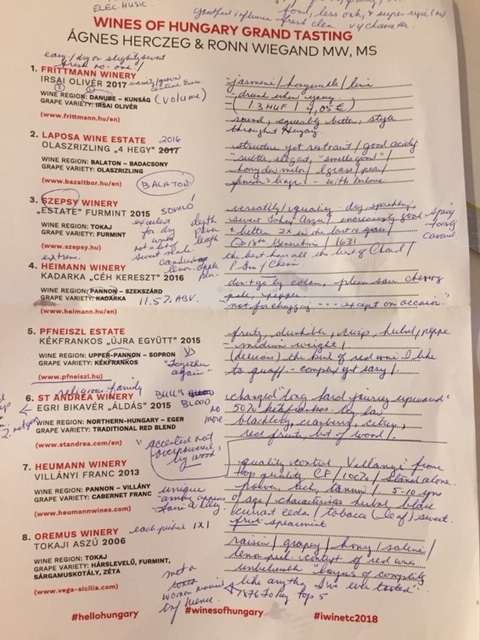
Just a few notes about Hungarian wine.
A varietal called Irsai Oliver (2017, Frittmann Winery) packs the palate with delicious notes of honeysuckle and lime. Olaszrizling (2016, Laposa Winery), is no relationship at all to German Riesling, but shows a crisp aromatic fruitiness akin to Muscat. Organic Kekfrankos Ujra Egyutt 2015 from the Pfneiszl sisters, Birgit and Karin, who claimed back their family’s land after the dissolution of the Eastern Bloc, is just the kind of easy but complex red wine I like to quaff. Meanwhile St. Andrea’s Egri Bikaver Aldas 2015 testifies to the “long hard struggle upward” from the state-made Bull’s Blood of yore to the complex and sophisticated wine it is today.
Exploring Hungarian Wine: Then we sip at lunch
The first lunch of the trip following the conference is at fashionable Kedves bistro at St. Andrea winery in Eger. I nearly make a meal of the housemade grainy bread and sweet/sour pickled red and green cabbage- they are that good. And we’re in luck. Gyorgy Lorincz, the brains behind the new style of Bull’s Blood and the country’s oenological guru and wine emissary, is in the house. Meeting the man seminal to Hungary’s developing wine industry, is a bit like saying “hi” to a local rock star. His son, Gyorgy Lorenzc Jr., is one of the young guns working hard to raise the bar for the country’s wine. Unlike their parents or grandparents, Hungary’s young winemakers are free to roam the world and learn from other winemaking regions. Lorinzc Jr. did just that before heading back to further develop his father’s footsteps at St. Andrea.
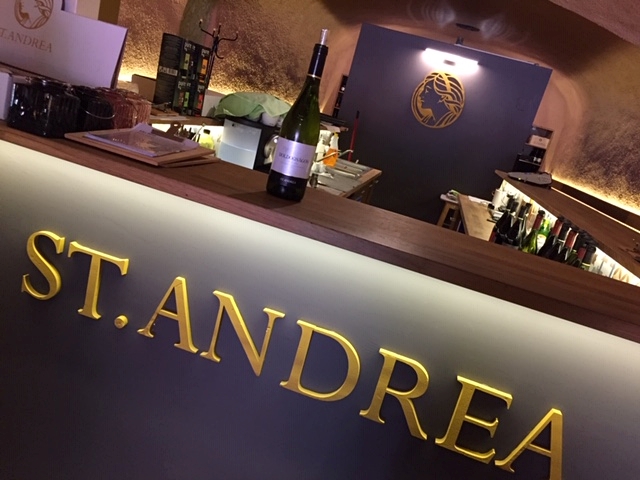
St. Andrea tasting bar.
Emerging from behind the winemaking shadows too, are the ladies, for instance the Pfneiszl sisters, and the young Vivien Ujvari. Located northeast, the town of Mad Barta Prince has it all – grandeur, tastings, accommodations, the steep and stony Old King Vineyard, (Oreg Kiraly dulo) and Ujvari, whose stomping turf included Australia, New Zealand, and Napa Valley. In 2006, Ujvari joined Barta where she turned her traveling expertise toward making the increasingly popular dry Furmint wines as well as a sweet Tokaj. What a privilege it is to nab a taste while there, of Ujvari’s exquisite Eszencia.
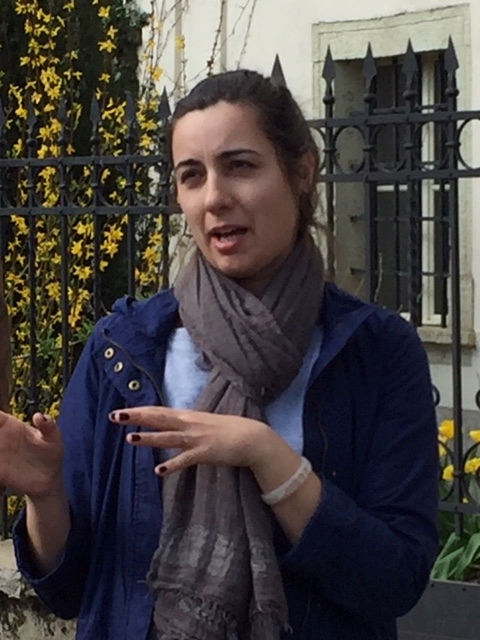
Winemaker, Vivien Ujvari of Barta Prince Winery.
Exploring Hungarian Wine: Then we sleep
Staying a day or two in one of the Barta suites or guesthouse allows you to kick back too. You can enjoy the pretty garden after visiting other nearby wineries, fire up Hungarian sausages on the outdoor grill and sip another of Ujvari’s wines, perhaps the Harslevelu, at which she also excels. (Not to miss, in between wine wanderings is Mad Synagogue, a memorial to commemorate the Jews who were forced from the area during World War ll).

Barta Prince Wines from Old King Vineyards.
Exploring Hungarian Wine: New day, new wines, and lunch
At Gusteau Restaurant the following day, we enjoy two fine 2015 Furmint wines – one from Szepsy, a family winery, the other from Demetervin, which also offers guest accommodations. But it’s the three-course lunch, homage to both modern cooking and traditional ingredients that bowls me over. Jerusalem artichoke soup with basil and pear precedes thick slices of duck breast (cooked perhaps sous vide?) so tender there’s barely need for a knife. There’s attention to detail – the ethereal nugget of black pudding and slivers of mangold, a German type of beetroot that accompany the duck. I love the chef’s use of grains too. Millet, rather than the usual spaetzle (noodles) is the starchy bit and the sweet spot is quinoa, chocolate, plum and almond “cake.”
And to accompany, instead of Aszu, is a delicate elixir from the Szamorodni grape (Szent Tamas 2013). No wonder Gusteau garnered Hungary the restaurant of the year award in 2016. A mere cork toss from the restaurant and Mad Winery lies the Botrytis Hotel with its sleek modern rooms and a bar, in case a post-prandial sip of palinka, Hungary’s answer to grappa, is required. I go for a shot of quince palinka.
Exploring Hungarian Wine: Dinner and a castle
At Castle Hotel Grof Degenfeld it’s a climb up the vineyard slope to a tiny chapel before returning to another sumptuous wine dinner, then bedding down amongst old-fashioned splendor. The casement window opens to misty spring air and a view over the vineyards that are just starting to bud.

A charming white chapel in the vineyard at Degenfeld.
The last two days have been truly magical.
This whirlwind visit leaves me thirsting for more. I stay on in Budapest for a couple of days at the well-appointed and modern Continental Hotel. I try savory rosé wines as well as more whites at DOBLO and DiVino Wine Bars, and drink in the funky vibes and the crazy mismatch décor of Szimpla Kert, one of the “ruin” bars that have sprung up in derelict buildings. I happen upon the Sunday organic market in Szimpla Kert’s “backyard,” where I grab a beer and purchase paprika made by local farmers, their tangy cheeses, paprika-laced sausages, headcheese, and homemade pickles for the late afternoon train to Vienna.
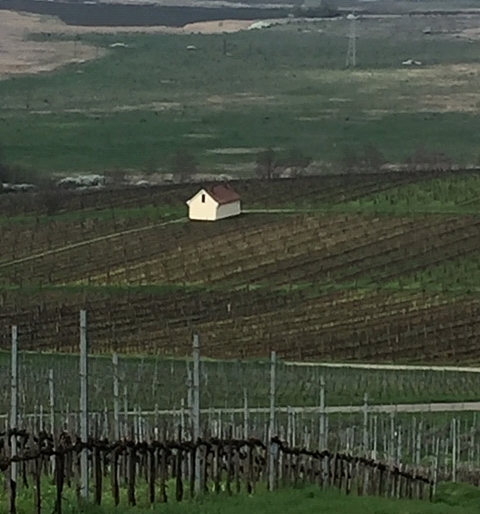
A beautiful vineyard view from the Degenfeld hotel room.
2019 will be the thirtieth anniversary of the fall of Communism in Hungary. As the train pulls away from Keleti station, I can’t think of a finer way to celebrate than to return for more wine and gastronomy in the country’s modern era. After all, it’s true that food and wine truly unite a people. — Story and photos by Julie Pegg.
If you go:
Multiple Airlines fly to Budapest from several national and international cities. It’s best to check out on Google for flights. There are also frequent trains from Vienna or Prague to Budapest. www.trainline.com is a reliable website.
Very good travel websites for Hungary: hellohungary.com and tastehungary.com
Hotel and Restaurant Info:
Degenfeld: hotelgrofdegenfeld.hu/en/
Barta Prince: bartapince.com/en/accommodation/barta-guesthouse
Gusteau Restaurant: gusteaumuhely.com/en/home
Kedves Wine Bistro Eger: visiteger.com (provides info on all of the Eger region)
I, and others on the trip, were guests of Wine a’More: http://www.wineamore.hu/en/

Exploring Hungarian wines includes understanding the stages of grapes. This and the cover image of grapes in various stages in the hand are both courtesy of Adrienn Tóth.
BONUS: Tokaj Aszú
The 10th of December is heralded as Tokaj Aszú day each year. Tokaj Aszu is one of the most exclusive and greatest sweet wines of the world. Dániel Kézdy, the brains behind founding Aszú Day, explained that people not usually keen on sweet wines changed their minds after tasting aszus. “After the intitial aszu experience, you are bound to re-evaluate the whole category,” Kézdy added.
The Tokaj wine region, situated in North East Hungary, has a long tradition of making wine. It actually was the world’s first delimited wine region with records dating back to 1737. The secret to its exceptional sweet wines’ incomparable character lies in five factors: soil, microclimate, botrytis native varieties, and technology.
The bedrock wine terroir of Hungary is of volcanic origin. It endows wines with minerality and tight structure. In autumn the microclimate influenced by wet weather and the humidity generated by the rivers is conducive to the onset of Botrytis cinerea or noble rot, responsible for the shriveling of berries. In the autumn, these aszú berries with high sugar concentration are picked manually over an extended period lasting for months. All winemakers have to follow a carefully stipulated technology and the wines can only be made from the six permitted varieties grown within the region. The aszú berries are macerated in the fermenting juice or base wine of the same vintage. Residual sugar content must reach at least 120 gram/liter and the wines have to be aged in wooden barrels.
Each Tokaj Aszú day, the wines are paired with a themed food such as foie gras or Szechuan dishes. What are seemingly unlikely pairings show themselves to be a perfect match that one might not otherwise have explored. Follow #aszuday on social media to see what the 2019 pairings will be and plan to shop, sip and savour.
Hungry for more? You’ll enjoy these other wine-centric articles by Julie Pegg.







0 Comments