











As you plan what to pack, where to stay, where to eat, and what to do on an international trip, also consider how you’ll spend your money. Should you exchange currency? Should you stick with a credit card? What about using your debit card abroad? MoneyCrashers.com provided some practical, and maybe surprising guidance on the foreign transaction fees to avoid (if possible), when you’re spending your money, abroad.

Photo by Pixabay.com
4 Foreign Transaction Bank Fees to Watch Out For When Spending Money Abroad
Traveling abroad is exciting, but it can be filled with unanticipated expenses even the savviest travelers don’t expect: Hotels charge more than advertised because of extra fees; bottled water costs twice what you expected; your tour bus drops you off, but you still need a cab to get to your next destination. Plus, you find yourself buying souvenirs at every market, often pulling out your credit card abroad. These added expenses are obvious, and you can account for them by adding 10% to your estimated travel budget.
But, unfortunately, there are also hidden international transaction fees you may not have anticipated. One extra surprise may be paying your bank extra fees to access your own money. For instance, when you use an ATM or go to the currency exchange counter, you may learn later you were charged excessive penalties.
Unanticipated costs shouldn’t diminish an amazing travel experience. A major part of traveling is exploring quaint towns, museums, and restaurants you’ve never seen and quite possibly couldn’t have planned for ahead of time. The good news is that not all fees are unavoidable. Here are the four bank fees most travelers end up paying, and how best to avoid them.
1. Currency Exchange Fees
When you visit a foreign country, you’ll likely want to use the currency from that country. But the cost to exchange currency varies widely based on location.
The worst places to exchange currency are in your home country, at the airport, and at your hotel. At these locations, it’s a seller’s market, and vendors can hike prices because clients are paying for convenience. Plan ahead to avoid putting yourself in a situation where you have to use those options.
Perhaps surprisingly, the best exchange rates are often at ATMs, but only certain ATMs. An ATM in a convenience store, hotel, or club will often exchange at a worse rate than you’ll find at the airport. ATMs at major banks typically have reasonable rates. Research online or call your bank ahead of time to determine its exchange rates.
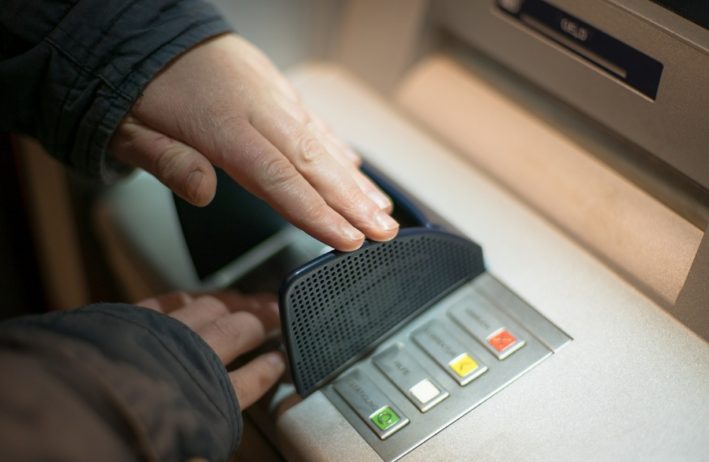
Photo by Pixabay.com
2. International ATM Withdrawal Charges
If you use some banks or ATMs for your currency, you’ll be paying the following ATM withdrawal charges, according to research by NerdWallet and NomadicMatt:
- A fee charged by the ATM’s owner (often $1 to $3 USD)
- A fee charged by your bank for foreign transactions (often $3 to $5)
- A currency exchange fee (1% to 3% of the withdrawal)
Adding those up, if you took out $100 each day, you’d be spending $5 to $11 daily just to access money that was already yours. That’s $70 to $150 on a two-week vacation. Fortunately, you can find better rates than those fees.
Beat the ATM owner fee with a debit card that comes with ATM fee rebates. You find these primarily from credit unions and Internet-only banks that don’t have a network of branches or ATMs of their own.
Beat the international ATM fee by joining a bank that’s part of the Global ATM Alliance, which has banks with no ATM fees in its system. That means, if you use ATMs at member banks with a card issued by member banks, they charge you no fees for the withdrawal. As of this year, Bank of America is the only U.S. bank that’s a member.
Beat the currency exchange fee partially by selecting the “local currency” option. You’ll still pay an exchange fee, but it should be low. The local currency rate is always better than the “home currency” option.
3. Foreign Transaction Fees
Using a credit card to pay for purchases abroad is convenient and safe. You don’t have to bother calculating exchange rates. You don’t need to carry and keep track of cash — and that’s cash you don’t have to worry about getting mugged or pick-pocketed for. Even better, you don’t have to worry about getting into trouble because you’re just 10 units of local currency short to do what you need.
But you pay for that convenience and safety of using your credit card abroad, and too often, you pay a lot. Most cards charge a 1% to 3% foreign transaction fee, according to WalletHub. That doesn’t seem like a lot, but that’s on top of your finance charges, membership fees, and any other costs associated with using plastic at the register instead of paper.
You can avoid this with due diligence and a decent credit score. WalletHub also reports that about 25% of available credit cards have a version that charges no foreign transaction fees, and 60% of those have no annual maintenance fee.
Read the fine print, though. Some of those cards hide the fee by inflating the exchange rate surcharge. Remember that deals change frequently, and which credit cards you qualify for depends on your credit score. Always research cards carefully to find the best deal for you. Bonus points if you find a card with great travel rewards while you’re at it.
4. Debit Card Fees
The above fees also apply to debit cards. Debit cards are convenient and safe, but they may charge you substantial fees for using them abroad.
The solution is also the same: Choose and use the right card for the job. But because debit cards are marketed and sold differently from credit cards, the process for making that right choice is different.
Unlike credit cards, debit cards aren’t offered directly to consumers. Instead, they’re part of a convenience feature for opening a bank account. Therefore, you’ll be shopping bank accounts instead of cards.
Look for any or all of the following features:
- Low or no foreign transaction fees
- ATM or debit card fee reimbursement
- A guaranteed low exchange rate for foreign currency
- Extra fraud protection while abroad
- Bank locations in the country you’re traveling to
- Membership in large ATM networks, like the Global ATM Alliance
Not all of these features will be listed on the simple features lists most banks offer on their sites or in person. You’ll sometimes need to dig deeper to find this information. Do your research well before your trip so you embark with the right plastic in your wallet.
Final Thought
While you’re getting detail-oriented and mission-driven about how to get and spend money while you travel, take a close look at your credit card rewards. Knowing what kinds of purchases give the largest rebates or accumulate the most air miles can help you fund your next travel adventure.
Just be sure to check the international transaction fees for each case. For many cards, even with the rebates, it becomes a net loss when you use them internationally. There’s no point in accumulating 3% cash back when a transaction costs you a 5% overseas fee.
Now, start making those travel plans with the help of TripAdvisor!
Hungry for more? Find out what the best frequent flyer programs are, tips for safe and healthy travel, 6 ways to travel cheap, and while we’re at it, some interesting facts about how past presidents fly.
Pin these tips to Pinterest so you don’t forget them when you travel.


Please note: RealFoodTraveler.com is a member of AWIN, an affiliate marketing organization that pairs publishers with advertisers whose content matches the needs of the readers. Affiliate marketing programs are designed to provide a means for sites to earn a small amount of advertising fees by linking to to their advertisers while providing convenience for the reader.









0 Comments