





We welcome writer Valarie Johnson to Real Food Traveler with an inspiring and introspective article of discovery on a recent trip to Roatán, Honduras.

Save this article to Pinterest to help plan your trip to Roatan, Honduras. Photos by Valarie Johnson and Anthony’s Key Resort.
Hungry for more? Plan your trip to Peru.
Roots of Wonder: A Journey Through Culture, Cuisine, Connection, and Conservation in Roatán, Honduras
A dear friend recently, and unexpectedly, invited me to join her and a dive group from A-1 Scuba and Travel on a trip to Roatán, Honduras. Her husband couldn’t make it, and she extended the invitation with a gentle nudge: “You need this adventure.” Initially, I envisioned it as a peaceful getaway, a chance to dine on international delights together, snorkel or perhaps scuba dive a bit (once I took a much-needed refresher course), recharge my batteries, and perhaps gather inspiration for my eco-mindfulness book and next retreat. What I didn’t anticipate was a profound transformation. Roatán didn’t just give me an experience; it gave me purpose.
From my first eye-to eye contact diving with a sea turtle to my last mindful moment enjoying yucca fries under the shade of a swaying palm, I felt a profound shift. The island awakened something in me, a deeper commitment to connection—to people, to cuisine, to nature, to the present moment, and to the preservation of all that sustains us.
Like any adventure abroad, mine included a couple of traveler’s bumps. Despite using a water purification bottle and being mindful about food and hygiene, I did indulge in a few iced beverages and fresh salads. I also had close interactions with wildlife—including monkeys, sloths, and the national bird of Honduras, the scarlet macaw—which may have posed additional exposure risks. These experiences, while cherished, likely contributed to a brief bout of digestive issues upon returning home. According to the CDC, travelers to Honduras are advised to be cautious with food and water, avoid unpeeled fruits and raw vegetables, and ensure drinking water is purified. Still, even with these tummy troubles, I wouldn’t trade a moment. The beauty, wisdom, and soul-stirring wonder of Roatán far outweighed any discomfort.
This is a story not only of real food travel but of awe and appreciation for everything about the food, one told in four parts: culture, cuisine, connection, and conservation.
CULTURE: A Living Mosaic Beneath Caribbean Skies in Roatán, Honduras
Roatán’s culture is a living, breathing mosaic of histories, languages, and legacies. The island’s soul pulses with Garifuna drumming, Afro-Caribbean resilience, colonial layers, and Latin warmth. Whether through a passing “buenas” greeting or the rhythmic sway of Punta dance during Fiesta Evening at Anthony’s Key Resort, every moment in Roatán is steeped in story.

An aerial view of Anthony’s Key Resort. Photo courtesy of Anthony’s Key Resort.
The Garifuna people, descendants of West African, Carib, and Arawak ancestry, have lived on the island since 1797. Their culture—recognized by UNESCO as a Masterpiece of the Oral and Intangible Heritage of Humanity—is celebrated every April during African Heritage Month. During my visit, I was lucky to attend this celebration, and even got to dance with them. Women in vibrant skirts and men with drums moved rhythmically, honoring the arrival of their ancestors in Honduras. The dance, language, food, and stories I experienced that evening will stay with me forever.

The author participating in traditional Garifuna musical festival celebration and dance.
The Garifuna are not only culture bearers; they are stewards of ecological and culinary wisdom. They fish, grow cassava, and harvest coconuts with sustainability embedded in their traditions. Their homes and songs, along with their foods and rituals, echo a respect for land and sea that modern life often forgets. A trip to the Roatán Museo de Historia helped me to appreciate how the food became such an important aspect of today’s culture on the island.
Roatán also reveals the soft edges of island life through language. Spanish and English are both widely spoken. I was able to communicate with most people in both English and Spanish. It’s the melodic blend of Creole English, however, that lingers in your ears like a lullaby. The island’s laid-back, “island time” rhythm fosters a culture of presence—something that mindfulness practitioners like me cherish.
CUISINE: Savoring Stories of Sea and Soil
My culinary journey in Roatán was a voyage through history, ecology, and sensual delight. Every meal, especially those at Anthony’s Key Resort, told a story—a layered narrative of migration, agriculture, biodiversity, and island ingenuity.
Let me begin with the Sopa de Caracol (Conch Soup), a beloved Garifuna dish. This rich soup, simmered with coconut milk, yucca, green plantains, and tender conch, carries flavors as deep as the sea itself. Eating it, I imagined generations of women stirring iron pots over open fires, seasoning with love and wisdom passed down for centuries.
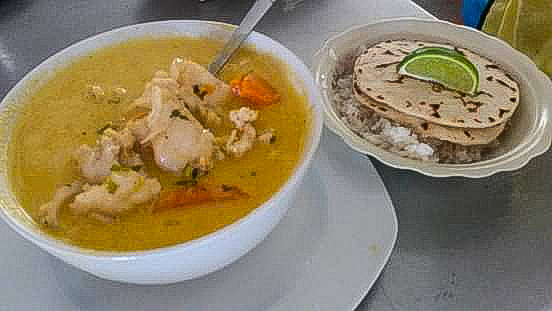
Sopa de Caracol with tortillas and rice on the side.
Tapado, another Garifuna specialty, is a seafood coconut stew brimming with crab, fish, shrimp, and ripe plantains. This dish embodies the island’s bounty and the community’s deep connection to the sea. It was served at Fiesta Evening, along with Machuca (mashed green plantains pounded with coconut milk), both celebrating the ingenious ways the Garifuna people have sustained themselves from land and sea.
Equally unforgettable was the Whole Fried Red Snapper, caught fresh and served with coconut rice and fried ripe plantains. The fish was so fresh it tasted like the reef had whispered its essence into the flesh. Each crispy bite, seasoned with lime and island herbs, was a tribute to the reef’s vibrancy and fragility.
Then came Baleadas – warm, thick tortillas filled with refried beans, cream, and cheese. Street vendors and home cooks alike offer variations of this dish, considered one of Honduras’ most iconic. I delighted in its simple comfort while watching a sunset paint the sky in hues I can only describe as divine.
Other delectable and iconic island dishes I enjoyed included the Catrachitas, two crispy corn tortillas topped with refried beans and Honduran white cheese.
Plant-based meals were surprisingly savory for this pescatarian. The cauliflower tacos (corn tortillas, grilled cauliflower, salsa and guacamole), cheese quesadillas, lentil-stuffed peppers, Honduran black bean burger and oh-so-yummy coconut beans and rice served with yucca fries were all sensational and I found myself craving more the next day.

A traditional cheese quesadilla served with guacamole, sour cream and salsa.
I must also mention the Coconut Bread and Johnny Cakes. Both are humble staples, yet they hold the sweet memory of island grandmothers, kneading dough as waves crash nearby. These breads, especially when paired with a cup of locally brewed Honduran coffee, offered grounding warmth before my morning meditations.
And then there were the sweet treats: conchas, pan dulce, carrot cake, pineapple cake and chocolate ice cream. Whichever I chose nightly, it was the perfect close to an island meal.
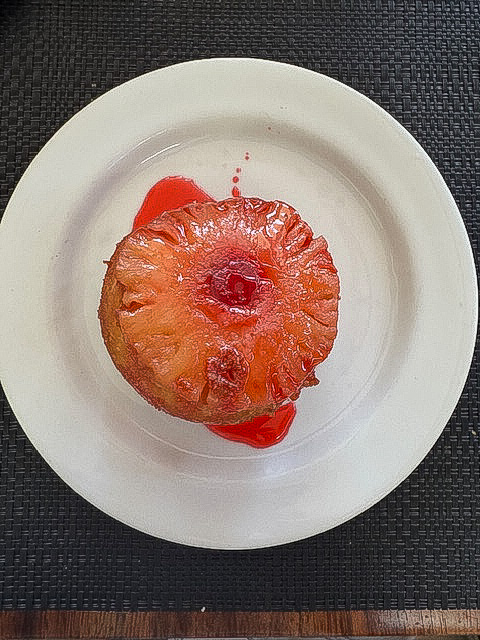
Pineapple cake was a fitting dessert.
Of course, no Roatán culinary journey is complete without a Monkey Lala. This frosty cocktail—a decadent blend of vodka, Kahlúa, coconut cream, and chocolate—was born at the Frangipani Bar in Anthony’s Key. Sipping one as the sun dipped below the horizon, I felt utterly immersed in the sensual richness of the island.

Monkey Lala is a must-have drink.
CONNECTION: Sea, Self, and Soul in Roatán, Honduras
Each day in Roatán began with silence. I would rise early, practice yoga on the deck of my bungalow, and meditate to the sound of lapping waves and chirping birds. The gentle rhythm of nature, combined with the kindness of those around me, reminded me of our universal desire for peace.
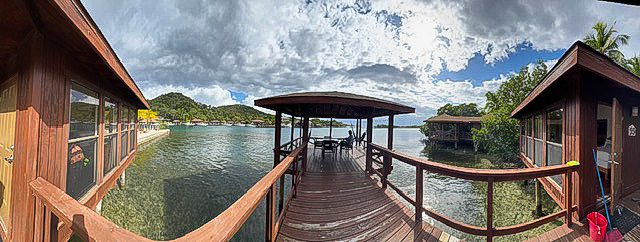
The author meditated and wrote on the balcony of her bungalow at Anthony’s Key Resort. Photo courtesy of Anthony’s Key Resort.
Scuba diving brought a different kind of presence. As I descended into the sapphire depths of the Mesoamerican Barrier Reef—the second largest in the world—I experienced life in suspension. Coral gardens swayed with sea fans, parrotfish shimmered past, and, in one heart-stopping moment, a sea turtle glided by, locking eyes with mine. In that gaze, I felt the pulse of the planet.
Another moment of pure magic occurred at the dolphin sanctuary. As a certified mindfulness coach, I often teach the importance of interbeing—Thich Nhat Hanh’s concept that we are all deeply interconnected. That teaching came alive when a dolphin swam up beside me, playful, curious, aware. We too, locked eyes in a magical and life-changing way. I knew it was also a healing moment for me. My father and soul buddy sadly passed 4 months ago… Somehow, in that precise moment of connection with the dolphins, I felt a sense of grace, peace and acceptance. The encounter felt less like tourism and more like communion.

Valarie and Tilly the dolphin connecting at the Dolphin Sanctuary in Bailey’s Key.
I also visited Roatán’s wildlife sanctuary, where rescued monkeys, birds, and sloths live in care and safety. Holding a cuddly monkey, shaking hands with a sleepy sloth and listening to the guide’s passionate explanation of conservation efforts moved me deeply. In a world racing toward consumption, Roatán offers a reminder of compassion.
Whether on land or in the sea, the message was clear: everything is connected. Mangroves shelter reef fish, coral reefs feed coastal communities, and people thrive when nature thrives.
CONSERVATION: Mindfulness in Action
Roatán is not just a paradise for tourists. It’s a frontline of ecological resilience and grassroots environmentalism. The Roatán Marine Park works tirelessly to protect the island’s marine ecosystems, combat overfishing, and educate locals and visitors about sustainable practices. Their work is especially critical as tourism rises.
Eco-conscious practices at Anthony’s Key Resort also deserve praise, as I learned from the class I took at the Roatán AKY Lab. From reef-safe sunscreen initiatives to lionfish hunting excursions (lionfish are an invasive species threatening local biodiversity), the resort demonstrates that responsible tourism is possible. I was fortunate to meet a doctorate student there specializing in dolphin communication and protection. Of all the places in the world she could live and study to complete her degree, she chose the Institute for Marine Sciences in Roatán due to the natural sanctuary and safe treatment of the species.
Mindfulness, when practiced beyond the cushion, becomes stewardship. Conservation is not separate from spirituality; it is a spiritual act. As a certified restorative yoga teacher and LARASA-certified cultural communicator, I see clearly how respect for nature, heritage, and each other form a sacred triangle of harmony.
From biodegradable straws to recycling programs, from coral restoration projects to storytelling circles that honor Indigenous knowledge, Roatán is making quiet, beautiful progress.
The Heart of the Island
When I boarded my flight home from Roatán, I didn’t just carry home souvenirs or photos. I carried the taste of coconut bread, the sound of Garifuna drums, the stillness of deep-sea meditation, and the memory of a dolphin’s intelligent eyes.
Roatán reminded me that food, culture, and nature are not separate threads—they are a braid. And to be truly well, we must nourish all three. If you seek a destination that feeds your senses and stirs your soul, I offer this: Roatán is calling.
And if you answer, come with an open heart. Bring your appetite. Bring your breath. Bring your gratitude. And for the sake of the planet leave only footprints in the sand.
To learn more about visiting Roatán, utilize their tourism bureau website.
-Story and photos, except where noted, by Valarie Johnson
Hungry for more? Discover local cuisine of Guatemala.





0 Comments