











It’s some of the most stunning scenery, with ocean-view drives that are as thrilling as they are nail-biting. Carole Jacobs, Real Food Traveler’s Health, Fitness & Spa Editor, has created a handy 4-day itinerary that takes advantage of the best that a summertime Big Sur California road trip can provide. Be sure to take advantage of the delicious recipe Carole procured too, linked below, that lets us all have a taste of Big Sur at home.

Save this article and itinerary to Pinterest to help you plan your summer road trip to Big Sur. Graphic by RealFoodTraveler.com.
4-Day Summertime Big Sur California Road Trip
If you’re looking for a spectacular way to kick off summer, start your engines for a scenic journey along the Big Sur Coastline.
Come June, the tumbling hillsides have begun to fade from emerald-green to the golden blond of a lion’s mane, signaling the end of spring and the start of summer. Phosphorescent orange and yellow poppies and purply lupine dot the craggy glens, and waterfalls still heavy with snowmelt thunder and spray from shadowy forests.
Although you may experience morning and late afternoon/evening fog (locals call it the June Gloom, which typically retreats by mid-morning and rolls back in late afternoon), some say the fog, manifesting as wispy fingers that reach up and over the mountains and cloud the sea, turn Big Sur into an ethereal Japanese landscape.
In a good news/bad news scenario, because of the current political situation, tourists from other countries don’t want to visit the U.S. which means that while crowds are much lower, businesses really need those tourism dollars. Many are also waiting out Big Sur highway road closures but there is still plenty to see and do outside of those areas.
Traditionally, Big Sur is also more crowded in June than during the rainy wintry months, but even that has an upside: Every establishment — cafes, bakeries, restaurants, lodges, boutiques, art galleries, wineries, tasting rooms — is open for biz and the local farmers markets are overflowing with the spring bounty.
In addition, there’s a special event, food, wine, and art festival around every corner: Carmel’s Art Walk and Carmel-by-the-Sea Culinary Week, featuring immersive food and wine experiences, curated menus, and special offers at 30-plus participating restaurants; the first-ever walking tours of the Point Sur Lighthouse Station and Monterey’s Mozart and Jazz Fests. Or come for the July 4th festivities and fireworks in Carmel, Pacific Grove, and at Fishermen’s Wharf in Monterey.
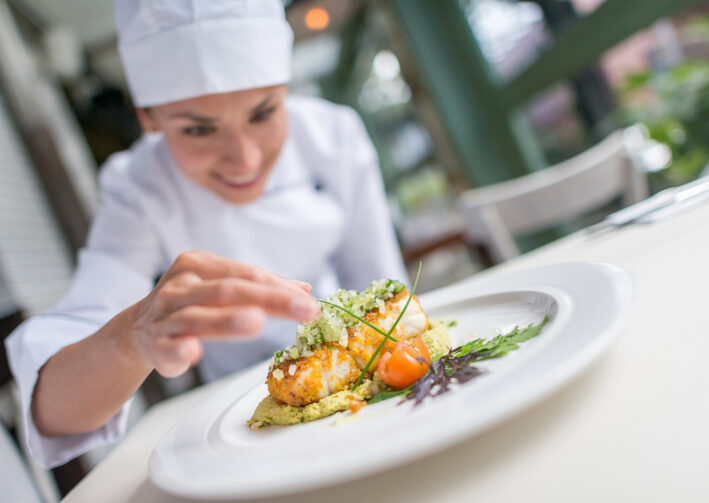
Big Sur Culinary Week is one of the events to try to attend while on a road trip. Photo courtesy of Carmel, California.
In June, local rangers and naturalists are also out in force to lead hikes, point out local flora and fauna, and share gossip about famous natives. Learn why resident author Henry Miller, who moved to Big Sur for peace and quiet finally fled. (Hint: His literary pals came for a visit but stayed –forever.)
After a trip to the coast, you’ll probably relate. This 4-day journey takes you through Big Sur’s storybook towns and along its ruggedly beautiful coastline, where wave-sculpted cliffs and scalloped strands echo the age-old conflict between sea and shore.
4-Day Itinerary for Enjoying Summer in Big Sur
Getting there: Carmel-by-the-Sea, your home base, is 11 miles from Monterey Regional Airport; 1 1/2 hours from San Jose International Airport, and two hours from San Francisco International Airport and Oakland International Airport. Visit during the week to avoid the weekend crowds.
MONDAY afternoon: Arrive in Carmel-by-the-Sea
Snapshot: Nestled along an idyllic stretch of beach just off Big Sur Highway, Carmel-by-the-Sea was founded in the early 1900s as an artist colony, or what the Los Angeles Times called a “Hotbed of Soulful Culture, and Vortex of Erotic Erudition Where Author and Artist Folk are Establishing the Most Amazing Colony on Earth.”
Today, while the impossibly picturesque village still resembles a life-size Thomas Kinkaid painting (he opened his first gallery here) the starving artists are long gone (Carmel’s median housing price is $2 million) as is the erotic “vortex” (the city’s median age is 69).
But then as now, Carmel lures droves of creatives seeking California’s take on terminally quaint. In summer, Carmel’s population (3,069) quadruples, and A-listers like Taylor Swift and Bradley Cooper were recently seen canoodling on the beach (although not with each other).
Carmel’s one-square-mile is crammed with storybook cottages and a labyrinth of hidden passageways and courtyards where 100 art galleries, dozens of curlicue-roofed boutiques, 10 adorable bakeries, 60 restaurants, 18 wine-tasting bars, 20 wineries, and 40 lodging ops peek out from tangles of flowers and vines. Edging town is sugar-white Carmel Beach, a local hang for swimming, surfing, volleyball, dog-walking, the nightly sunset watch, and evening campfires.
How Carmel Became NIMBY
In 1906, a San Francisco earthquake sent scores of artists and writers fleeing the city for Carmel. Instead of numbers, they gave their homes names and enacted ordinances to preserve the coastal hamlet’s charm.
Today, Carmel’s ordinances ban everything from billboards and chain restaurants to high heels (so women who trip and fall on Carmel’s’ cobblestones streets can’t sue the city). Drivers who hit a local tree and leave the scene are charged with a hit-and-run.
Also banned are street addresses and mail delivery, a practice that lately has run up against Amazon, Instacart, and other 21st century necessities requiring a physical address (like connecting to water, utilities, and the internet, getting a real ID, opening a bank account…)
But old habits die hard. In a recent survey, 59% of residents said they didn’t want addresses, even if it meant occasional inconveniences (like having to stand in the middle of the street to wave down delivery trucks –- dicey at night given Carmel’s bans on streetlights and sidewalks).
Ironically, one thing Carmel hasn’t banned is dogs, who are allowed on the beach and in many hotels, shops, and restaurants. Carmel even has a dog-only drinking fountain called The Fountain of Wolf.
Settle in: Carmel is just minutes from popular attractions like Pacific Grove, 17-Mile Drive, Pebble Beach, and Big Sur Highway, and has countless lodging ops.
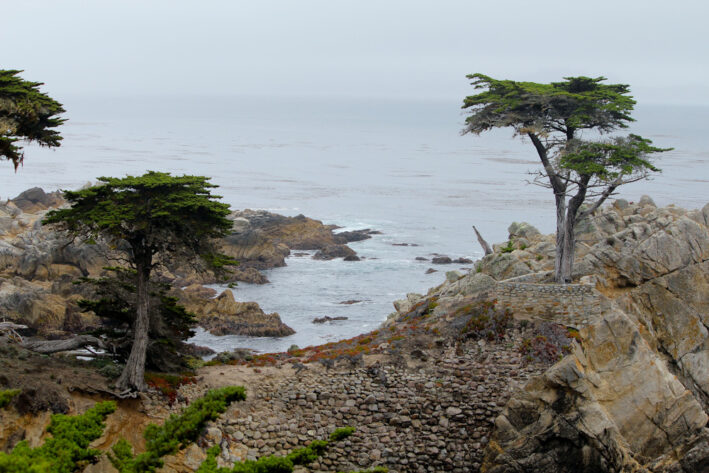
Traveling on the 17-Mile Drive is a must while on a Big Sur California road trip. Photo courtesy of Pixabay.
Splurge on a stay at one of Carmel’s popular guest ranches:
Mission Ranch: Set on an 1800s dairy farm owned by actor and longtime resident Clint Eastwood, this 22-acre rustic-chic spread is anchored by a 19th century farmhouse, with lodging in a converted barn and cottages. Sweeping views overlook a sheep pasture, bird-filled wetlands, and the Pacific. Facilities include a pool, tennis courts, fitness center, and restaurants.
Carmel Valley Ranch: The centerpiece of this 500-acre luxury ranch is a contemporary lodge with walnut floors and floor-to-ceiling windows that frame rolling hills and expansive valley views. Rooms have cathedral ceilings, travertine fireplaces, and large decks, and facilities include an apiary, lavender fields, vegetable and flower gardens, a hilltop yoga platform, a pool, tennis courts, a championship golf course, horseback riding, stables, restaurants, and the full-service Spa Aiyana.
3-5pm: Roam around the ranches and come in for complimentary afternoon wine and cheese.
Dinner: In recent years, Carmel has become a foodie haven, boasting more restaurants per capita than any other small town in the U.S.– from flip-flop casual to Old World elegance, Mediterranean, Italian, and modern Californian. Farm-to-table and sea is de rigueur in a town surrounded by organic farms, dairy, ranches, orchards, and the Pacific, and the following three restaurants are guaranteed to get you in a Carmel state of mind.
Valley Kitchen at Carmel Valley Ranch: You won’t forget you’re on a working ranch here, with produce from the on-site garden; honey from the on-site apiary, and house-made wine and cheese. There’s even a resident salt maker. The hill views may be mesmerizing, but the butternut squash risotto is even more so.
Terry’s Restaurant + Lounge at the Cypress Inn: Formerly owned by the late actress Doris Day, one of many celebs who lived in Carmel (the lounge is named after her son, a record producer) the 1929 restaurant, set in a Spanish colonial building serves California coastal cuisine, including prawns, shrimp scampi, and Day’s favorite chicken salad. Like many Carmel eateries, Terry’s is pet-friendly and has a “Yappy Hour” dog menu.
Enzo Ristorante: Everyone from Enzo to the chef, manager, servers, and cuisine hail from Calabria, Italy’s “boot.” Savor Crab Ravioli (Enzo’s fave), with scallops, sun-dried tomatoes, and ravioli in a Champagne sauce on the bougainvillea-lined patio outdoors or in the fireplace-warmed dining room.
Find more Carmel dining options here.
TUESDAY: Explore Carmel
8-9am. Breakfast
From Scratch: Featured on the Food Network’s “Diners, Drive-ins and Dives, this unpretentious eatery features all-day breakfasts like the Scratch Skillet, a pile of potatoes, eggs, and cheese served with a homemade cheddar biscuit.
Stationaery: This neighborhood favorite tucked in a small courtyard serves wake-up calls like chilaquiles, French pancakes with passionfruit curd and matcha served in a personal-size cast-iron pan, and sake-spiked Bloody Mary’s.
9am-noon: Put on your walking shoes and explore square-mile Carmel by foot.
Take a self-guided audio tour walk of Carmel’s famous fairytale houses: These twenty-one 250-square-foot Hansel & Gretel cottages were built in the 1920s by resident Hugh Comstock (he even built one to house his wife’s handmade dolls) and were inspired by illustrations in children’s books.
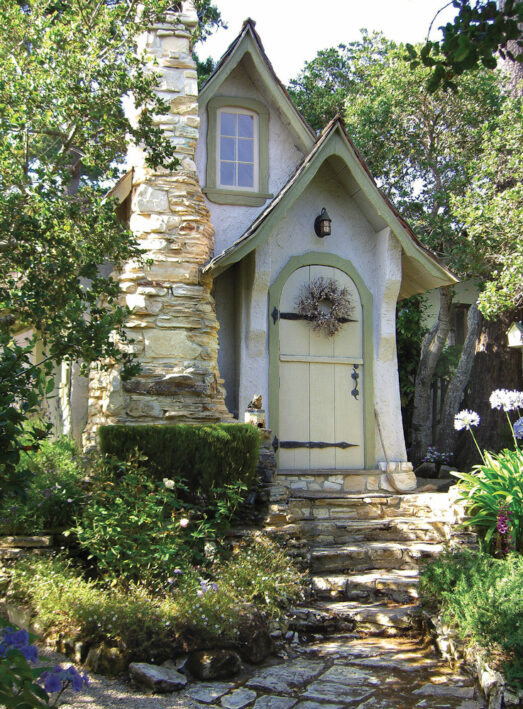
Hansel House is just one example of the fairytale architecture to be found in Carmel, part of a Big Sur road trip. Photo courtesy of Carmel, California.
Shop till you drop: Carmel’s 41 courtyards and secret passageways have enough shops, boutiques, art galleries, bakeries, and sidewalk cafes to empty your wallet.
Enjoy a self-guided history tour of town past the 1904 Carmel Bakery; the outdoor 1910 Forest Theater, the first outdoor theater west of the Mississippi; and the 1937 fire station built from Carmel stone.
Walk the powdery beach for breathtaking views in either direction.
Roam the Scenic Pathway, located on a bluff above Camel Beach and overlooking panoramic views from Pebble Beach to Point Lobos.
Sign up for a Carmel Art Tour: Visit the galleries and meet working artists who continue Carmel’s art colony legacy.
Find more Carmel walking tours here.
Noon-1pm: Lunch
La Bicyclette: With chalkboards and hanging copper pots, this French Italian bistro has a rustic country vibe. Try the spinach gnocchi or truffle mushroom pizza.
Mulligan’s Public House: This affordable eatery serves shrimp tacos, salmon salad, and mean bacon Bloody Mary’s.
Tree House Café: The menu spans Mediterranean, Thai, and Italian influences. Try the seafood pasta or baked calamari.
Get a taste of six iconic Carmel restaurants on the 2-hour Carmel Food Tour.
Afternoon:
1-4pm: Take an e-bike tour: Cruising through the fairytale village and along Scenic Road is like cycling through a life-size impressionistic painting.
Or: Go on a self-guided wine walk: Carmel-by-the-Sea Wine Walk’s free mobile guide takes you some of Carmel’s favorite tasting rooms to sample the wines and meet the winemakers.
Or: Visit Carmel Mission Basilica Museum: Carmel’s historic mission offers a glimpse into the history of California under Spanish colonial rule and later, Mexico.
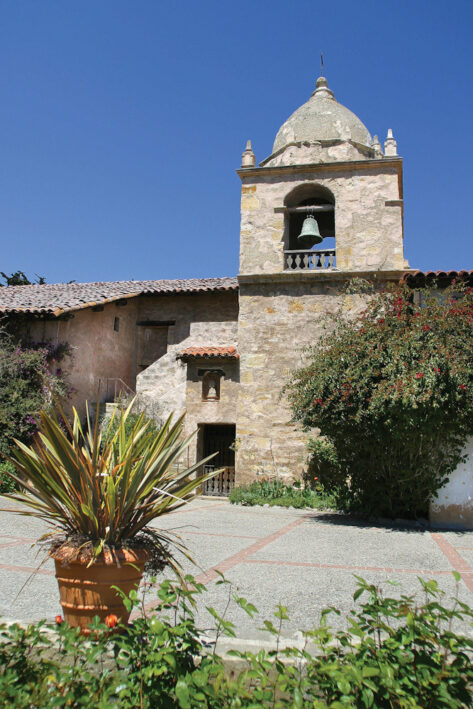
The Carmel Mission Basilica Museum. Photo courtesy of Carmel, California.
Or: Zone out on a mindfulness journey with Carmel’s Naturally Mindful-by-the-Sea Map and Guide. Then unwind at Refuge, an outdoor spa overlooking the Santa Lucia mountains, with waterfall-fed cool and hot pools, a Himalayan salt wall sauna, and an eucalyptus steam room.
5-6:30pm: Meet the locals on a happy hour pub crawl.
Il Fornaio at the Pine Inn—Carmel’s longest bar—offers great deals on cocktails and wines, plus gourmet noshes.
A.W. Shucks, a decades-old seafood joint, serves straight-off-the-boat oysters, plus crab cakes, clam chowder, and 130-plus types of Scotch.
Shearwater Tavern, a pub at Carmel Mission Inn, serves $5-$9 small plates; try the chicharrons with chipotle aioli.
7-7:15pm: Catch the sunset on Carmel Beach. Hold your breath for the elusive green flash.
8-10pm: Dinner
Chez Noir: You’ll feel like family dining in the intimate dining room of this award-winning restaurant owned by a husband-and-wife team. The 4-course tasting menu highlights seafood-centric dishes like farm tomato panzanella with Baja mussels, local squid, and guindilla peppers.
Il Tegamino: Brothers from Naples deliver hearty dishes inspired by their hometown, like theragú napoletano with a slow-cooked sauce made with short rib, pork, and sausage. Savor it on the outdoor patio with twinkling lights.
10pm-whenever: Night on the town:
Burn the midnight oil at these local hotspots.
Sade’s: Carmel’s last old-school cash-only watering hole is the last word on dive bars.
Vesuvio & Star Bar’s rooftop bar: Firepits and heat lamps keep the ocean’s cool at bay in a bar renowned for its innovative libations.
Barmel: This classic cocktail bar serves classic and signature cocktails and is Carmel’s only music and late-night dancing venue, with live music and DJs on weekends.
Hungry for more? Discover San Luis Obispo Off-Season.
WEDNESDAY: Explore Pacific Grove, 17-Mile Drive and Pebble Beach
Snapshot: Lined with 1,300 tiny board-and-batten cottages to stately mansions, historic Pacific Grove (1875) began life as a seaside summer retreat for church groups. But long before they arrived, the town was home to a different type of pilgrim—thousands of orange-and-black monarch butterflies who migrate south from Canada each October to overwinter in the town’s pine and eucalyptus groves.
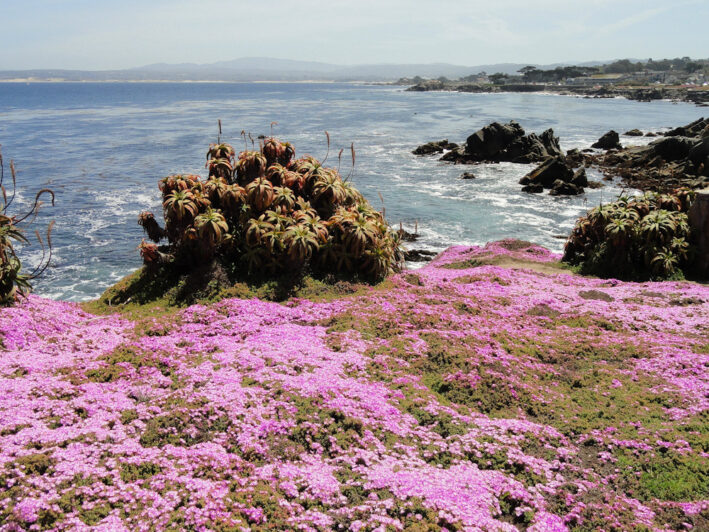
Pacific Grove coastline. Photo courtesy of Pixabay.com.
8-8:30am: Breakfast in Carmel
Grab a quick breakfast, then drive six miles to Pacific Grove for a morning of exploring and lunch.
Carmel Belle: This counter-service organic café, bakery, and juicery serves gourmet-ish breakfast sandwiches like mushroom melts with poached eggs and truffle oil; avocado toast, and Italian-inflected green eggs and ham, plus breakfast polentas, fresh-baked pastries, and much more.
8:45-11am: Wander Pacific Grove’s 3-mile-long coastline: Clifftop trails bursting with wildflowers coil down to rocky beaches where thundering surf leaves gleaming tidepools in their wake.
Hike the Asilomar State Beach Coast Trail: This 3.6-mile roundtrip beach and bluff walk meanders past crashing waves, tide pools, and kelp beds.
Stroll the Asilomar Dunes Boardwalk Trail: Across the street from the coastal trail, the short boardwalk trail pushes through coastal dunes.
Explore tide-pools: Asilomar State Beach and The Great Tidepool at Point Pinos are home to star fish, mussels, abalone, sea urchins, sea anemones, and sand dollars.
Visit Point Pinos Lighthouse: The oldest continuously operating lighthouse on the West Coast (1885) was also the social hub of early Pacific Grove.
11am-1pm: Explore Pacific Grove:
Take a self-guided walking tour of historic Pacific Grove’s 1,300 Victorian, Gothic and Romanesque homes, inns, and B&Bs, including John Steinbeck’s Cottage.
View the historic murals decorating the walls of Pacific Grove’s local pharmacy, post office, markets, and restaurants.
Wander the Monarch Grove Sanctuary, where thousands of monarch butterflies hang like fluttering veils from the trees.
1-2pm: Lunch
Red House Café: Sun pours through the windows of this cozy red Victorian house, with indoor seating by the fireplace or outside on the porch. Enjoy gourmet sandwiches, salads, and espresso and buy a box of their homemade oatmeal, apricot, and pecan cookies for the afternoon spin along 17-Mile Drive.
2-6pm: Drive scenic 17-Mile Drive
Drive 11 miles to the Carmel Gate of 17-Mile Drive and drive the toll road clockwise so you reach Pebble Beach just in time for sunset cocktails.
Snapshot: Established in 1881, 17-Mile Drive meanders past pristine beaches, wind-battered cliffs and dunes, and misty headlands that rise from a restless sea. Midway along is the 250-year-old Lone Cypress. Gnarled by wind and cloaked in fog, it clings to a granite boulder lashed by waves.
6-6:45pm: Brake for sunset cocktails by the outdoor fire pits at the Inn at Spanish Bay in Pebble Beach: As the ocean mist rolls in and day turns to night, a bagpipe player in Highland dress bleats out a haunting song on the green.
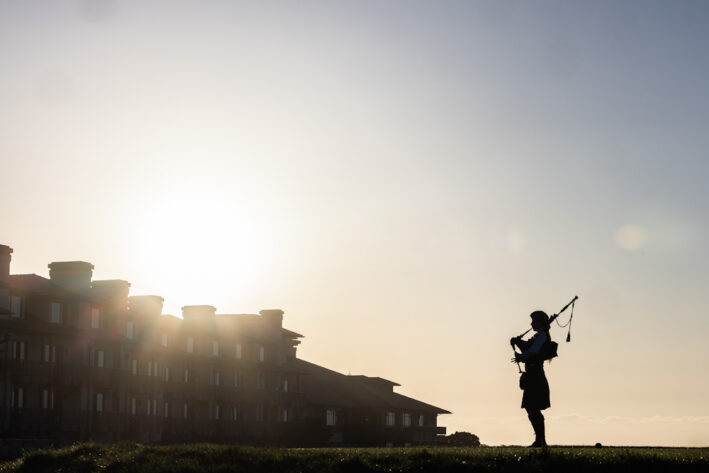
At Spanish Bay, a bagpiper plays at sunset. Photo courtesy of Mower PR.
7-9pm: Have dinner at Roy’s at Pebble Beach: Feast on Hawaiian super chef Roy Yamaguchi’s Pacific Rim fusion cuisine. Try his signature Hibachi Salmon with Teriyaki Glaze.
9-9:15pm: From Roy’s, it’s an easy 6-mile (15-minute) drive back to Carmel via inland route CA 68.
Hungry for more? Get two seafood recipes from Roy’s at Pebble Beach.
THURSDAY: Big Sur Highway
Snapshot: After 14 years of backbreaking construction, this 90-mile stretch of California Route 1 between Carmel and San Simeon opened in 1934 and soon gained fame as one of the world’s most breathtaking scenic drives.
The ribbon highway clings to precipitous cliffs as it snakes along the Big Sur Coast in a series of hairpin curves, passing high above pristine pocket beaches, wave-battered crags, brooding forests, and panoramic ocean views.
Big Sur Highway is routinely battered by heavy winter storms. Gravel, mud, trees, large rocks, and even entire hillsides can avalanche down the steep slopes and across the highway and carry off huge chunks of pavement and bridges.
Unfortunately, due to recent storm damage the highway is currently closed 40 miles south of Carmel near Esalen until repairs are estimated to be completed by 2026.
Fortunately, the 40-mile stretch between Carmel and Esalen has Big Sur’s most striking scenery and makes for a perfect day trip.
Before driving Big Sur Highway: With miles of sharp curves, steep drop-offs, and no guardrails in places, Big Sur Highway is not for the faint of heart. The weather is changeable, cell phone service is unavailable in most areas, and the highway may close at slide-prone areas during storms. Before heading out, check the road conditions and weather along the highway.
8am: Get breakfast-to-go and a picnic lunch
Carmel is bakery heaven. These two sell breakfast and lunch items and small batch coffee roast.
Rise and Roam Bakery, an artisanal bakery and pizzeria, makes organic breads, pastries, frittatas, quiches, tartines, muffins, cinnamon rolls, deli sandwiches, cookies, and salads.
Carmel Bakery & Coffee House makes hand-crafted croissants and donuts; breakfast burritos, sandwiches, and bowls; deli sandwiches; cookies; cupcakes; and gingerbread.
9-10am: Just 10 minutes from Carmel is Point Lobos, where wind and waves have left an indelible mark on the rocky headlands. Trails wander along rocky crags capped with twisted Monterey cypress and coil down to inlets where the tides come and go. The $10 parking fee is valid for other Big Sur state parks visited until sunset the same day.
The half-mile Sea Lion Point Loop trail leads down a steep, uneven staircase to a pebbly beach and Sea Lion Cove, where you can peer out on barking sea lions.
The .8- mile Bird Island Trail overlooks jade-green China Cove, where harbor seal moms nurse their newborn pups on a strip of pristine beach.
10-noon: Garrapata State Park
About 4.5 miles south of Point Lobos, Garrapata State Park stretches for four miles along the highway. The park has no entrance, but you can access hiking trails from the highway pullouts. lead along rocky headlands abloom in; and down to Garrapata Beach.
The trails from miles 13, 15, and 16 access Soberanes Point, a verdant ledge that juts out above the sea. Wander the California poppies, lupines, and wild irises, and look down on hidden coves.
At mile 19, steps lead down to secluded Garrapta Beach, where Doud Creek emerges from a deep valley and carves a path through the sand to the sea. In springtime, the valley is a carpet of white calla lilies. A trail winds up the valley for a closer look.
Follow the highway south across Rocky Creek Bridge and Bixby Bridge
For the next six miles, Big Sur slices a thin line between the sea and spiny foothills, then leaps across two historic arch bridges spanning deep, precipitous gorges. Stitching together the rugged highway, the bridges deliver OMG views of the pounding surf far below.
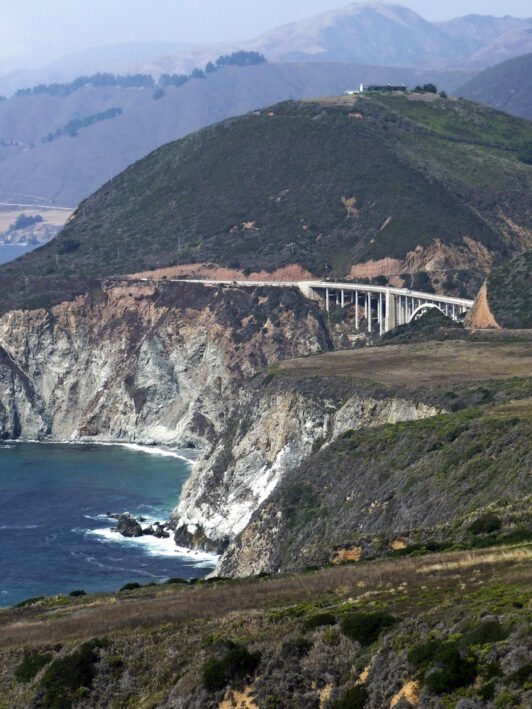
The famous Bixby Bridge is iconic along the Big Sur Coastline. Photo courtesy of Pixabay.com.
Noon-1pm: A few miles along is Point Sur State Historic Park, where the Point Sur Light Station perches on a lonely volcanic promontory just offshore. Erected in 1889 following countless shipwrecks, its powerful beam, visible for 20-plus miles, has guided more than a century of sailors through the Pacific’s treacherous waters. On weekend tours of the lighthouse and Point Sur Naval Facility (the Cold War relic was so top- secret even its logo was fake), docents tell tales of the naval facility’s clandestine missions, spies, and weapons.
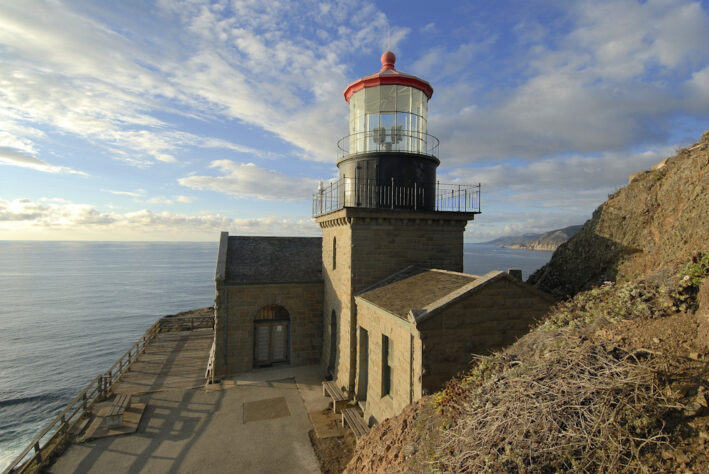
The Point Sur Lighthouse should be part of any Big Sur California road trip. Photo courtesy of Pixabay.com.
1-2pm: Drive on to Andrew Molera State Park, with sea-sculpted cliffs, wildflower meadows, rivers roaring with snowmelt, and easy hikes to sheltered beaches that are the perfect place to plunk down for a picnic lunch.
The 2-mile roundtrip Beach Trail wends through fields and along Big Sur River to one of Big Sur’s largest beaches.
The 2.4-mile Bluffs Trail crosses craggy bluffs above the sea to Spring Trail, which scrambles over boulders to tiny Molera Beach.
2-3pm: South of the park, the highway swings inland a few miles to Big Sur Village, set along a mile-long valley of the Big Sur River. This rugged outpost, a former hippy hangout for artists and writers including Henry Miller, has a visitor center, ranger station. rustic lodge, general store, post office, gas station, restaurants, and galleries.
The Henry Miller Memorial Library (the novelist lived here from 1944-1962) feels more like an indie bookstore, with a broken piano, foreign currency dangling from the ceiling and quirky sculptures in the yard.
Get a caffeine and sugar buzz at adorable Big Sur Bakery, nestled in flowers and vines.
3-4pm: Just a few miles along is Pfeiffer Big Sur State Park, a “mini Yosemite” where trails lead up a narrow river canyon edged with boulders and waterfalls. Keep an eye peeled for California condors.
Follow the .7-mile roundtrip self-guided Natural Trail to learn about Big Sur’s native plants.
4-5pm: Across the highway, Sycamore Canyon Road coils down through redwoods, bay laurel, sycamore, eucalyptus, and giant ferns to Pfeiffer Beach, an unspoiled oasis with caves, blowholes, and Keyhole Rock, where the setting sun shines, creating a dramatic light show. After rainstorms, the sand turns purple from manganese garnet deposits flowing in from surrounding hillsides.

Get the timing right and Keyhole Rock offers a unique take on sunset. Photo courtesy of Pixabay.com.
5:30-6:30pm: From Pfeiffer Big Sur State Park, the highway rollercoasters seven miles down to Julia Pfeiffer Burns State Park, named after a Big Sur pioneer woman.
- The half mile McWays Falls Overlook trail leads to views of the 80-foot waterfall cascading from palm forests to the beach. It’s one of the only waterfalls on earth to empty into the ocean.
The highway is closed four miles south, so turn around and head north back toward Carmel.
7-8:30pm: Sunset dinner at Nepenthe: Drive north 11 miles to Nepenthe, a storied restaurant that clings to precipitous cliffs high above the rocky coastline. Set on land once owned by Orson Welles, the restaurant was designed in 1949 by a pupil of Frank Lloyd Wright’s and incorporates Welle’s original log cabin. A popular hangout for creatives like Welles, Henry Miller, Anais Nin, and Dylan Thomas (and struggling actors like Steve McQueen, Clint Eastwood, and Kim Novak en route to Hollywood) the world-famous restaurant overlooks staggering views of hills plunging to the Pacific. Settle on the terraced deck for dinner (try the Ambrosia Burger, butternut squash soup and walnut cake) and watch the sun slip into the sea.
8:30-9:30pm: Drive back to Carmel 31 miles as the crimson dusk fades to a sea of stars — a fitting finale for a 4-day sojourn in unbridled beauty.
-Story by Carole Jacobs, Real Food Traveler Health, Fitness & Spa Editor
Hungry for more? Learn more about Carmel-by-the-Sea from one of its long-time residents.








0 Comments