





I had the privilege of visiting Mallorca, the largest of four populated Balearic Islands, off of the mainland of Spain. The other islands are Ibiza, Formentera and Menorca. These islands of Spain are their own, distinct, autonomous region and take pride in each having its own identity. The cuisine hearkens to the culinary influences of those who ruled it in the past including the Moors, Phoenicians, Catalan and Romans. On Mallorca, I discovered a feast of foods the Mallorcans hold dear as their own creations or variations of Spanish classics. Here are just 12 of some of the authentic items and dishes I encourage you to try. They were my Editor’s pick favorites while I was there.

Save this article to Pinterest to help you remember which foods to have in Mallorca. Graphic by RealFoodTraveler.com.
Editor’s Note: You will see “Mallorca/Mallorcan” and “Majorca/Majorcan” and “Mallorquinas” on menus and various other places. All refer to the island and its people but the spelling with a “j” is used primarily by the British. Officially, the name of the island is Mallorca.
Editor’s Pick: 12 Favorite Foods in Mallorca
Coca de Patata is a slightly sweet bread roll made from boiled potato which gives it a light, slightly spongy texture. It is typically dusted with powdered sugar on top. They are the specialty of Mallorca’s charming village of Valldemossa. Take a break from strolling and shopping to have one at a local café.
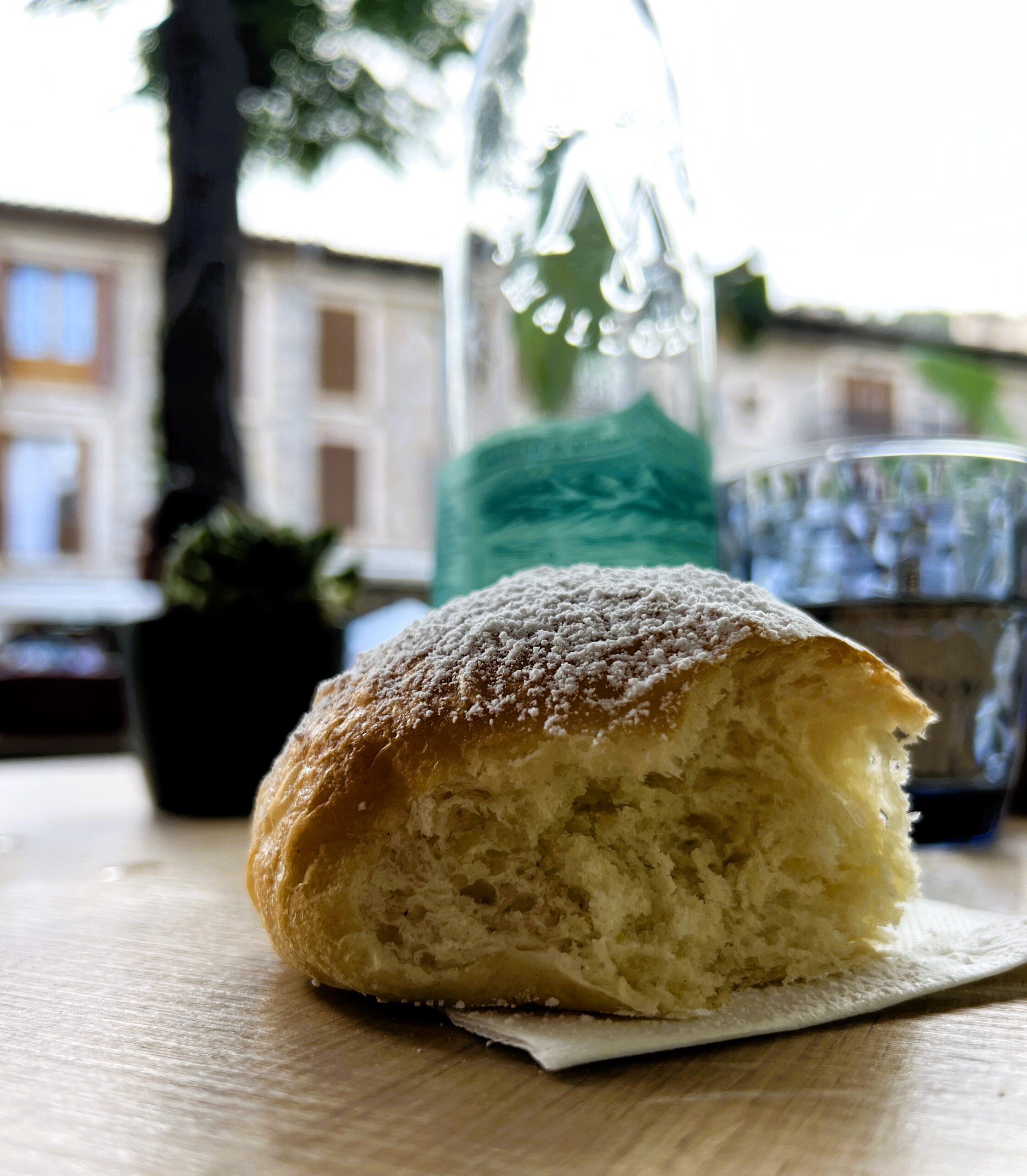
Coca de Patata sweet roll in Valldemossa Spain.
Coca Mallorquina has a base of flatbread (made from flour, olive oil and water only) topped with vegetables, sobrassada sausage and other items. The best I had was from Fornet de la Soca, a must-see bakery in Palma, Mallorca’s capital. There, they focus on “agricultural gastronomy,” sourcing locally, organically, and using traditional recipes. You’ll note that I mention this place multiple times in this list.

Coca Mallorquina, bottom shelf, at Fornet de la Soca. It was one of my favorite foods to have in Mallorca.
Ensaimada is a large, spiral treat made with dough that is rolled, braided, coiled and allowed to raise to create a light, fluffy texture. After baking, it’s topped with powdered sugar. Sometimes Ensaimada is filled but it can be delicious without. At Fornet de la Soca, they feel that when the ingredients are so high-quality, you don’t need to augment the “plain” ones with anything else. You can see it shown and even being made in entertaining Reels on their Instagram page (do yourself a favor and peruse all of their posts!). At Fornet de la Soca, you can also try a local classic, Angel Hair (cabello de ángel) Ensaimada, a type of ensaimada filled with pumpkin squash). You can find ensaimada at many bakeries and cafes and even some hotels serve it in their breakfast buffets such as at HM Palma Blanc Hotel.

Fornet de la Soca is one of the premier places to get ensaimada. Center, co-owner Tomeu Arbona holds a fresh-out-of-the-oven ensaimada ready to be dusted with powdered sugar. Right, a slice of the finished product and a popular variation filled with pumpkin. Left, a stack of boxed ensaimadas waiting to be picked up and two on display in the front window of the bakery.
Mahón cheese is a fairly mild, whitish cheese with an orange rind, made on the neighboring island, Menorca, but served all over Mallorca. It’s delicious in small rolls of bread and with sobrassada, prosciutto, olives – anything. I had it at several restaurants but also in the breakfast buffets of the two hotels I stayed in, the HM Palma Blanc in Palma and Hoposa Hotel Uyal in Puerto Pollensa. (You’ll see Mahon in a photo below).
Olive oil is a major product of Mallorca thanks to plentiful olive orchards. We visited Aubocassa, where they do things differently, starting with younger olives from which they get “olive juice” versus pressing. This results in a mildly-flavorful, silky-on-the-palate(?), adaptable olive oil.
Editor’s Note: Until you can go to Mallorca to purchase bottles of Aubocassa olive oil directly, if you’re in the United States, it’s available online through Despaña.
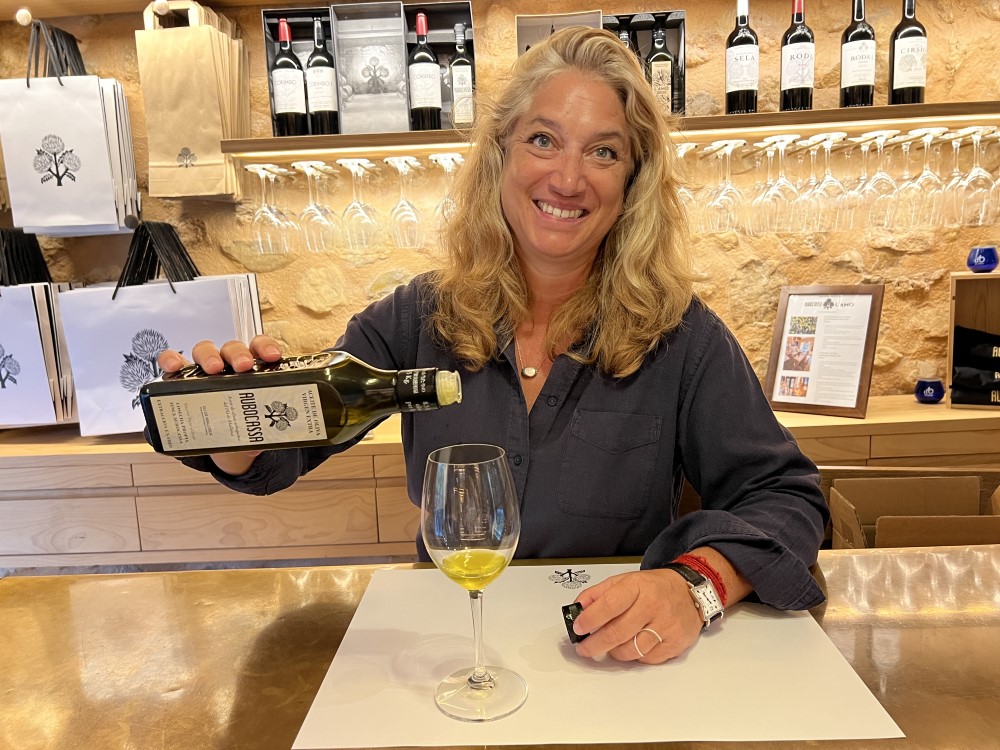
Tiffany Blackman, manager at Aubocassa pours a tasting of olive oil.
Olives are a major crop of Mallorca, thus the mention of olive oil, above. They are served as a snack, to accompany meals, with cheese, meats and other additions such as caper berries. See an example in the photo below.
Pa amb Oli is Catalan for “bread with oil.” A staple in Mallorca, it is a hearty bread (toasted or not) with olive oil and sometimes garlic with salt. When raw tomato is rubbed on it, it’s called Pan de Tomate. I was told by locals that it’s the foundation of many quick meals, topping it with whatever one may have on hand at home including fish, sausage, and cheese.
Editor’s Note: At a cooking demonstration at Moltak, our instructor showed us that you can rub raw garlic on one side of the bread and tomato on the other (if you want garlic), because the roughness of the bread acts as a grater.
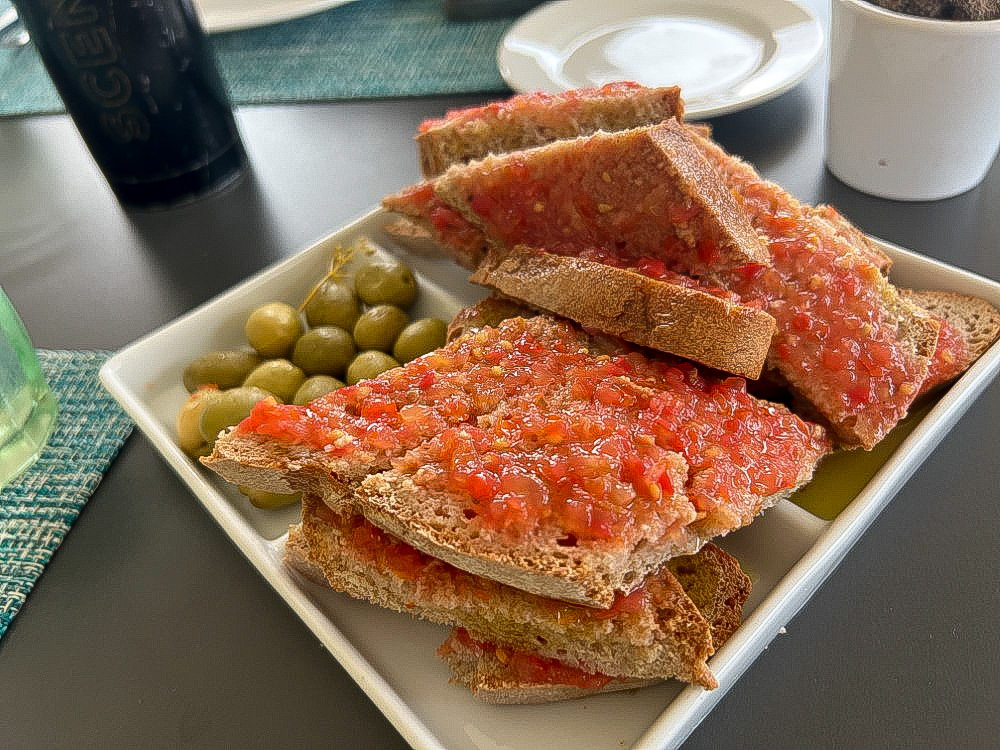
Pan de Tomate is simply fresh tomato grated on hearty bread, served with some olives.
Hungry for more? Learn about the favorite foods of Jerez de la Frontera, the Gastronomical Capital of Spain 2026.
More Favorite Foods to Have in Mallorca
Panades are a type of empanada, round and disk-shaped, filled with meat and vegetables. Fornet de la Soca has delicious ones but we also had delicious ones at a reception held for our group of travel writers at Son Sant Jordi hotel in Pollensa.

A selection of Panades, savory pies with various fillings, are on the top shelf at Fornet de la Soca in Palma de Mallorca.
Rubiols are sweet dough filled with chocolate, cream or fruit jams, often shaped like a flower or star, commonly eaten during Easter Week. Bakeries, including Fornet de la Soca make them. To give us an example of what these treats are like, we had some at Son Sant Jordi hotel.

Rubiols are pastries typically served at Easter, with various fillings and often formed into pretty shapes or in half-moons as shown. Note the Panades to the right and Sobrasada on little bread rounds, above.
Sopes Mallorquines (Mallorcan Soup, may also appear as Sopas Mallorquinas) is a hearty dish with onion, garlic, leeks, cabbage leaves, other veggies including peas, spinach and green beans. The key ingredient is thin slices of, or torn up pieces of farmhouse brown bread, which soaks up the liquid making it, less like a soup and more like a stew. My favorite was from Hotel Illa d’Or, which opened in 1929 and was a favorite of writer Agatha Christie, publishing one of her detective novels, Problem at Pollensa Bay, inspired by her time there. Here is a recipe from the Spain Tourism website.

Sopes Mallorquines, aka Mallorcan Soup, is a vegetable and bread comfort food dish, more of a stew than a brothy soup.
Sobrassada is a cured pork sausage, red because of paprika, and spreadable. The high humidity climate is part of the curing process and contributes to it being soft.
Editor’s note: You can get sobrassada on Amazon using this link and on Tienda.com.
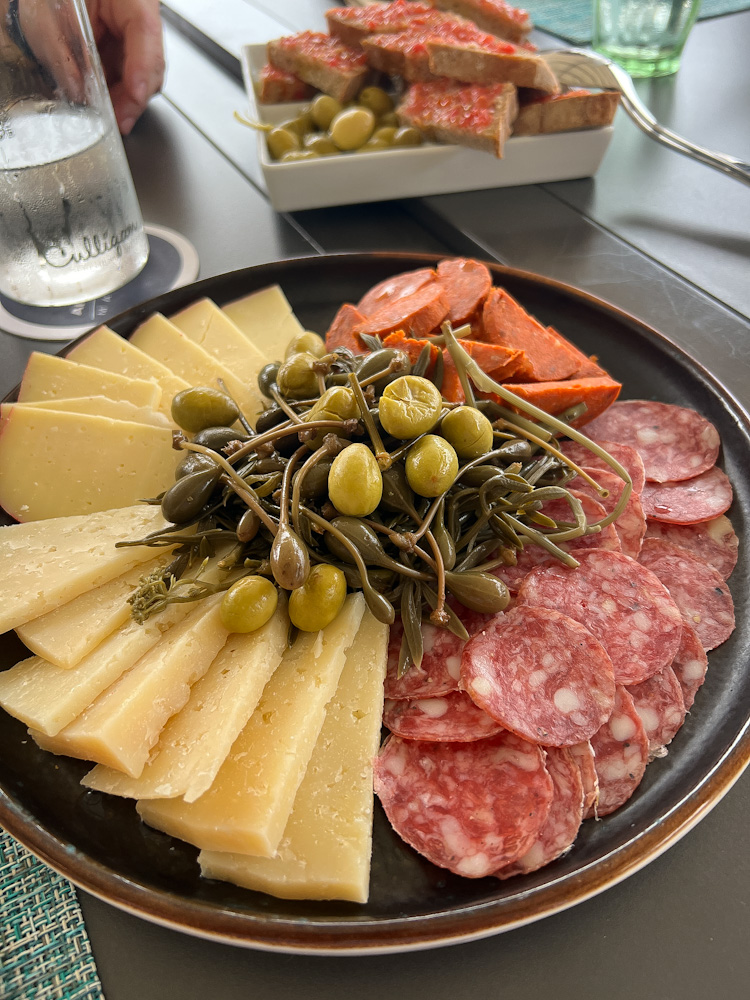
A beautiful platter with Mahon cheese and sobrassada sausage in the back and Manchego cheese and another kind of sausage, front, served with olives and caper berries.

During a cooking demonstration at Moltak, I helped make this appetizer of sauteed sobrassada with a little vinegar and honey, served over toasted bread. It was delicious!
Hungry for more? Listen to our podcast with the chef/owner of Moltak.
Tumbet is a dish commonly made by households around Mallorca. Sliced potato, eggplants, zucchini squash and peppers are fried in individual batches and layered with the addition of tomatoes and tomato sauce, then baked. I kept confusing this dish with Frito Mallorquin which has similar ingredients that are chopped, and including “offel” such as lamb livers. It’s called Frito Marisco when it has seafood in it. What confused me was that several restaurant menus used the word “Tumbet” but it was not the traditional, layered dish. Regardless, the main ingredients are the same and are healthy and delicious.
While I, sadly, never ended up having traditional, layered Tumbet, I did have Frito Mallorquin at Mesón Ca’n Pedro in Palma and Frito Marisco at Faro Gastrobar in Porto Cristo.
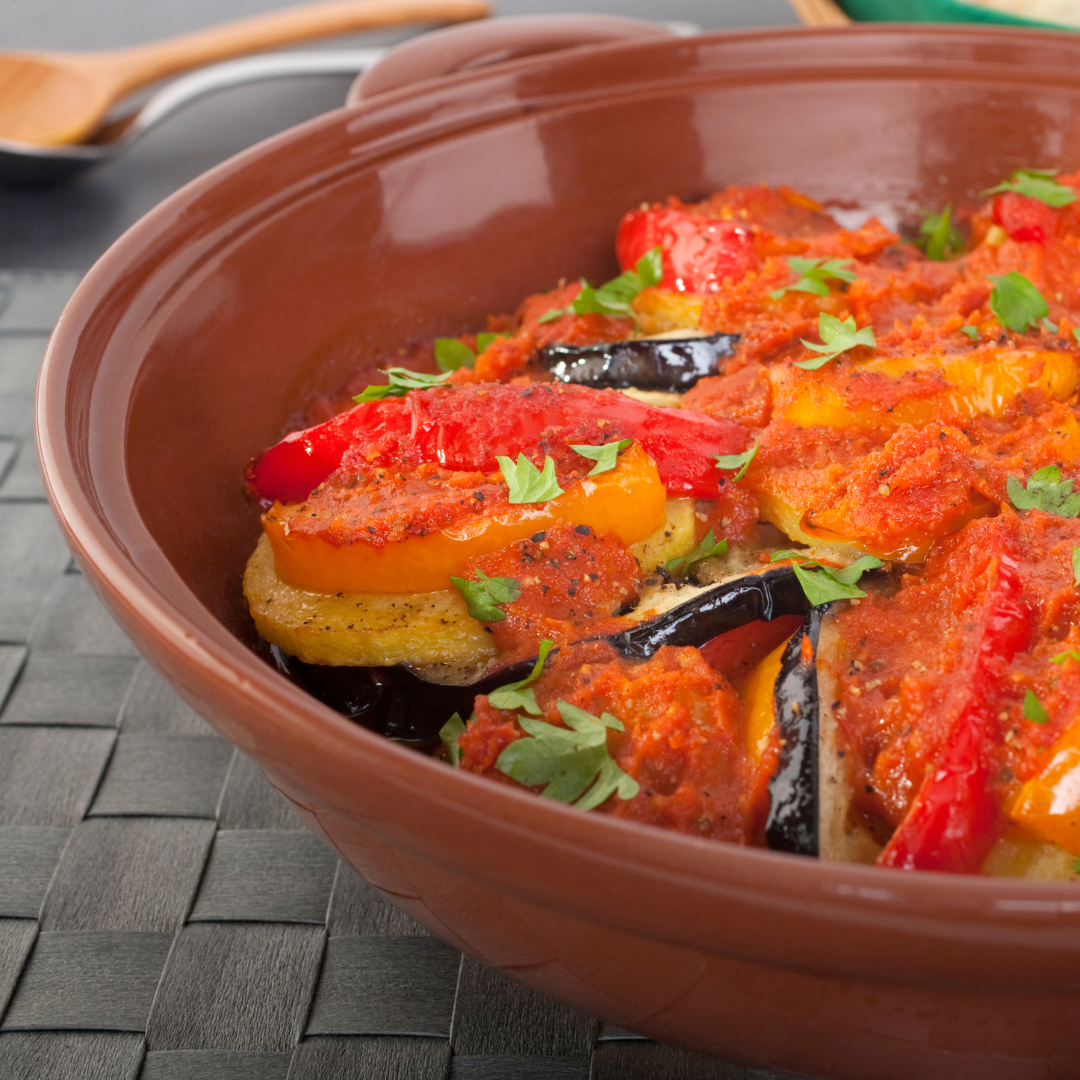
An example of Tumbet, a favorite layered dish in Mallorca, with potatoes, zucchini, peppers and tomatoes. Photo courtesy of Canva.

Frito Mallorquin with lamb livers at Mesón Ca’n Pedro.
For more information about visiting Mallorca, look to the Spain Tourism website.
-Story and photos, except where noted, by Courtney Drake-McDonough, Publisher & Managing Editor, Real Food Traveler and host of the Real Food Travel Podcast
Please note, as is common practice in this industry, this was a hosted visit, however, all opinions are honest and based on the author’s opinion for the purpose of informing our readers.







0 Comments