











 France’s Loire Valley with its castle-studded landscape is the third largest producer of wines (behind Bordeaux and Burgundy and ahead of the Rhone Valley). Fragrant, fruity and nuanced with any or all of citrus, herb and spice and stone, Loire wines are more graceful than gutsy. The stony quality in the wines comes from the same tufa (porous rock) from which the valley’s chateaux are constructed.
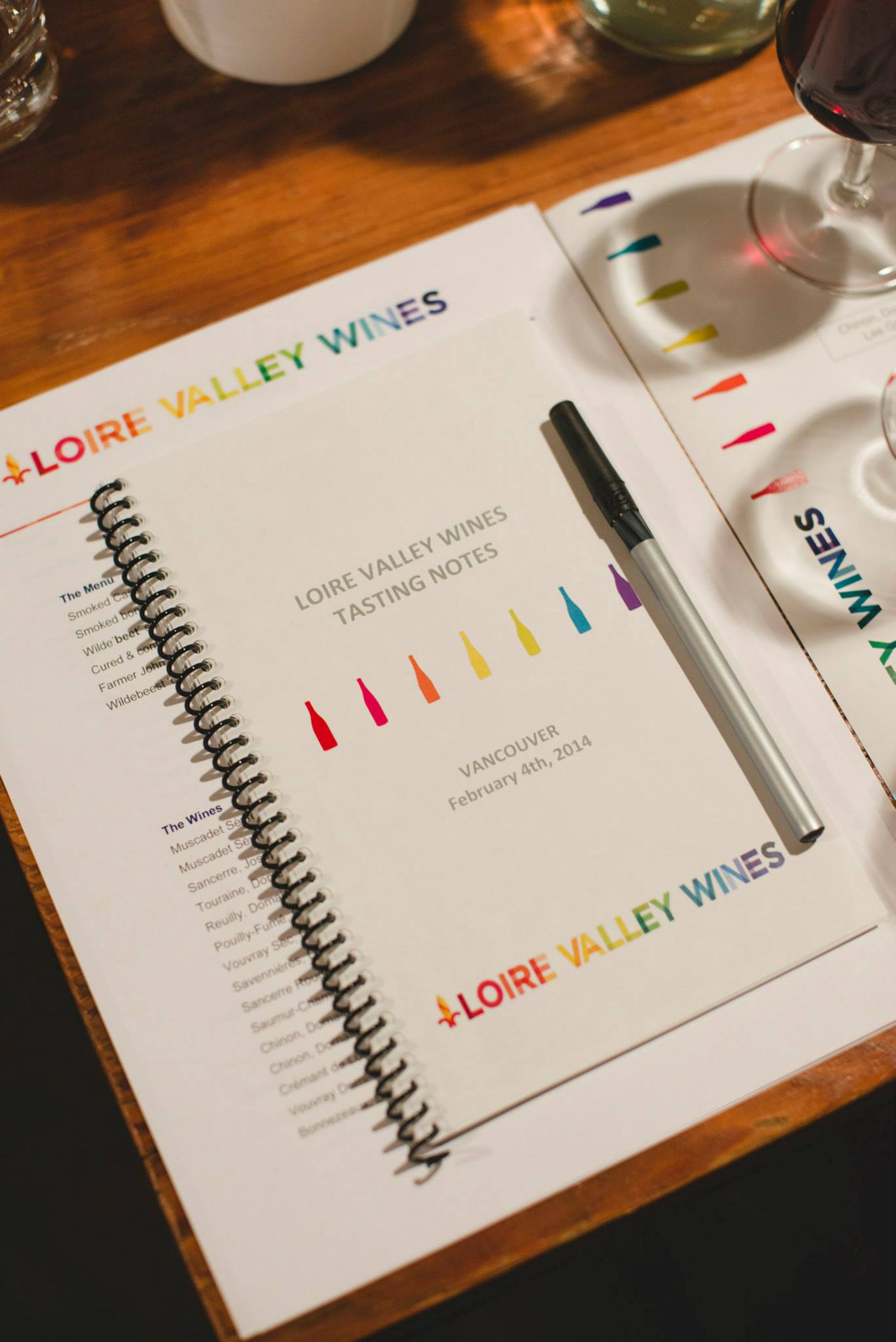
If you’re going to taste wines one after another, it helps to take notes.
Let’s take a closer look at this regional wine lover’s heaven. Three white grapes dominate the area—Muscadet (aka Melon de Bourgogne), Chenin Blanc and Sauvignon Blanc. Cabernet Franc prevails for red wine. The region’s delightful fizz, called crémant (often marketed as Fines Bulles/fine bubbles), clocks in for a fraction of the price of Champagne. Crémant(s) de Loire is made mainly with Chenin Blanc, but Cabernet Franc also makes a significant appearance.
Charming Muscadet
Muscadet (aka Melon de Bourgogne), grown around the maritime village of Nantes about 50 km inland from the windswept Atlantic, should not be confused with perfumy Muscat, the grape noted for much of the globe’s sweet wine as well as some aromatic dry wines, and Italian spumante. Nor is it muscadelle, a minor grape used for fleshing out white Bordeaux. Better Muscadet is made sur lie. Many winemakers like to leave newly fermented Muscadet on its lees (spent yeast cells) for a few months in order to add a flesh and flavor to its youthful charm. Quaffed with a tower of briny oysters, raw cherrystone clams and chilled prawns, Muscadet wakes up a palate like nobody’s business.
Chenin Blanc—gently sweet, heady and honeyed, or bone-dry
Further upstream lay cheek-by-jowl Anjou/Saumur, and Touraine. The Anjou region produces easy-going rosé and refreshing Chenin Blanc. Both possess a gentle sweetness that’s a delightful alternative to Riesling for Asian or Latino spiced dishes. Very possibly Anjou’s exquisite Coteaux de Layon, Quarts de Chaumes or Bonnezeaux (which unfortunately sounds somewhat like “Bonzo”) is not among your wine lexicon. You’re not alone, but you are missing out. These long living, heady and honeyed elixirs supported by good acidity and minerality, rival the world’s best sweet wines. With foie gras (rich duck pate), they make an opulent opener for that special dinner party, or for after dinner, are dessert on their own.
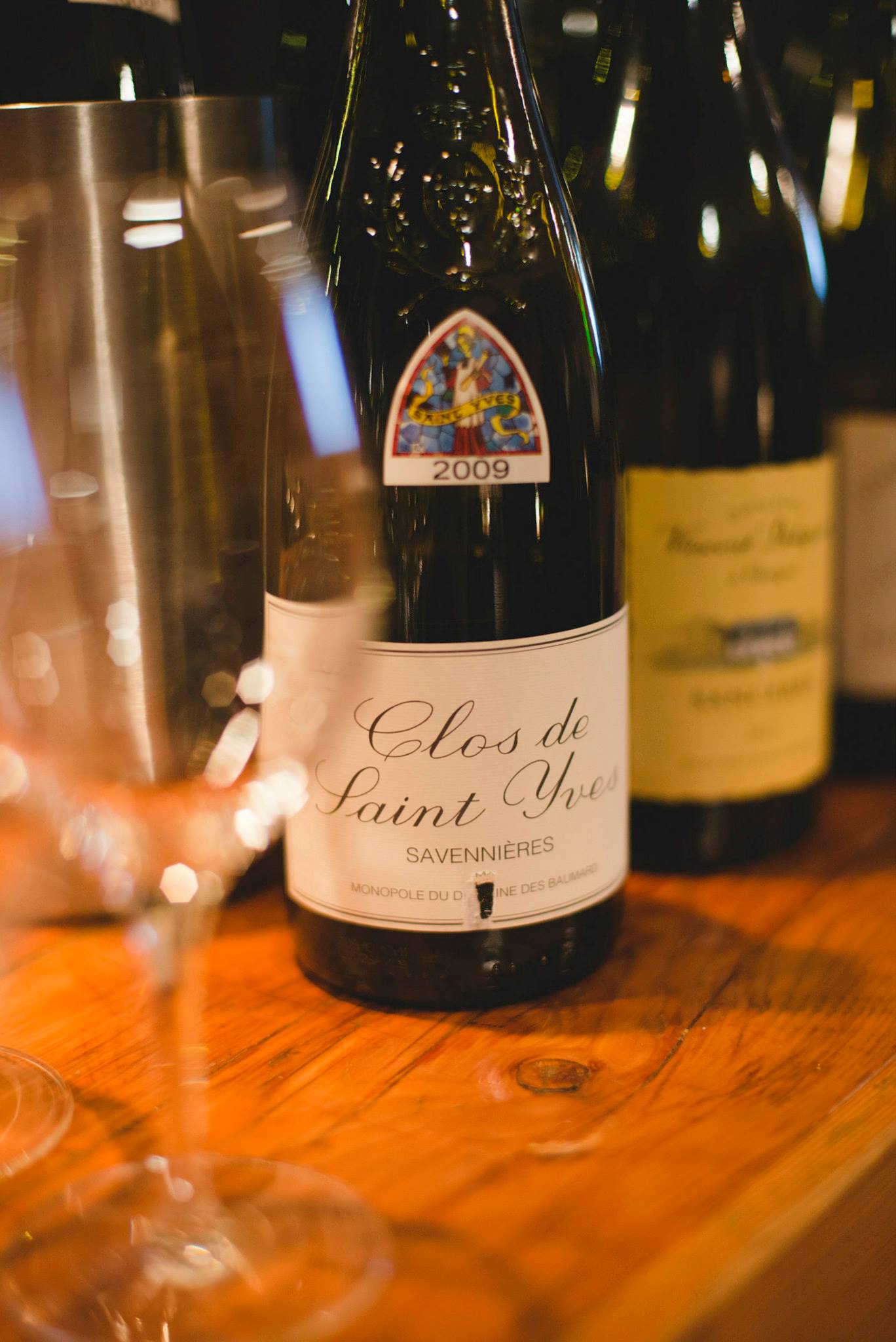
Dry Chenin Blanc is a hit with buttery or brown-buttered white fish, cold roast pork, or cracked crab.
Vouvray, from the Touraine region, is probably the Loire’s best-known wine. Off dry classic Vouvray offers notes of pear, apricot and hints of honey. Meanwhile, Saumur relies on Chenin Blanc for fresh and friendly bubbly wines that also hint at pear, sometimes with a touch of almond or hazelnut. Versatile Vouvray matches all but the most aged and crumbly cheeses. Both Vouvray and Saumur fare well with many Asian flavors. I like to sidle up to a glass of the bubbly stuff at about 11:00 on a Sunday morning with a plate of soft scrambled eggs, brioche, and smoked salmon.
The tiny appellation of Savennieres produces a limited quantity of medium to full-bodied dry Chenin Blanc. Should you stumble upon a bottle of Savennieres, dig for the bucks, and grab it. At once both viscous and brisk, Savennieres brims with fruit and spice, nut and minerality. It’s heavenly with buttery or brown-buttered white fish, cold roast pork, or cracked crab. Should mood and opportunity strike, sauté a few links of boudin blanc (a delicious creamy sausage, made only with pork, egg, and milk.)
(Touraine’s sub-appellations, Reuilly, Menetou-Salon, and Quincy reward too, with vibrant Sauvignon Blanc wine, but there’s not a lot of it about. Simple Touraine Sauvignon owing to its budget-conscious price tag, is capable of being a “the poor man’s Sancerre”. )
Getting to know Cabernet Franc
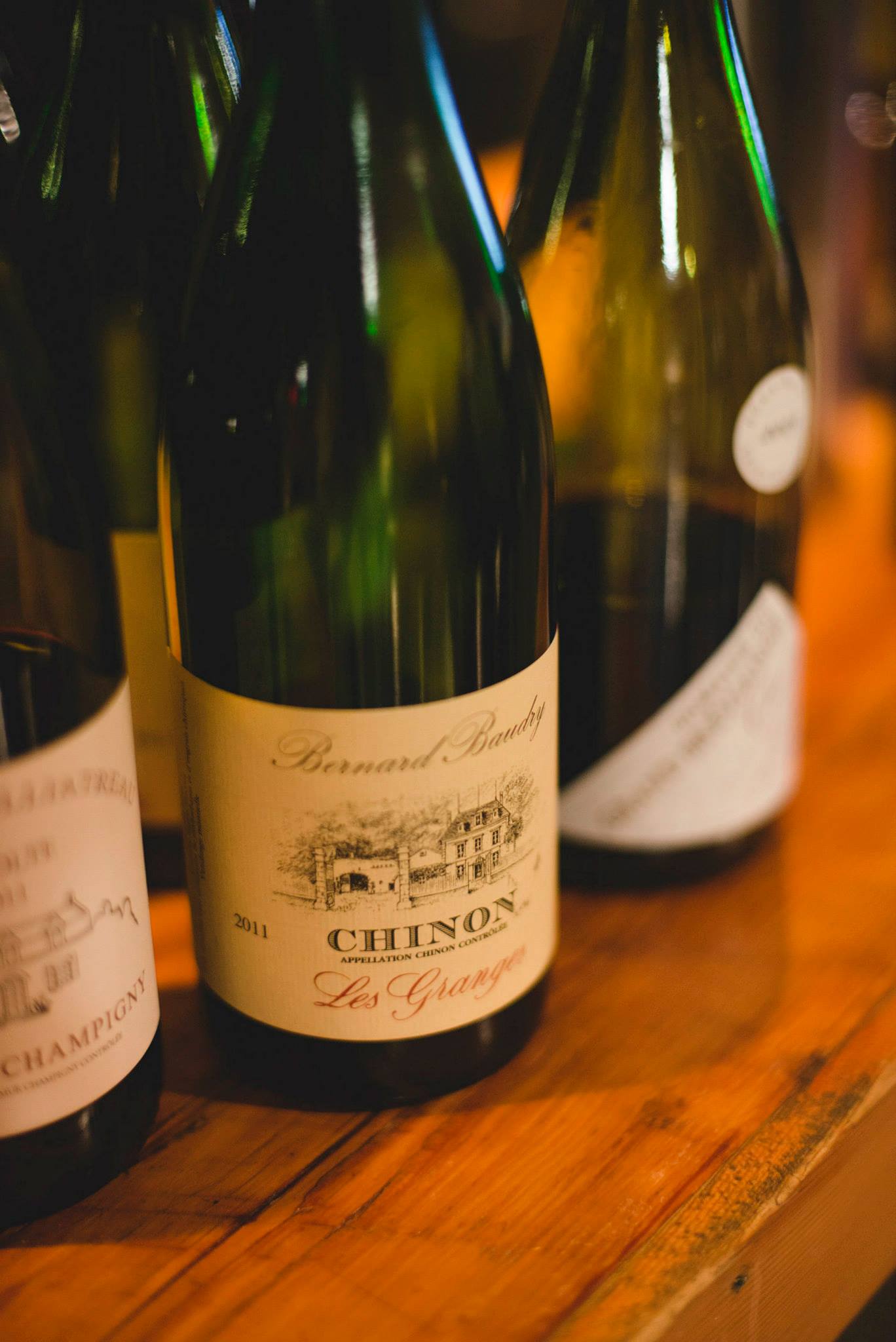
Chinon and Bourgueil wines partner well with white meats, or an array of charcuterie.
Bourgueil and Chinon appellations are Cabernet Franc turf. The grape is often accused of being green, lean, and mean. On their best behavior, however, Cabernet Franc wines smack of field berries, fresh herbs, leaves and white pepper. Juicy and vibrant with tamed alcohol and tannin, Chinon and Bourgueil wines are a marvel with white meats, or an array of charcuterie accompanied by smoked olives, savory preserves and rustic bread. With this spread, I prefer the wine lightly chilled. Meatier Bourgueil partners very well with wild mushrooms, simply grilled meats, particularly game and aged cheeses. Try Cab Franc, too with seared peppercorn crusted tuna.
The Purest Expression of Sauvignon Blanc

Sancerre brings the essence of white flower, lime and grapefruit aromas and flavors.
Ahh! Sublime Sancerre and Pouilly-Fumé (not to be muddled with Burgundy’s Pouilly-Fuissé) is a celebration Sauvignon Blanc. Unlike fruit-driven, oft oaked California Sauvignon Blanc, or the exuberant grassy Sauvignons from New Zealand, Sancerre delights with white flower, lime and grapefruit aromas and flavors. On the palate, the wine expresses cool-climate fruit and a distinct flinty taste that echoes the chalk, limestone, and marl soils on which the grape is grown. Neighboring Pouilly-Fumé shows off with even more floral, citrus and smoke. Sancerre, and Pouilly-Fumé number among my list of top ten desert island wines. (I fully intend to drift to shore with a case—at least—and a watertight log of goat cheese, the match for these sleek sophisticates.)
Sancerre’s “other” grape, Pinot Noir makes up about 20% of the region’s production. Increased plantings over the last years has resulted, I have read, in some remarkable red wines. I have sampled little Sancerre “rouge,” but what I have had impresses. The wines have been bright and savory and again, with that mineral undertone I cherish in wine.
Cheverney, a mini-appellation north of Touraine, produces light-bodied Cabernet Franc, Cot (Malbec) and Gamay (the light and lively red grape mostly associated with Beaujolais)and fragrant Chardonnay/Sauvignon Blanc. I tend to prefer the reds.
I urge you to get to know Loire wines for their grace and delicate charm. And the wines make a perfect entrance for spring’s lighter fare. – Story by Julie Pegg, RFT Wine & Spirits Editor, Photos courtesy of The Wine Unbrella
FOOD FOR THOUGHT (and Pairing!)
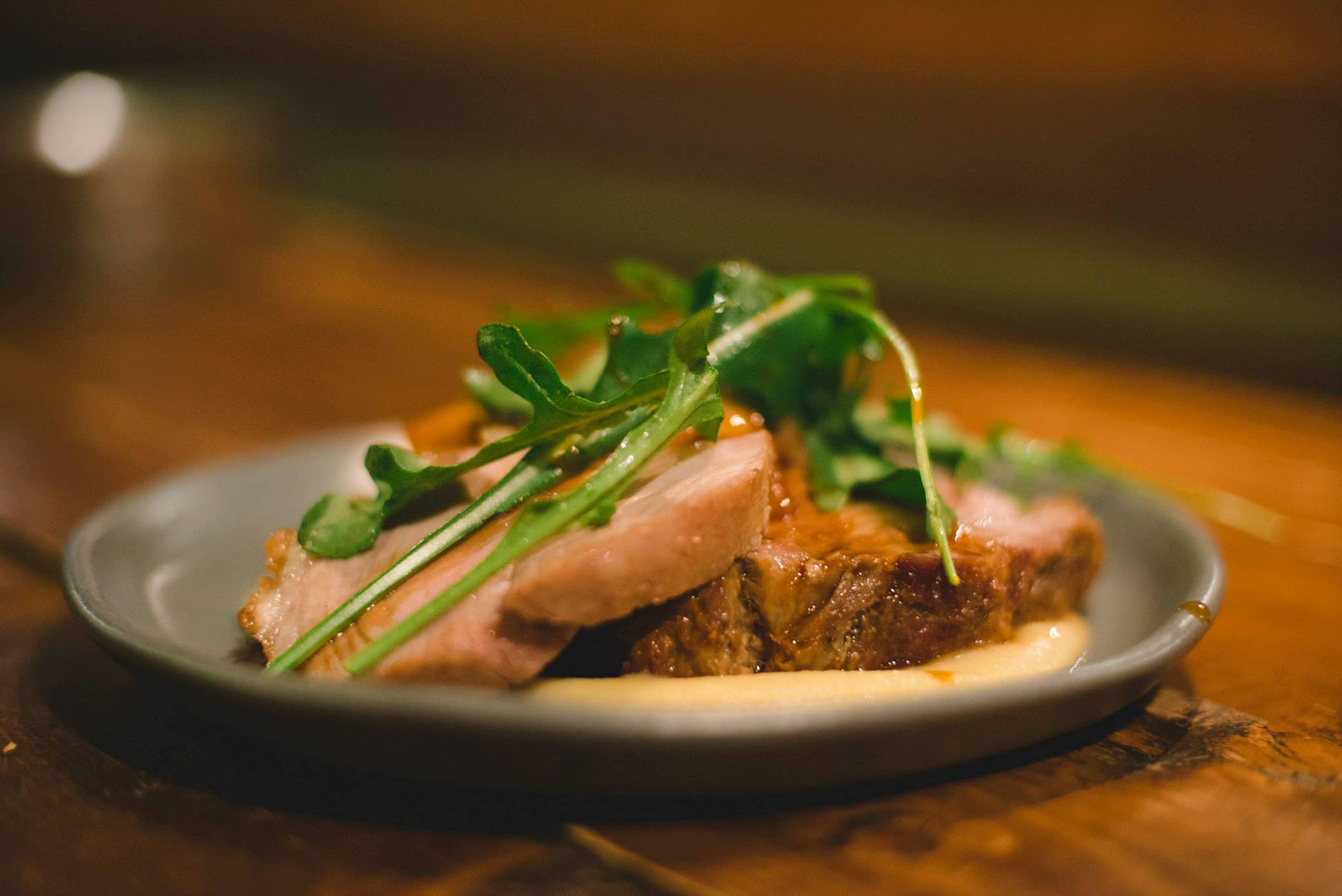
Pork sirloin with arugula, apple and garlic jus paired perfectly with Loire wines.
I wrote this article following two Loire wine trade events held at two of Vancouver’s more popular restaurants–Wildebeest and the Farmer’s Apprentice.
The Loire dubbed as “the garden of France” winds through lush forests, fertile fields, and orchards finally draining into the Atlantic offering an abundance of foods from land and sea. We on the west coast Of North America enjoy a similar bounty.
Here’s a sample of what we mixed and matched with Loire wines. You too can do this at home.
From Wildebeest:

Good restaurants like Vancouver BC’s Wildebeest make food and wine pairing an art.
Beet and apple salad with winter herbs and frozen mascarpone cheese.
Cured and confit trout with pine-scented celeriac and pine butter.
Pork sirloin with arugula, apples and garlic jus.
Cheesecake with blood orange sorbet.
Farmer’s Apprentice: featuring wines from Racine. Imports Charcuterie board of saucisson sec (dried sausage), thinly sliced cured meats, onion butter and quince jelly, a medley soft and hard cheeses.
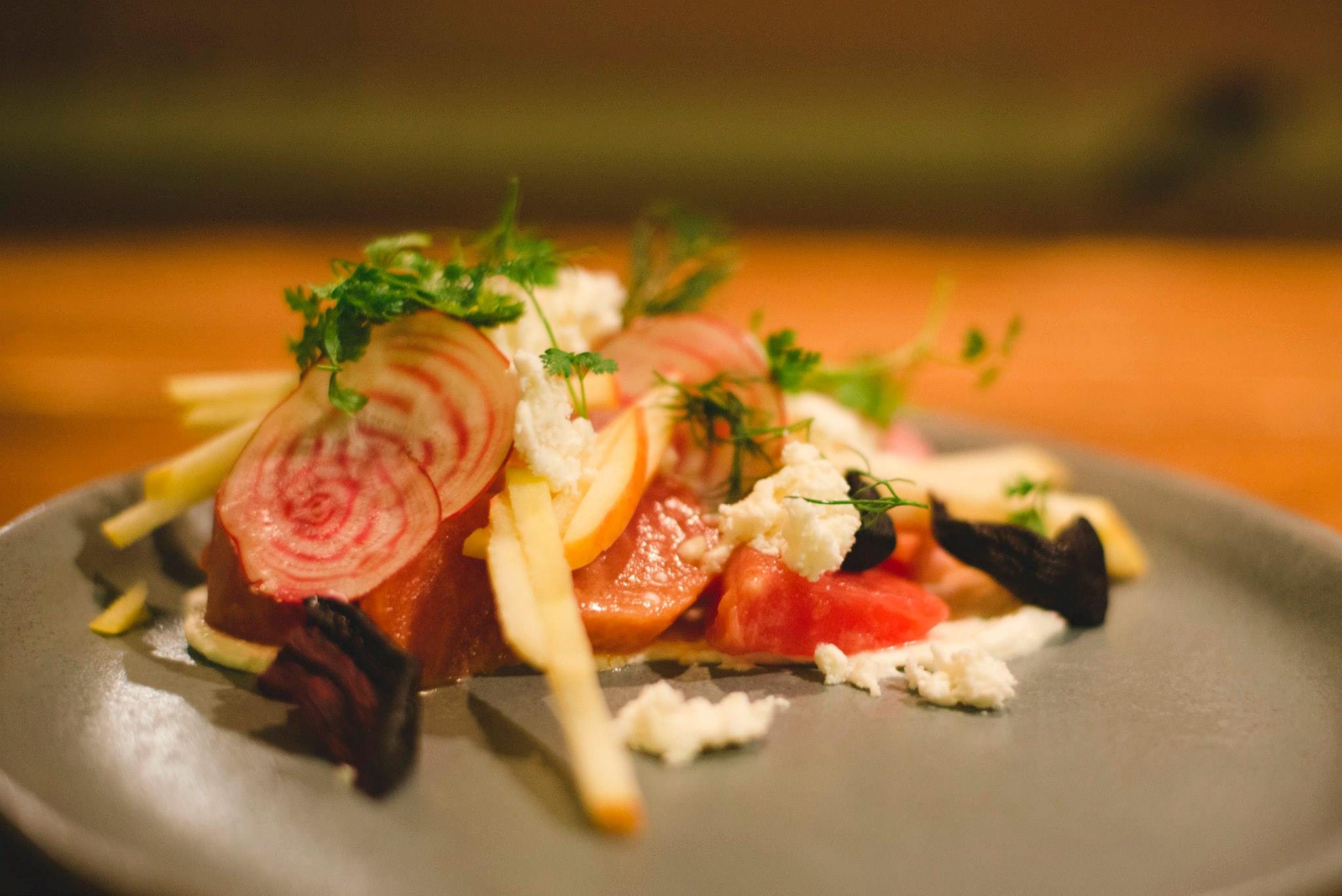
A dish like this beautiful roasted beet salad with frozen mascarpone is one you can try with Loire Valley wines.
The excellent restaurant Burdock and Co. offers Racine Imports Loire selection with inspired dishes such as rosemary-smoked mussels, roasted squash and barley miso ramen, and celeriac and potato ragout with goat [cheese] curd. — JP
Wine & Spirits Editor Julie Pegg








0 Comments