






Whether you think of it as a must-have addition to a hot dog or a trendy everything-old-is-new-again probiotic, sauerkraut has never fallen out of favor. Beloved in many different countries and used in many different ways, it’s an important and healthful food staple. We welcome Chef Adam Roy to Real Food Traveler to talk about the origins of sauerkraut. In addition to the interesting history lesson, he also shares some images from having happened upon a man making sauerkraut and the steps he took to make it.
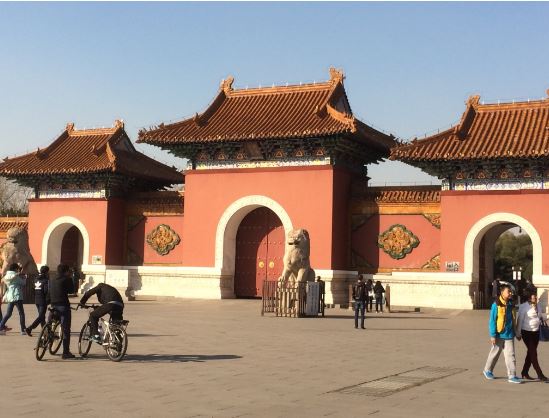
Beiling Park: Tomb of the founding emperor’s son Huang Taiji. He is buried here alongside his empress Xiaoduanwen. This is a UNESCO heritage site and a popular tourist attraction in Shenyang. Besides his father’s tomb near this site, the rest of the Qing emperors are buried near Beijing.
When Westerners think of sauerkraut, we think of Germany, Poland, Eastern Europe, and Russia. For many years, I did too. I started reading about food history when I worked as a pastry cook downtown Chicago as I had a one-way hour’s journey and thought I would use the time wisely. Well, that is where I first read about pickling and food migration history in Reay Tannahill’s book Food in History.
It’s Fermented Cabbage, Not Pickles
Pickling vegetables traditionally never uses vinegar. What we call “pickles” in the west is a cucumber sitting in vinegar. This is not what the world usually does when they ferment vegetables. They use airborne yeasts and bacteria to sour the salted brine taking advantage of natural sugars and enzymes in fruit and vegetables referred to as “fermentation.”
When the Great Wall was built, over many centuries, there was an army of people assigned to this task. In order to keep these people fed and nourished with the energy to complete the work at hand, they were fed probiotic food and their diet had a lot of pickled cabbage, as it was more ready than other food sources we think about today.
Sour cabbage, in East Asia, is a preservation technique after harvesting the fall cabbage crop. This consists of slicing, salting, pounding, marinating, and pressing Napa cabbage. This is just called “bai cai” or white vegetable in mandarin Chinese. The prepared cabbage is then stored in large crocks or containers over the wintertime leaving time to ferment and “sour.” The cabbage is then sliced and stored in its brine until cooked with pork fat using star anise, cinnamon stick, and some oil. Sometimes it is eaten with a local blood sausage too.
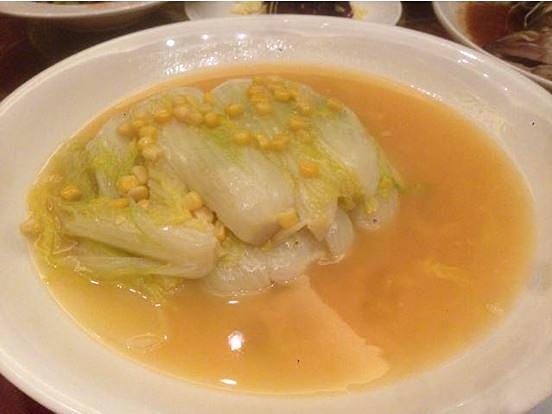
A cabbage dish of baby Napa cabbage heads blanched and braised with corn in a broth sauce.
Origins of Sauerkraut: Ancient Manchurians and the Goryeo Empire
In China, I personally have never seen people eat raw sauerkraut. However, in Korea, kim chi is the national dish and most of the time, it is eaten raw for its nutritious and umami properties. The Korean peninsula is linked to northeastern China and these regions are the birthplace of soured cabbage. It wasn’t until discovery of the Americas that Korean white kim chi started turning red by using the newly found chili pepper.
Shenyang, located in ancient Manchuria, is the birthplace of the Qing dynasty. After the Qing emperors took over the Ming capital of Beijing, they inherited and built the largest dynasty lasting 268 years. Ancient Manchurian people came from the tribes in the hills and forests east of Shenyang. It is about a 2 hour train ride to the border of North Korea.
Living off of the land in those days must have been tough, especially during winter when food was scarce and temperatures were far below 0 Fahrenheit. Shenyang has a yearly average low of zero and below during their harsh winter season. Korea, along with northeastern China across the border, are known for their boiling cauldrons of food (stews) that keep them very warm in the wintertime. It’s not the same as the wok fried dishes we think of in Guangdong (Canton) province.
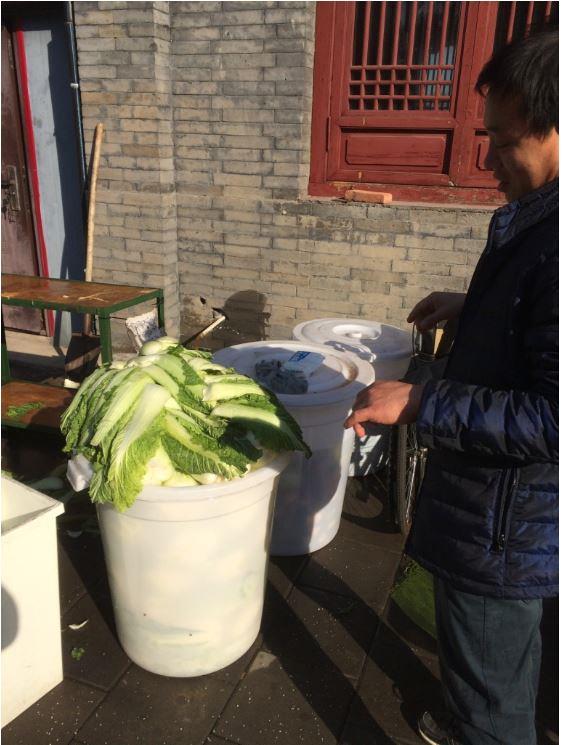
A local explaining to me about how he ferments his cabbage for the employees of Beiling Park. They will cook this for staff meals and also take home for themselves. This is how the inner leaves of Napa cabbage are salted and put into large tubs.
Good Enough for a “Khan”
Before Kublai Khan reigned over China (Yuan Dynasty), his grandfather, Genghis took over Asia, Europe, and lands beyond. The Great Wall was built to keep the Mongolian and Manchurian invaders out. There is not only one Great Wall, but many sections built over many centuries. Some parts link together and some parts do not but they were all built for a purpose of sovereignty over the lands to the south and control of the Silk Road.
Genghis Khan realized the nutrition and practicality of eating sauerkraut having to feed his swift moving armies over such a long distance. He is the one that is said to have brought this food to Eastern Europe, as the farthest he reached was Poland and Germany. Recipes surely changed as the round green local cabbage and lack of rice wine were changed for the spices on the European continent.
Origins of Sauerkraut: Cross-Cultural Similarities
Fatty pork is still a favorite to be served with the boiling soured cabbage as the acidity in the pickled dish cuts the rich pork quite well. When I worked in Shenyang, as an executive chef, we had many long-stay guests in our hotel that worked for BMW as they have a large plant there producing cars for the Asian market. A few times when I saw them for breakfast, after a previous night’s company dinner, they mentioned to me that the local Chinese keep getting served sauerkraut because they want to make their guests happy.
I laughed and tried to explain that sauerkraut origins came from northeastern China and Korea. These were engineers and managers from BMW and thought I was crazy. I showed them some photos that I took below trying to broaden their perspectives for a moment. The Chinese did not learn this from the Europeans and have been doing things like pickling cabbage for centuries. Influences came back and forth from the various continents but Sauerkraut was one that came from the East.
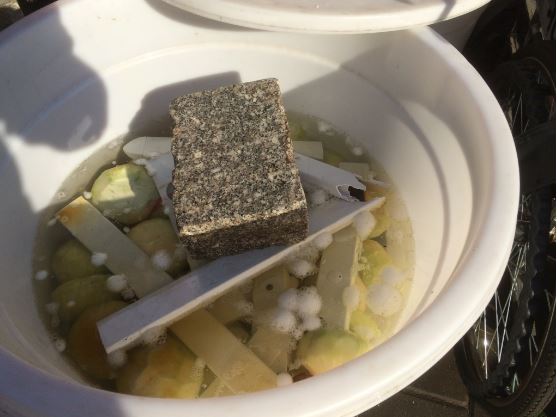
Whole peeled radishes here are left to ferment over the wintertime. They were done a week prior to the cabbage as they were harvested first. The white bubbles are good bacteria converting the fresh vegetable to a soured pickle that will last at room temperature for a long time.
Longstanding Rituals for Sauerkraut
I had over 100 culinary staff on my team when I worked and lived in Shenyang. I asked many if their parents and grandparents still made sauerkraut. They would always tell me their yearly family ritual of buying cabbage and preserving it. When I taught later in South Korea, my students had to go home once a year and make the traditional bean paste, chili paste, and kim chi together. It is a form of passing recipes down from generation to generation. It is about culture. It is about security. It is about preservation. Most of all, it is about taste. Our roots ground us all. I never thought cabbage had such an interesting story. I am lucky to have witnessed this and although it hasn’t put money in my pocket, it has made me richer just by seeing this with my own eyes.
— Story and photos, except where noted, by Adam Roy
Hungry for more? Learn about the history of fermenting pots for wine. Or, fermenting honey to make mead.
Pin this interesting article about the origins of sauerkraut to Pinterest so you don’t forget it.

Please note: Real Food Traveler is a participant in the Amazon Services LLC Associates Program, an affiliate advertising program designed to provide a means for sites to earn a small amount of advertising fees by linking to Amazon.com while providing convenience for the reader.






0 Comments