











Ann Arbor “is a food-conscious city that embraces a variety of methods for fermentation,” explains food and travel writer, Jill Dutton. She takes a closer look at three different perspectives on the subject through the eyes and efforts of local food purveyors and enthusiasts.
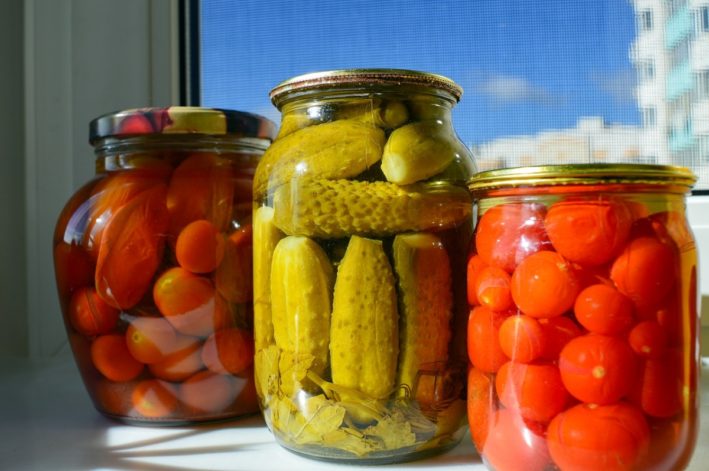
Photo courtesy Pixabay.
Between the yogurt commercials promoting a flat belly to the numerous health claims made by physicians and holistic practitioners, you have no doubt heard about probiotics—or the “good” bacteria—found in fermented foods. Some research says that these good bacteria, particularly those in our gut, may improve digestion, promote gut health, boost immunity, and help prevent heart disease, type 2 diabetes, and obesity.
Lacto fermentation is the process in which natural bacteria feed on the sugar and starch in the food creating lactic acid. This process not only preserves the food, but also creates beneficial enzymes, B-vitamins, Omega-3 fatty acids, and various strains of probiotics. Natural fermentation also helps break the food down into a more digestible form.
In Ann Arbor, Michigan, they’re utilizing a variety of fermentation methods to create traditional as well as innovative fermented foods. These businesses are keeping the tradition (and the cultures) alive in the process.
Who: The Brinery
Ferments: Raw Sauerkraut, Kimchi, Pickles, and Hot Sauce
The Brinery creates traditionally fermented foods that are raw and unpasteurized. Theyspecialize in sauerkraut, kimchi, pickles, and hot sauce.
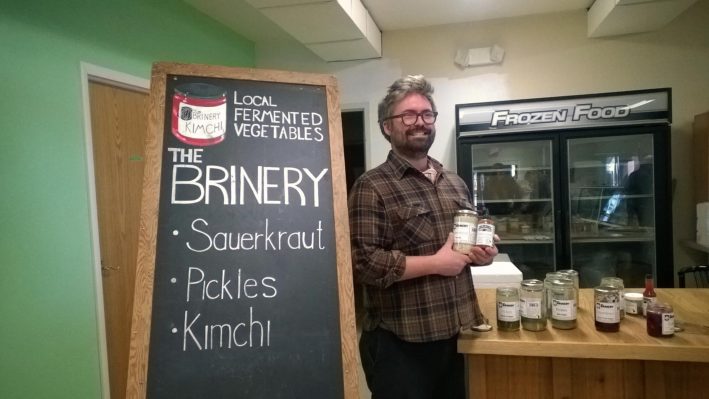
David Klingenberger is enthusiatic about fermenting and teaches classes on it. Photo by Courtney Drake-McDonough.
The Brinery was founded in 2010 with a small batch of sauerkraut meant to preserve a surplus of fresh cabbage at Tantré Farm in Chelsea, MI. Owner and Chief Fermentation Officer, David Klingenberger, went on to make more and more small batch ferments with the abundance of local produce, scaling up the operation at an exciting rate. The Brinery now processes over 200,000 pounds of local family-farmed vegetables per year and employs 12 people.
The Brinery’s fermentation process is the same time-honored way our ancestors did it—with no starter culture added. They shred the vegetables, mix with salt, pack into barrels, put a weight on the top to keep the kraut submerged, and let it sit. After a couple months, the barrel is fully fermented and ready for packaging.
David explains the benefits of fermenting foods: “The benefits of fermenting are numerous! Our ancestors did it mainly to preserve food. Vegetables will not spoil, decay, and rot when fermented. They stay safe to eat in the acidic pickled environment. Another reason is for health. Fermented vegetables are full of beneficial bacteria that aid digestion, boost the immune system, and prevent illness. Lastly, but most importantly, we ferment for flavor. Every human culture has fermented foods as part of their heritage. We crave the complex and delicious flavors brought on by fermentation!”
“The human body has 10 times as many bacterial cells as human cells. We have truly co-evolved. The single-celled organisms (yeast, bacteria, mold) that are responsible for fermented foods are a part of us, this world, and our food!” David says.
Who: Bigalora Cucina
Ferments: Sourdough Pizza Crust
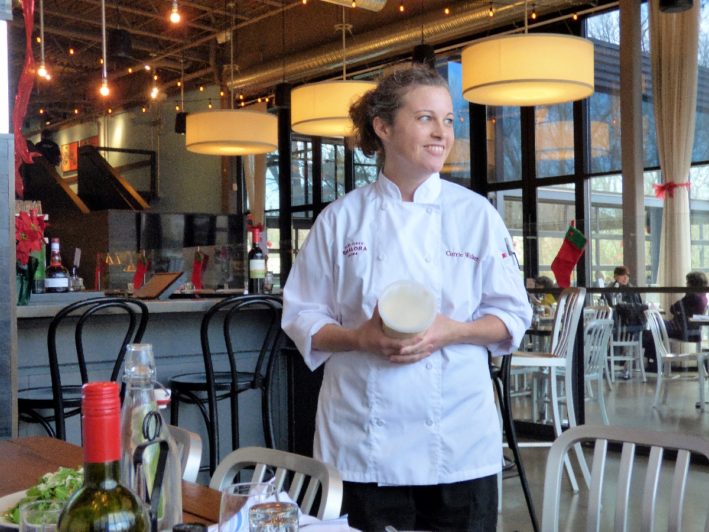
Chef Carrie Walker at Bigalora Cucina explains the sourdough process.
The pizza crust and bread served at Bigalora Cucina are made with sourdoughs—bread products that are leavened with wild yeasts. Chef Carrie Walker says they do not add any commercially derived yeast to their pizza dough.
To create the sourdough, Carrie combines flour and filtered water together to harvest the natural yeasts in the flour and in the surrounding environment. Cold fermentation begins with one day on the starter, and then four more days of cold fermentation on the dough before it is cooked.
Using wild yeast is a slower process than using commercial yeast, Carrie says. “During fermentation, the natural yeasts have time to feed on the grains of flour, breaking them down into more elemental components which can be more readily absorbed by the body. When you eat a sourdough, your body does not have to work to break down the flour first, so sourdoughs are more easily digested than commercially yeasted breads and pizzas.”
Another benefit of sourdough versus commercial yeast it that when you use a wild yeast starter in pizza, no sugar is needed. The sauce, cheese, and crust at Bigalora Cucina are free of any added sugar. Carrie says, “We care about our food and only serve food that we would serve our family.”
Who: Zingerman’s Creamery
Ferments: Cheese
At Zingerman’s Creamery, also in Ann Arbor, they produce cheese from local cow and goat’s milk. One of the first steps in their style of cheesemaking (known as lactic) is getting fermentation started. Emma Boonstra, the Marketing Coordinator, says, “So most of the cheese that we produce—there are a couple of exceptions—are a fermented food.”
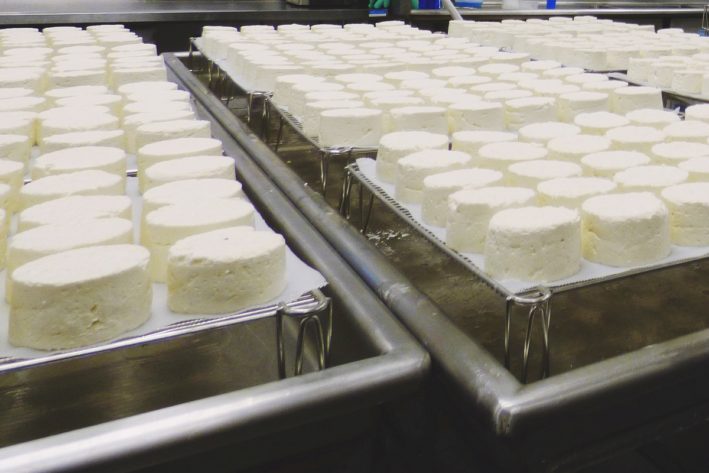
The cheese making process at Zingerman’s Creamery.
The fermentation process starts when they add bacteria, usually referred to as “starter cultures” in the cheese industry, right after they pasteurize and cool the milk at Zingerman’s Creamery. Over the next 18-24 hours, they allow the starter bacteria in conjunction with rennet (an enzyme used to coagulate milk) to acidify and curdle the milk. This acidic environment is inhospitable for many “bad” bacteria that can cause disease in humans, helping to make cheese safe to consume.
Acidity is important in producing texture in the cheese by determining how large the curd structure is. More acidity produces a finer, flakier curd whereas a lower acidity produces a larger, moist curd. The texture of the curd helps to determine the texture of the finished cheese. In addition to developing texture through the formation of the cheese curd, the lactic bacteria also helps develop flavor in the cheese. Different flavors can be produced, depending on what lactic bacteria cultures are added to the cheese during the making process.
“Fermentation (as cheesemaking) has been used since around 4000 BC as a method of preserving milk,” Emma says. “The highest production of milk occurs during the spring and summer when ruminant mammals have access to the widest diversity of plants and grasses in their diet, and they are feeding new baby animals. Fresh milk has a very short shelf life before the naturally occurring bacterial start to convert the lactose sugars into lactic acid, “spoiling” the milk. Cheese is a much more durable storage method and takes up less room in storage as well.”
Click here for a recipe for Spicy Southwestern Saurkraut if you’d like to try fermenting at home. Then, watch this short video where Chef Carrie Walker explains the sourdough process.
— Article and photos by Jill Dutton, unless otherwise noted.
Hungry for more? Read our article about all the ways that Ann Arbor is a foodie destination (even beyond the fermenting scene)!









0 Comments