











Along with the carols, twinkling lights, and ornaments hung lovingly on the tree, it’s the presence of specific food and drink that really says “holidays” to us. Writer Sherry Spitsnaugle visited Dresden, Germany recently and found out, first hand, just how beloved stollen bread (also called Christstollen) is in Germany and also around the world.
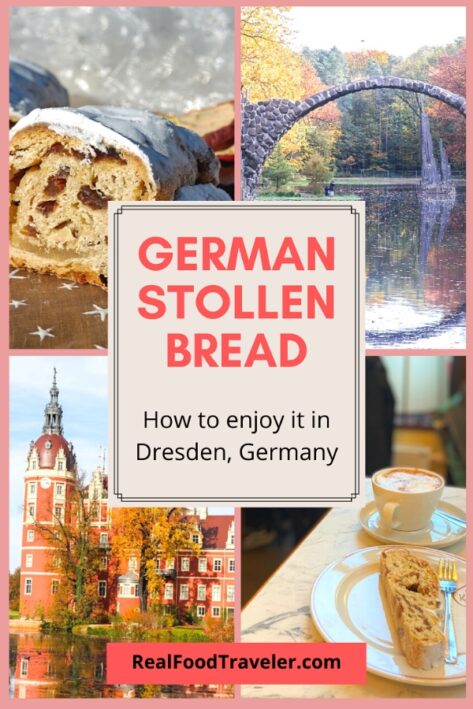
Save this article about Stollen to Pinterest to keep it handy. All photos by Sherry Spitsnaugle except Stollen image courtesy Pixabay.com.
Dresden Stollen Bread – Synonymous with Christmas, this famous German bread comes with a long history and a list of do’s and don’ts!
Much like panettone in Italy, or the Christmas yule log cake bûche de Noël in France, stollen is synonymous with the holidays. And the place to enjoy original stollen is its birthplace of Dresden, Germany.
Last October, I traveled to the state of Saxony, Germany, to learn more about the arts of this region steeped in culture. Situated on the banks of the Elbe River, the stunning city of Dresden revealed the Church of Our Lady, a monument of Martin Luther, and significant pieces of history at every turn.
But even the charms of Dresden couldn’t divert me from the heavenly aroma of stollen. A whiff of bread baking halted me in my tracks as I strolled the centuries-old cobblestoned streets of this elegant city, considered by many to be the most beautiful city in Germany.
I followed the scent and stepped into a wonderland where red tins, containing the iconic Christmas bread, towered in the middle of the bakery, as workers darted around with the frenzy of the holidays.
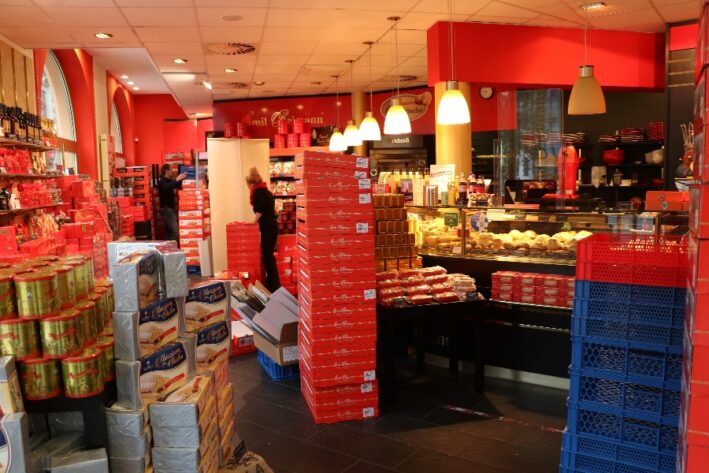
Heavenly smells waft from a bakery where Christmas stollen is made.
Hungry for more? Learn how to make German Stollen at home.
Traditions of Christmas Stollen
“Traditions vary within family to family and person to person about when to enjoy stollen,” explained Wolfgang Gärtner, with Saxony Tourism. “Some people wait to have their first bite of stollen on Christmas morning (and not a day before) and others eat the cake throughout the season.”
One trend everyone seems to agree on is the ritual of mid-to-late afternoon coffee or tea with pastry. This tradition is common year-round in Germany; during the holidays, that sweet is often stollen.
“Locals have their favorite bakery where they like to buy stollen,” Gärtner explained. “Or they like their mother’s or grandmother’s the best.”
Gärtner advised that when buying stollen – either to enjoy on the spot or take home – it’s best to buy the generous size rather than the small loaf. And always, buy the official Dresden stollen.
Do’s and Don’ts of Enjoying Stollen
Gärtner also gave me tips for eating stollen that I would not have known without advice from a local:
- Stollen is finger food; there’s no need to use a fork
- Slice the loaf of stollen in the middle – not at the end
- When you talk about stollen, remember: It’s a slice of stollen, not a piece of stollen
- Cut stollen on a board, preferably with a special stollen knife!
Divinely Delicious
Stollen has a past as juicy as this moist bread-cake which is replete with raisins and rich with butter. Today, the dessert is flavor-packed, but in the beginning, the Church decreed that because Advent was the time for fasting and penitence, people could not use butter or sugar. The result was a cake that tasted bland.
Prince Ernst of Saxony came to the rescue when he appealed to Pope Nicholas V for an exception.
Four Popes ignored the request, but in 1490, Pope Innocent VIII sent a reply. Still known today as the “Butter Letter,” the dispatch, at last, granted the use of butter in baked goods. Often called ChristStollen, people in early times said that the cake-like bread symbolized the swaddled baby Jesus.
Today, the divine dessert practically emanates butter. Orange and lemon zest, dried fruits, raisins, and sugar give it sweetness. Bakers make loaves well before Christmas so the bread can mature. A sugary glaze keeps it moist, and shops ship loaves of stollen around the globe.

Christmas stollen fills shelves in bakeries and cafes.
More reasons to visit Saxony, Germany
Dresden is home to the Royal Palace and the Zwinger Palace, which houses the Old Masters Picture Gallery, which reopened in 2020 following years of restoration.
From Dresden, it’s easy to tour other sites of Saxony such as Kromlau Park, a 200-acre landscaped park about four miles from the border of Germany and Poland. Here, you’ll find the “Devil’s Bridge,” constructed in the 1800s, which is a narrow arch stretching over the water.
Designed to create the illusion of a complete circle when the light is right, the bridge is a popular destination for photographers.
Nearby is Muskauer Park, a UNESCO World Heritage site, where we strolled trails in a gorgeous rural setting, crossed a picturesque bridge, and took selfies in Poland. With forested areas, a country landscape, and a pink castle to tour, visitors can climb the winding, steep stairs to the top of the tower for views. The Castle Café is an ideal place for a cappuccino and that slice of stollen, after the climb.
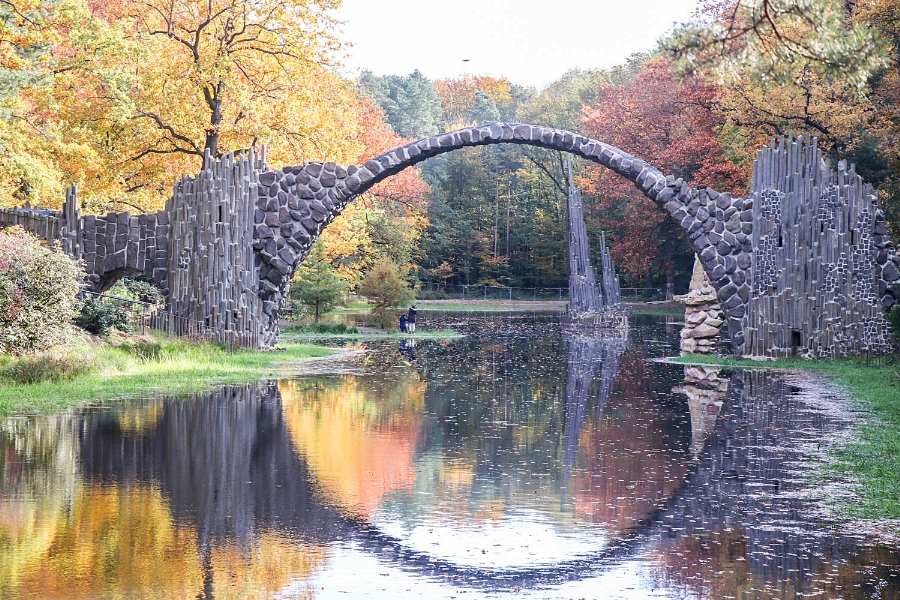
The dramatic Devil’s Bridge at Kromlau Park.
Hungry for more? Get the recipe for German Spitzbuben cookies.
Germany’s Eastern Most City
Hollywood has discovered the easternmost town in Germany of Gὂrlitz. This charming medieval city, where church bells toll and shops sell local mustard, has become one of the most popular places in Europe to film movies.
The Grand Budapest Hotel, Around the World in 80 Days, and Inglorious Basterds were all filmed in Görlitz, affectionately nick-named Gorli-wood.
You can even do a film walk and follow in the footsteps of actors and directors. Görlitz is so close to the border, you can cross a bridge into Poland.
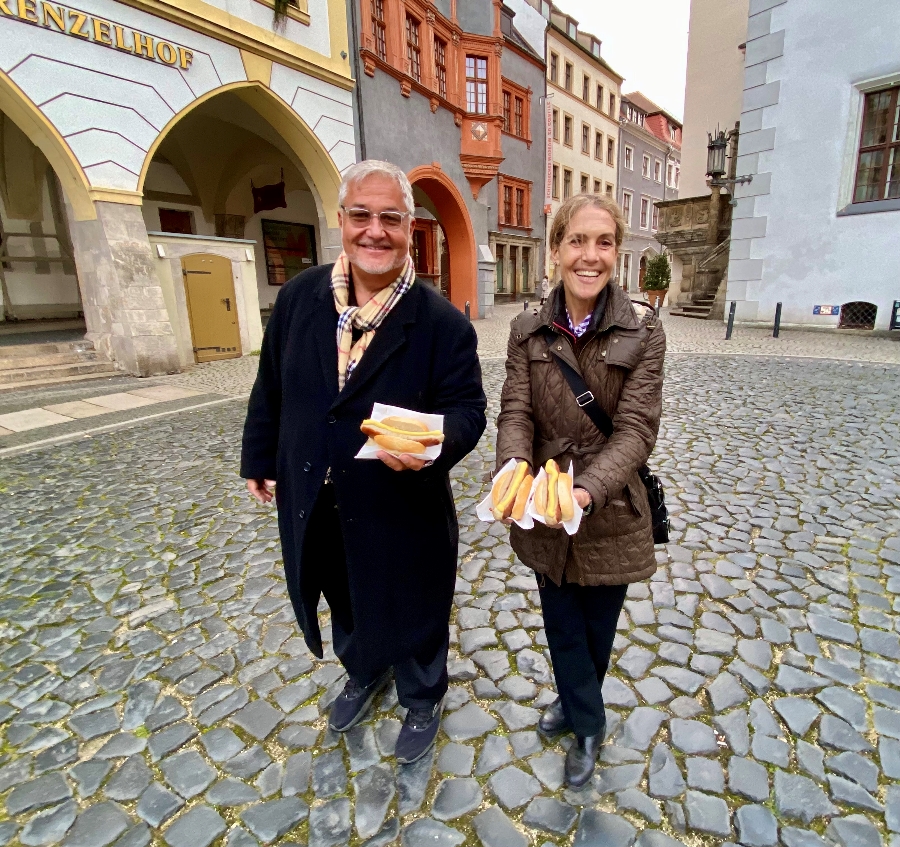
Don’t miss the taste of authentic mustard on a German brat when visiting.
Görlitz Synagogue Cultural Center
The Görlitz Synagogue Cultural Center was the only Jewish community sacred building in Saxony to survive the 1938 pogrom. After three decades of renovation, the synagogue recently reopened as a cultural monument for visitors and events.
It was a privilege to be in the sacred space and gaze at the architecture and workmanship. The synagogue is one of a few in Germany that survived the Kristallnacht.
The day my group visited, performers, musicians, and staff were preparing for a concert, making this special place come to life.
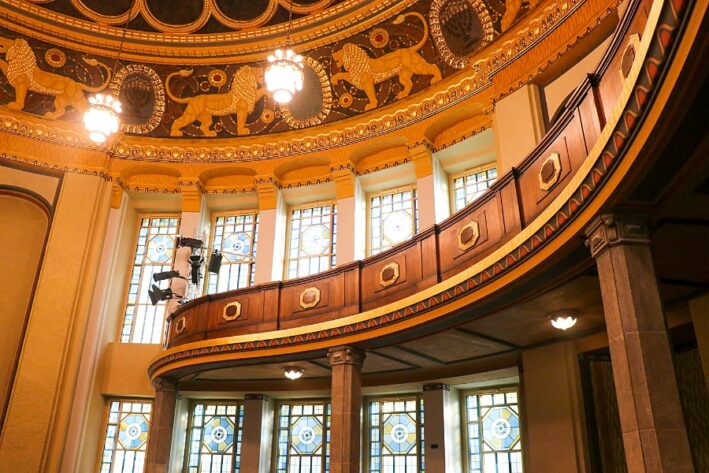
The Interior of Görlitz Synagogue Cultural Center.
Hungry for more? Learn about the famous Claxton fruitcake.
The Most Wonderful Time of the Year
One late afternoon in the city of Leipzig, I followed custom and savored a hot beverage and pastry. The sweet, moist, rich stollen with coffee hit the spot, but mostly, I relished the festive atmosphere of the small bustling café.
Friends laughing and couples chatting filled every table; Silent Night played; and a little girl dressed in a red velvet dress sat up straight and took a bite of dessert with a sip of hot chocolate. The holidays had arrived.

A late afternoon coffee and Christstollen.
Stollen Spending Spree
When it came to buying gifts to take home, I bought none other than the official Dresden stollen.
I left Germany with my luggage crammed with generous-sized tins of the precious, buttery bread. ‘Tis the season for stollen.
Saxony, Germany – If You Go
Best Resource: Saxony Tourism
Townhouse Dresden in the city center, near the airport, is an excellent choice for accommodations. From there, you can explore the city on foot.
It’s never too early to start planning for 2023. The best resource for information is Saxony Tourism.
— Story and photos by Sherry Spitsnaugle
Save this article to Pinterest to help plan your trip to experience Dresden. All images except Stollen by Sherry Spitsnaugle. Bread courtesy Pixabay.com.
Please note: RealFoodTraveler.com is a participant in the Amazon Services LLC Associates Program, an affiliate advertising program designed to provide a means for sites to earn a small amount of advertising fees by linking to Amazon.com while providing convenience for the reader. Clicking on them will not change your shopping experience, including pricing, in any way.









0 Comments