





It’s one of the most precious culinary items there is, and an essential element of a beautiful flower. Every October brings the harvesting of individual saffron threads during an authentic, culinary travel experience in Consuegra, a region of La Mancha, Spain. Writer Betsa Marsh gives her account of the celebration of the annual Saffron Festival, held in late October.
I’ve just plucked the stigmas from three dainty crocus flowers, and I only have 249,997 more to go before I harvest enough for a kilo of roasted Spanish saffron.
I’m learning the gentle art of “monda,“ removing the precious orange filaments from the purple crocus blossoms in Consuegra, heart of saffron country in La Mancha, Spain. LaMancha, after Iran and Turkey, is the world leader in saffron production.
In this process, everything’s fragile, from the crocus petals to the yellow stamens that cozy up to the stigmas and make this a tricky extraction. The art’s in peeling back the petals and teasing out just the three stigmas per flower that make this all worthwhile.
I realize two things simultaneously: I don’t want to do this for a living, and I’ll never grumble about the price of saffron again.
This is just one tiny freeze-frame within the panoply of Consuegra’s Saffron Festival, which has been praising the crocus rose since 1963. That these honey-scented little blossoms, such dainty shades of purple, yield such an assertive spice as saffron is just one of nature’s mysteries.
Into the field in La Mancha Spain
Alvaro Lozano invites travelers to step between the furrows of his family’s crocus field and examine the fragile blossoms up close. The sun beats warmly far into October as he pinches off flowers and fills a woven basket.
Each year, crocus farmers hand-harvest at dawn, supplying all the flowers for Consuegra’s Saffron Festival and saffron for export. Locals and travelers from the States shop the saffron market side by side when the fall harvest rolls in, buying 90% of Consuegra’s production in two days.
Consuegra has been following this natural progression in its fields and markets for a millennium, since Muslims brought crocuses to Spain along the Silk Road.
The crocus bulbs, technically called corms, originated in Mesopotamia, but now Spanish farmers like to claim mastery over these delicate blossoms. “We have the best saffron,” Lozano proclaimed out among his rows of flowers. “Many people from Iran are coming here to copy our systems.”
Hungry for more? Find out where to lunch in Toledo Spain.
Crowning a champ—and a queen in Consuegra
The atmosphere pulses with tension inside a vast white tent in Consuegra’s central plaza. Dignitaries fill in empty seats near the stage, until only two remain. Finally, everyone stands to welcome the mayor and this year’s Dulcinea.
Don Quixote’s heroine is crowned as queen for each festival, dressing in grand brocades and presiding over crocus events. This Sunday morning, contestants race to remove the stigmas as quickly and accurately as they can.
First up, a phalanx of children in regional costumes, poised to pinch. From “Go!,” it’s clear that they’ve been practicing their dexterity, and the champs take home prizes.
Ladies next, again with steely concentration and flying fingers. It’s not just bragging rights at stake here—the top prize was, as of 2021, 600 Euros/$707.
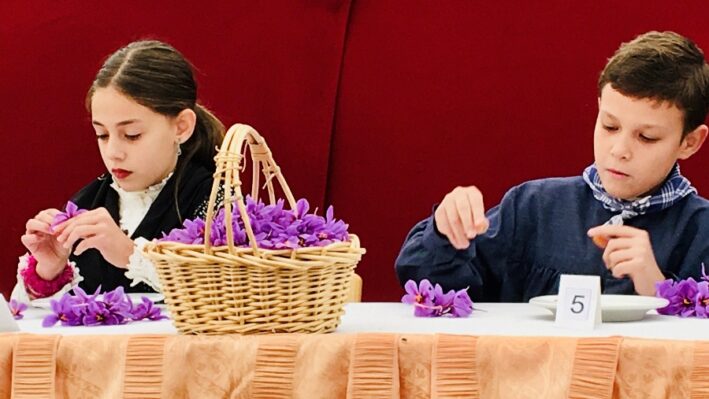
Young saffron pickers vie in the annual plucking contest in Consuegras’ town square.
Pluck up your courage at the Saffron Festival
It’s one thing to watch experts work the flowers, but something else totally to try it yourself. A group of self-proclaimed Crazy Teachers, gives a quick tutorial on crocus-rose plucking inside Consuegra’s immense Castle of St. John. Pull out the stigmas in a little competition and you can take your saffron home in a tiny coffee pod.
With parts dating back to 850, the castle was destroyed by Napoleon’s army in 1813. Today, town loyalists are working hard to rebuild the landmark at the end of a line of Consuegra’s 12 windmills, the heart of Don Quixote tourism in LaMancha.
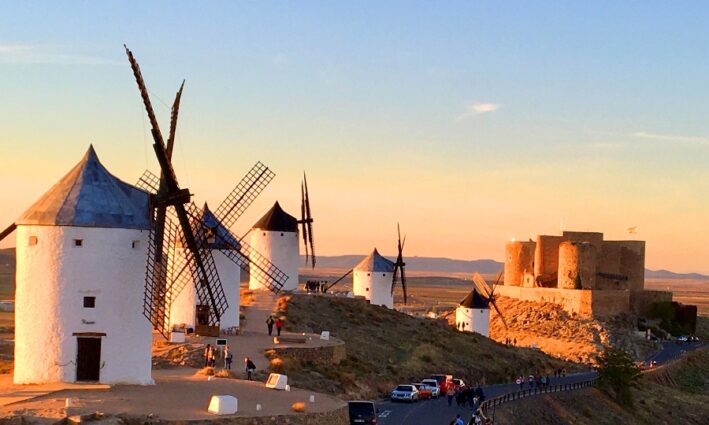
Windmills and the Castle of St. John create the archetypal La Mancha backdrop for the fall harvest of saffron.
Windmill power in Consuegra
Five of Consuegra’s 12 windmills still work, and several are open for travelers. Climbers can spiral up “Sancho” windmill for milling lessons, and diners can pause for an atmospheric drink or dinner at Gastromolino windmill. All of the windmills line up for great photos, day and night.
During the Saffron Festival, regional dance troupes compete in a plaza framed by whitewashed windmills. Add the vibrant embroidery, jaunty music and swirling wind for a trademark LaMancha moment.
Hungry for more? Read about another writer’s experience in La Mancha, Spain.
Sampling some of the best saffron in the world
Celebrating the crocus rose is fine, but how about tasting it fresh from its native soil?
El Alfar Restaurant starts a family-style meal with pimenton-and-saffron migas, the bread crumb side dish that rules throughout LaMancha. It pairs well with a pisto manchego of saffron, tomatoes, eggplant, bell peppers and cumin. Dishes of cod and chicken pump up the protein. Even dessert sweeps through the crocus patch with saffron cream topped with cinnamon. El Alfar serves its saffron menus all year.
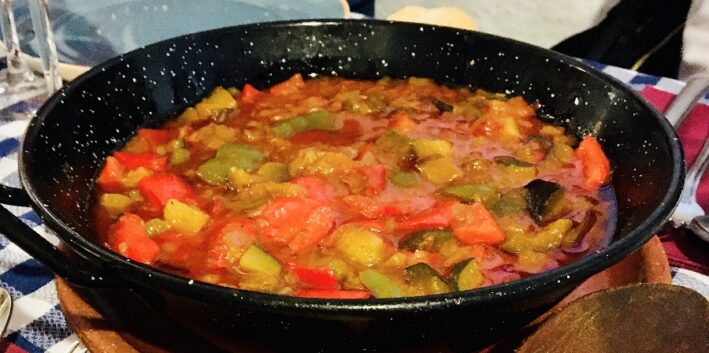
A pisto manchego of saffron, tomatoes, eggplant, bell peppers, and cumin spike the family style meals at El Alfar restaurant.
La Rabiosa Restaurant weaves saffron, the world’s most expensive spice, through some of its sausage and cheese dishes. Be sure to check out Chef Juan Delgado Gomez’s killer cheesecake, made with three kinds of cheese plus sea salt and a side jolt of tomato marmalade. The cake’s like catching melting ice cream just before it puddles out.
El Retorno offers a refined menu inside La Vida de Antes hotel. Chef Mamen Moraleda crafts a thick salmorejo, a gazpacho of beets crowned with pearls of olive oil and tiny chive threads. The salt cod with corn goes East to wrap up in nori seaweed, and the suckling lamb tacos carry their own accolades as Consuegra’s Best Medieval Tapa. The contest was limited to food used before Columbus’ voyage of 1492, when the explorers brought back tomatoes and potatoes.
For dessert, Moraleda cools things down with almond soup, partnered with saffron toffee. She infuses saffron threads into hot cream, then later blends caramelized sugar into the cooled cream mixture. It’s precise work, but so worth it for the balance of extra-sweet and saffron-earthy, the treasured flavor of Consuegra for a thousand years.
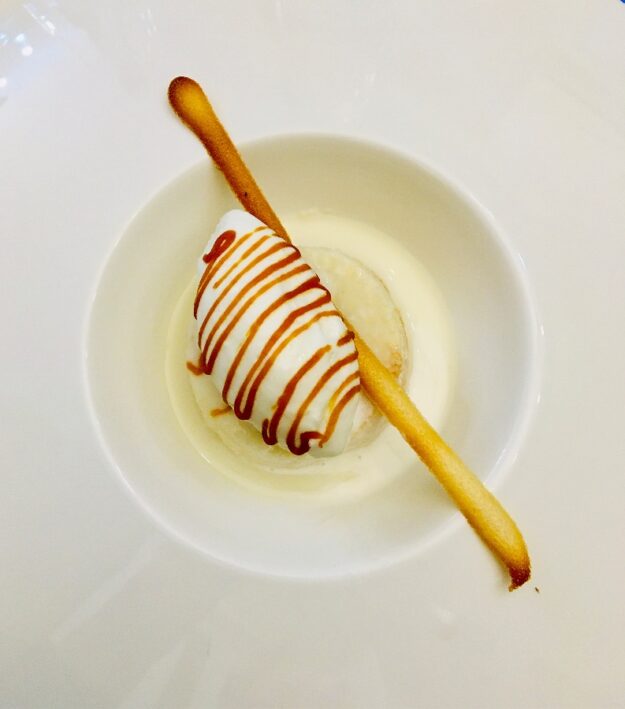
The refined dessert at El Retorno restaurant marries almond soup with saffron toffee for a blend of extra sweet and saffron-earthy.
Hungry for more? Make Spanish Patatas Bravas at home.
When you go to Consuegra for the Saffron Festival:
Consuegra’s Saffron Festival runs late October. Be sure to check the website for exact dates.
BONUS: Digging deeper into saffron territory
The Municipal Museum of Consuegra is a great first stop in town, a quick sweep from Roman times to the Muslims who brought saffron to Spain a millennium ago. Then it’s on to the 17th century and Miguel de Cervantes’ “Don Quixote,” often credited as the world’s first modern novel. Many towns claim the “Ingenious Gentleman” who tilted at windmills, but the author never said where he was from. Today, Don Quixote belongs to all of LaMancha.
The arid plains of Consuegra are perfect for growing crocuses that yield saffron, but you’ll find a few other local specialties, too. Manchego cheese takes the LaMancha name and weaves itself into dozens of dishes. The region’s local—and only—fish is salt cod, because dry LaMancha is landlocked. These two are often paired with a light Consaburum wine.
During the Saffron Festival, be sure to swing by the fairgrounds and shop the exposition tents. You’ll find local saffron blended into cheeses and regional honey.
If you’re shopping for saffron (azafrin), the top-quality Spanish crop is called coupe, known for its deep red color. Buy dried filaments rather than ground saffron, which is often adulterated. Stear clear of tourist markets, Jill Norman warns in her book Herbs and Spices, because unethical sellers often peddle turmeric, safflower and marigold petals as saffron.
Depending upon market forces, saffron can be more expensive than gold. So, it’s a good thing that it’s used sparingly in dishes and can last two to three years in an airtight container in a dark, cool place.
-Story and photos (except where noted) by Betsa Marsh
To help you plan your trip to Spain, you can use this Real Food Traveler affiliate link to Expedia. This will not change your planning, purchasing or travel experience at all. But if you do book through this link, we may receive a small commission which will support the running of this site.
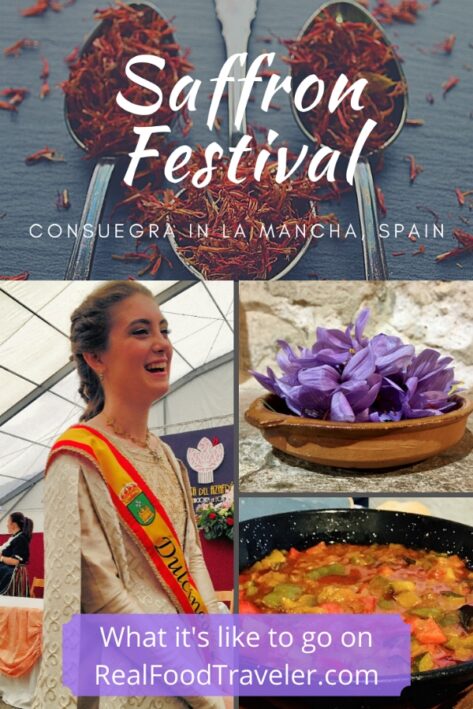
Save this article to your Pinterest bucket list of culinary travel plans. Graphic by Real Food Traveler with images by Betsa Marsh.
Please note, this article contains a link to Amazon Affiliates, a program by which Real Food Traveler may earn a very small commission if you make a purchase on Amazon. This does now, however, effect pricing or your shopping experience in any way but does help support the expenses of running this site.






0 Comments