











Mulay’s Sausage company is located in Colorado which, as a Coloradan myself, caught my attention. But their delicious sausage products are available across the U.S. What made me want to interview the head of this company, in particular? I was intrigued by all of the certifications the company holds, which translate to its commitment to the following: Certified woman-owned, Certified free from the “Big 8” Allergens, Certified Gluten Free, Paleo, and Keto. In our podcast conversation with Loree Mulay Weisman, Owner and CEO of Mulay’s Sausage, we talk about what those certifications really mean, and a lot more.

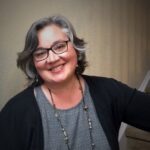
Click on the image above to meet Loree through our podcast conversation.
In the podcast, you’ll hear how Loree’s initial refusal to eat a sausage at a festival led her to start the company based on her Sicilian Grandmother’s recipe.
We talk about what sausage actually is. “Sausage is found in cultures all over the world. Almost every culture has its version of sausage,” says Loree. “There’s always that saying that, you know, you don’t want to see what the sausage is made of. And I think that could be true still today, but not with ours. We don’t use bits and pieces. We don’t use snouts and tails. We use 100%, whole-muscle meat that comes off the animal when they’re trimming the different chops or loins or things like that. So that is what is in our sausage.”
Hungry for more? Enjoy our podcast series and learn about destinations and businesses in our guests’ own words. It’s available on iTunes, Spotify, Google Podcasts and more.
Mulay’s has been ahead of its time since the start. Loree tells us: “We were certified gluten free…in 2008. And we were certified paleo in 2014. And keto happened last year. But the fact of the matter is that our products have always been free from the eight major allergens. They’ve always been gluten free. They’ve always been free from sugar, no nitrates, no MSG, no artificial colorings, no corn syrup. Our products have always been super clean.”
The Big 8 allergens are wheat, soy, dairy, peanuts, tree nuts, fish, and shellfish and Mulay’s avoids all of them, even when it’s not traditional. “That includes our meatball, and our British bangers – things that typically have breadcrumbs in them. The meatball doesn’t have any egg in it either,” explains Loree. “The best thing about it is that you don’t have to compromise on taste or quality at all – they’re still amazingly delicious products that you will want to just buy for your kid that can’t have gluten, but your whole family will tell you that you have to buy it for the whole gang.”
Keep this podcast handy by saving it to Pinterest.

I asked Loree about why there are so many more people suffering from allergies today. She says that, in part, “We’ve moved so far away from the concept of food as medicine, and food as nutrition to nourish the body,”
Utilizing Heritage Breed Pork is an important part of Mulay’s business. Loree likens it to heirloom tomatoes. “If you think back to the food pyramid, back in the 1970s, and even in the early 80s, there was that marketing campaign about ‘pork, the other white meat,’ They bred out all of the fat and the marbling of pork, which took away pretty much all the flavor.”
As part of that discussion, Loree gave what I think is the best explanation of the difference between giving antibiotics to the animals versus having them be antibiotic-free. You’ll hear that when you listen, Click on the podcast logo below to start listening.

Click on this logo to listen to the podcast about Mulay’s Sausage.
We also talked about what it means that Mulay’s Sausage is a woman-owned business. Her answer was really interesting: “Being a woman in this industry is definitely the exception. It is a man’s world, the meat realm. But I see more and more women all the time. I think we bring maybe an understanding about usage and consumer desires to the table… For me, it really matters that we pay our farmers a living wage. It really matters to me how the animals are raised. It really matters to me that our employees are treated fairly and like family. So, I don’t know if that’s different with a man running a business. But those are things that I prioritize over the bottom line.”
Fun fact: Be sure to notice the logo of Mulay’s Sausage on their website and products. It’s the family crest which dates back to 1326 AD with ancestor Nicoló Mulé, who was the Senator of Palermo, Italy. Over the course of the centuries, the family moved around and settled in the village of “Lucca Siccula,” Sicily.
At one point, Loree realizes she’s revealing a lot about herself in our podcast conversation. I assure her that that’s exactly why we do these podcasts – because everyone has a story and there’s a story behind every business. I didn’t ask Loree to be my podcast guest to sell sausage (although you totally should buy some because it’s really delicious). I believe someone listening will find something about Loree and her experiences that they’ll connect with. “That’s why I love doing these podcasts so much because you can hear in your voice the passion for what you do,” I tell her. “And you know, this is a chance to divulge a little bit about yourself and for people to really get to know, not just what the product is, but the people and the intention behind it.”
I think you’ll enjoy this podcast conversation, our 24th! You can listen on iTunes, Spotify, Google Podcasts and more. This podcast was sponsored by Mulay’s Sausage.
Visit Mulay’s Sausage on their website. Follow them on their Facebook page, Twitter, Instagram, and Pinterest.




0 Comments