








In a year that brought hype of super blooms but disappointing shows, Kern River Canyons prevails. Real Food Traveler’s Health, Fitness & Spa Editor, Carole Jacobs, helps readers discover the area in a multi-day itinerary.
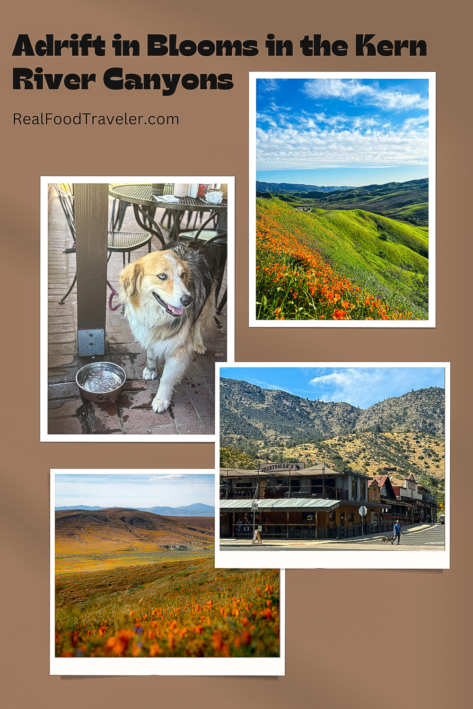
Save this article to Pinterest to keep it handy. Photos by Unsplash and Carole Jacobs. Graphic by RealFoodTraveler.com.
Hungry for more? Read Carole’s journey through 6 Death Valley Secret Kingdoms.
Adrift in Blooms in the Kern River Canyons
As a certified wildflower fanatic, when a California super bloom was predicted this spring–one that would magically transform the tawny deserts into carpets of flowers–I hopped in my car to catch the show.
Yet despite breathless reports to the contrary, when it came to a super bloom, Spring 2026 was basically a no-show in California’s most famous desertscapes.
Case in point was Death Valley, which I visited in early spring. The lower elevation sections of the park that are most accessible to tourists (The Oasis at Death Valley and Stovepipe Wells Village are both 190 feet below sea level) were as brown and bone-dry as ever, with temps in the 90s and the kind of high, dry Santa Ana winds that set your teeth on edge.
Aside from a few scattered patches of desert daisies poking from the sands, low-lying Death Valley was a parched wildflower desert–even as the park’s high terrain atop 11,049-foot Telescope Peak remained blanketed with snow.
As the national media continued to rhapsodize about an imminent super bloom in Death Valley, complete with photos of super blooms past, hordes of tourists in rental RVs poured into the park, scouring the sands for wildflowers to no avail.
EVEN THE POPPIES DIDN’T POP
Even wildflower strongholds like the Antelope Valley California Poppy Reserve in the Mojave Desert, found 75 miles north of Los Angeles in Lancaster, didn’t pop this spring. During super bloom years, the Reserve’s wildflower displays can last from mid-February through May, with a variety of wildflowers creating a mosaic of color that changes daily.

The Poppy Reserve in better years in the Antelope Valley. Photo by Larry Costales via Unsplash.
Wildflower enthusiasts come in from all over to wade through the Reserve’s waist-high carpets of orange and yellow poppies, purple lupine, yellow desert lilies, owl’s clover, goldfield, cream cups, and coreopsis, to name a few,
But aside from a few isolated patches of poppies, the Reserve was such a phenomenal no-show this spring that the staff felt compelled to warn prospective enthusiasts, lest they be misled by the ongoing media frenzy or Instagram posts showcasing the wildflower bounties of super blooms past.
SO WHERE ARE THE BLOOMS?
Fortunately, Southern California actually did have a super bloom this spring—just not in the famous desertscapes predicted by the newscasters. After racing to all of them and putting more than 1,000 miles on my car for naught, I was astounded to discover the real California super bloom 2026 was occurring in my own backyard. (See Bonus: “Anatomy of a Super Bloom” for info on what makes a super bloom happen.)
I’m talking about the sublimely picturesque if little known Kern River Canyons. Located in a pocket of California’s rugged and remote Southern Sierra – largely overlooked because of its proximity to its more famous neighbors, including Mt. Whitney, the High Sierra range, and Sequoia & Kings Canyon National Parks – the Kern canyons comprise hundreds of miles of wildly beautiful interlinking wildflower meadows, valleys and gorges that rise from 400 feet in the ‘burbs of Bakersfield to 14,500 feet at the base of Mt. Whitney.
A RIVER RUNS THROUGH IT
Besides the flowers, the Kern River Canyons are home to the North and South Forks of the Kern River. The North Fork, one of the steepest and wildest whitewater rivers in North America, is a tumultuous torrent that thunders down deep glacier canyons from the base of Mt. Whitney at 14,500 feet to Bakersfield at 400 feet. The South Fork, by comparison, is more of a lazy river that originates in high alpine meadows and meanders past my house in Kennedy Meadows before tumbling down precipitous canyons and meeting up with the North Fork in the beautiful riverside town of Kernville, a bucolic basecamp for exploring the region. (See itinerary below).
The good news is that on their collective 260-mile-long journey from the mountains to the valleys, the two forks of the Kern pass down through a staggering array of microclimates that house an 8-month-long wildflower display (one of the longest on earth) as the blooms creep up from the lower valleys in late January to the higher meadows of the Sierra in early September.
The bad news is that during especially wet winters, snowmelt from the High Sierra engorges the river and turns it into the “Killer Kern.” This is an apt description for a river that has claimed the lives of more than 300 unsuspecting anglers, boaters, and bystanders. (Musician Merle Haggard’s song, “Kern River,” fictionally recounts such a tragedy.) A sign at the mouth of Kern Canyon warns visitors: “Danger. Stay Out. Stay Alive” and tallies the deaths since 1968. As of May 23, 2025, it was 342.
The Kern River Canyons even boast a quirky past that includes a boisterous 1853 mini gold rush, an 1858 earthquake that switched the direction of the river, and torrential floods that swamped Bakersfield and changed the channel of the river.
Today, there’s no shortage of creature comforts in the Kern River Canyons’ clutch of historic (mid-1800s) riverfront villages that seem frozen in time, with homespun inns and lodges; Ma-and Pa diners; downhome breweries, bakeries and cafes; antique and vintage shops and used bookstores; tackle and gear shops; riverfront steakhouses serving 40-ounce porterhouses; plus professional outdoor guiding companies that can take you where you want to go, and get you home in one piece so you can brag about it.
Because in the Kern River Canyons, if you want to do it, it’s here –from traipsing through wildflower meadows to fishing (the North Fork has some of the best trout fishing in California) white-water rafting/kayaking/canoeing/tubing on the Kern and Isabella Lake, one of California’s largest reservoirs; rock-climbing the cliffs, and bagging surrounding peaks. Or you can just find a spot under a tree by the river and revel in the quietude.

Isabella Lake photo by Flickr.
The following 3-day itinerary highlights just a few of my favorite places in the Kern River Canyons. Visit during the week, and you’ll avoid the weekend crush of tourists from Bakersfield and beyond and maybe even have the Canyons mostly to yourself.
Kern River Canyons Blooms Itinerary
DAY 1
Stay here: Settle in at Whispering Pines Lodge in Kernville and start unwinding on river time. Nestled in towering pines above the Kern River just a minute from tiny downtown Kernville’s homey restaurants, cafes, breweries, thrift shops, and adventure outfitters, the lodge has cozy rooms with knotty pine ceilings, fireplaces, bathtubs, balconies, mini fridges, microwaves and more. After a long day on the trails or on the river, you can unwind in the lodge’s outdoor pool and hot tub.
Lunch. Head to McNally’s Outpost, a pint-size burger joint in downtown Kernville with cult status, with a second burger stand and steakhouse 15 miles up the river. Chow down a McNally burger topped with fried onions and egg, wash it down with their legendary jalapeno milkshake, and you’ll almost wish you were a local.
Afternoon hike: Climb up through waist-high wildflowers along the Cannell Meadows Trail, found just a mile from the Lodge. (If you’re feeling energetic, the 5-mile climb to the top of 5,778- foot Powers Peak is a spectacularly scenic 10-mile-roundtrip day hike.) The 23-mile-long trail corkscrews up past interlinking meadows, jagged cliffs, fang-toothed mountains and rocky gorges and ends at 9,200-foot Sherman Pass, which overlooks 360-degree panoramas of High Sierra wilds.

Blooms along the Canell Meadows Trail. Photo by Flickr.
Dinner: Unwind over a casual dinner and craft brews at Kern River Brewing Company: Start with the spinach artichoke dip or Wisconsin-style cheese curbs, graduate to their pulled pork tacos, and linger over home-brewed ales, sours, seltzers, IPAs, and non-alcoholic lagers.
DAY 2
Breakfast: Have breakfast with views of sweeping mountains crashing to the river at Cheryl’s Diner in downtown Kernville, serving breakfast all day and night. It’s like stepping into a classic hometown diner from the past. Don’t miss the made-from-scratch hubcap-sized pancakes, pecan waffles, biscuits and gravy, and every-which-way omelets served with mountains of hash.

Cheryl’s Diner downtown. Photo by Carole Jacobs.
Ride the mighty Kern: Buckle up for a white-water adventure on the Kern River with Sierra South Mountain Sports outfitters, the family that put white-water rafting on the Kern on the map in the early 80s (back when the Upper Kern’s Class V Thunder Run and Forks of the Kern were the most challenging whitewater sections on earth ever run commercially). Today, the outfit offers a variety of guided trips down the Kern’s Class 2 to 4 rapids. No experience is necessary– but prepare to get wet or even drenched!
Tubing down the river: Prefer to bond with the Kern with fewer thrills and spills? During the later summer months when the Kern runs lower, Southern Sierra offers 3-hour unguided tube trips down the Lickety Split section of the Upper Kern, a scenic and nostalgic way to cool off on a hot summer’s day.
Late lunch at El Rio: Drop by this casual Mexican restaurant for hefty portions of authentic enchiladas, tacos, burritos, taquitos, chile rellenos, and decadent peanut butter milkshakes.
Afternoon shopping: Browse downtown Kernville’s collection of quaint vintage and antique shops. Don’t miss The Mother Lode antique shop, Buzzard Gulch Trading Post, featuring collectibles and old-time candies, and vintage threads, furniture, dishes, glassware and more at Lah-De-Dah.

Stroll around Downtown Kernville. Photo by Carole Jacobs.
Dinner: Cap the day at Ewings, a family-owned steakhouse perched on cliffs high above the Kern River, with elegant, white linen dining, and floor-to-ceiling windows that let in views of the river and surrounding mountains. Start with Bloody Mary’s at the Copper Counter Bar, then dive into clam chowder, fish tacos, steaks, truffle pasta, Cajun shrimp, seared ahi tuna, and more. Save room for the brown butter or molten lava cake and work it off with dancing to live country Western music played by local bands.
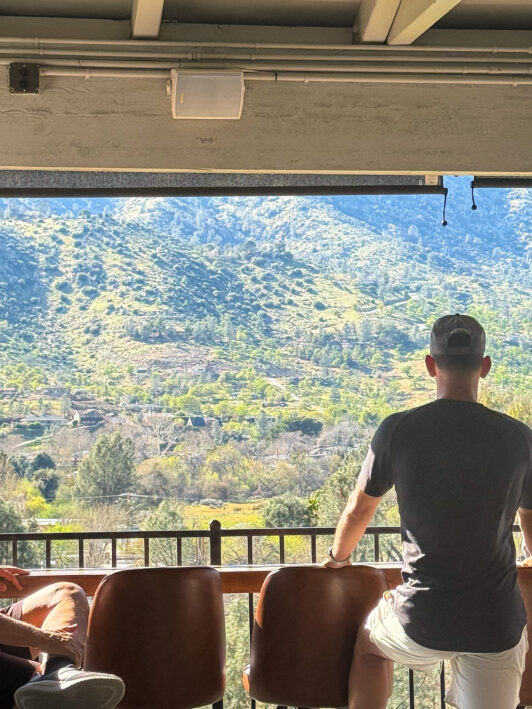
Take in the patio at Ewing’s. Photo courtesy of Carole Jacobs.
DAY 3
Settle in for a leisurely breakfast or brunch. Kernville has two stellar options that serve killer espresso drinks, home-baked pastries, quiche, sandwiches, soups, salads, and more. Both also have shaded outdoor porches where they’ll welcome your pooch with a bowl of fresh ice water.
- Sequoia Mountain Bakery, a cozy, casual cafe with a counter and sit-down service, and a dog-friendly front porch, has a delectable assortment of home-baked goodies, including almond croissants, blueberry muffins, Fresh baked sourdough, doughnuts, breakfast sandwiches, biscuits and gravy, avocado toast, quiche, breakfast sandwiches, plus a wide assortment of Peet’s Coffee espresso drinks served with their signature toasted marshmallow whipped topping.
- Big Blue Bear, located right across the street, is a charming cafe boasting an impressive selection of egg sandwiches, breakfast burritos, freshly baked pastries, strawberry cheesecake, apple turnovers, paninis, homemade sticky buns, sausage breakfast quesadillas with country potatoes, gluten-free options, every imaginable espresso drink, including a few of their own creation (for a peak java jolt, try the Mt. Whitney, and even craft cocktails like espresso martinis.
Head out for a hike and hot springs soak. Pack a picnic lunch along with your hiking boots and bathing suit. Both Sequoia Mountain Bakery and the Big Blue Bear make customized sandwiches on homemade bread stuffed with your choice of deli meats, cheeses, and veggies, quiches, salads, and fresh-baked cookies, brownies, and other treats.
Scenic drive: From Kernville, hang a left on Highway 155, which rollercoasters 12 miles along Isabella Lake, a fishing and boating haven and one of California’s largest reservoirs, to the funky lakefront town of Lake Isabella.
Morning hike: From Lake Isabella, Highway 178 follows the Kern River as it rollercoasters down through steep, grassy slopes. About 10 miles down, right before the highway crosses a bridge, pull into the pocket-sized parking lot for the 6-mile roundtrip Kern River Trail, which switchbacks down along the river’s steep, grassy, slopes to China Gardens. In springtime, the trail and surrounding hillsides are a Monet painting come to life with orange poppies, red Indian paintbrush, purple lupine, yellow daisies, and more.
Picnic lunch at the hot springs: From the trailhead, follow Highway 178 up (east) 7 ½ miles to Borel Road and follow the steep mountain road 3.4 miles west to Remington Hot Springs on the right. From the parking lot, the ½- mile-long Remington Hot Springs Trail winds down a steep slope and stone steps to the Kern River and hot springs, which glimmer like blue jewels along the base of the rushing river. The springs, which range from 80-110 degrees, are captured in four beautiful stone masonry pools that were handcrafted (along with the stone steps) by local volunteers in the 1990s to blend in seamlessly with the boulders and surrounding landscape. Then as now, the clothing optional hot springs are free, open to the public, and are maintained by local volunteers. Once a closely-guarded local secret, the springs have become a popular hot spot in danger of being loved to death, so treat the natural treasure with respect, and pack out your trash. (Remington Hot Springs is not to be confused with nearby Miracle Hot Springs, which was indefinitely closed in 2024 by the U.S. Forest Service following safety concerns.)

A pool at Remington Hot Springs. Photo by Carole Jacobs.
Dinner: Kern River Ceviche Company (open Thursday-Sunday) is an unassuming hole in the wall in Lake Isabella whose humble abode belies its astounding Mexican cuisine, which borders on the gourmet. Don’t miss the shrimp and aguachiles ceviche stuffed with wild caught Argentinian red shrimp, onions, cucumbers, and serrano peppers marinated in a tangy citrus house marinade. Even the beverages here are homemade and range from agua frescas in watermelon, pineapple and melon to jarritos, an original Mexican soda made with natural flavors; and horchatas, a traditional Mexican drink made with rice water, cinnamon, and cane sugar.
If the Ceviche Company isn’t open during your stay, head down the pike a mile to Nelda’s Diner (opened by Grandma Nelda 50 years ago) , an oldie-but-goodie that serves heaping portions of stick-to-your-ribs fare, including steaks, prime rib, fish and chips, hot turkey sandwiches, and homemade soups and gumbos. Wash it down with an old-fashioned milkshake, malt or float, or beer, wine or mimosas
Night on the “town.” With a population pushing 688, Kernville is an early to bed, early to rise family town that puts the lights out early. Even during a busy summer weekend, downtown can feel like crickets after 9pm — unless you know where to go. The action’s at the Kernville Saloon, an historic Cheers-like watering hole in downtown Kernville with friendly bartenders, great cheap drinks, and outstanding country Western bands that bring down the house on Saturday nights.
Get there: The Kern River Canyon is located 23 miles northeast of Bakersfield and 185 miles northeast of Los Angeles. Kernville perches above the North Fork of the Kern River 56 miles northeast of Bakersfield while Lake Isabella nestles on the banks of Isabella Lake 40 miles northeast of Bakersfield. The region is served by Meadows Field International Airport in Bakersfield.
Hungry for more? Plan ahead for the fall colors in California’s High Sierras.
BONUS: ANATOMY OF A SUPERBLOOM
A super bloom (which is not a scientific term) is a rare botanical phenomenon caused by a unique combination of five factors most commonly seen in the arid, desert regions of the Southwest. Including:
- Above average, deep-soaking rains in late autumn (between September and December), which saturates the soil and wash away anything that would inhibit germination.
- Continued, steady rain throughout the winter, which hydrates seedlings and promotes their growth.
- An abundance of dormant seeds in the soil, often accumulated over a series of dry, non-blooming years.
- Mild, cool spring temperatures, which prevent young, emerging plants from dying.
- An absence of damaging environmental factors, including extreme heatwaves, intense drying winds, and overgrazing, any or all of which can destroy delicate seedlings.
-Story by Carole Jacobs







0 Comments